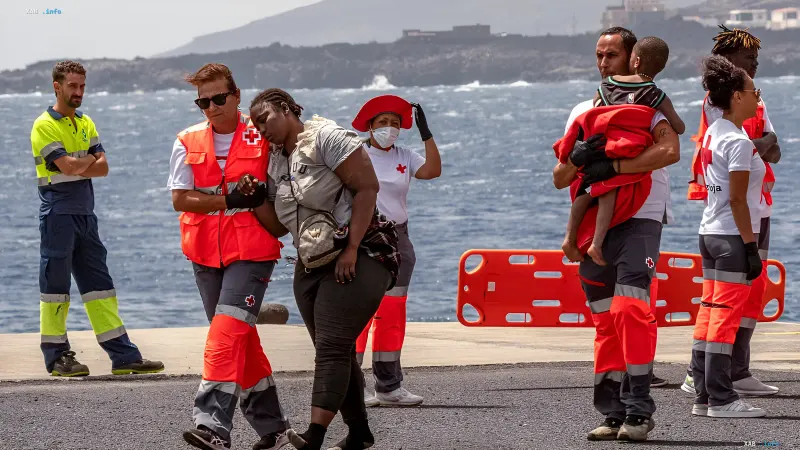
Spain's maritime rescue service (Salvamento Marítimo) reported that nearly 2,200 migrants arrived by sea in the Canary Islands over the past two days. The peak of activity was recorded on Sunday, November 15, when rescue teams conducted operations off the coast of El Hierro, assisting people on overcrowded boats and ensuring their safe landing at port facilities. Among the passengers brought to shore was an infant, highlighting the vulnerability of those who set out on the dangerous Atlantic crossing.
Operation off the coast of El Hierro
According to the rescue service, 1,324 people aboard 14 boats were assisted during Sunday's operation. Most of them were disembarked on El Hierro, the westernmost of the archipelago's inhabited islands, which is geographically the closest point in Spain for migrants coming from West Africa. Rescue crews coordinated the approach of the vessels to the shore and organized the transfer of people to port infrastructure, where they were met by volunteers from humanitarian organizations.
Figures close to daily record
As noted by the agency, the number of people rescued in a single day is close to the daily record for the Atlantic migration route, set in November 2020. This indicates that the intensity of arrivals in the archipelago remains at a historically high level and is again approaching the peak values recorded at the height of previous migration waves.
The Atlantic route from West Africa
The Canary Islands remain one of the main entry points for migrants trying to make the dangerous journey across the Atlantic Ocean from West African countries to Spain. The route, stretching from the coasts of Senegal, Guinea, Mali, and other countries in the region, is considered one of the riskiest in the world: overcrowded and often unseaworthy boats are not designed for the open sea, while weather conditions and a lack of navigation equipment multiply the likelihood of disaster.
Spanish Interior Ministry's annual statistics
According to the Spanish Ministry of the Interior, from January to the end of October 2026, more than 13,000 people have reached the Canary archipelago by sea. These figures confirm that the Atlantic migration vector remains one of the key entry routes into the country, and rescue and reception operations in the Canaries continue to be a regular and resource-intensive task for Spanish authorities and partner humanitarian organizations.