
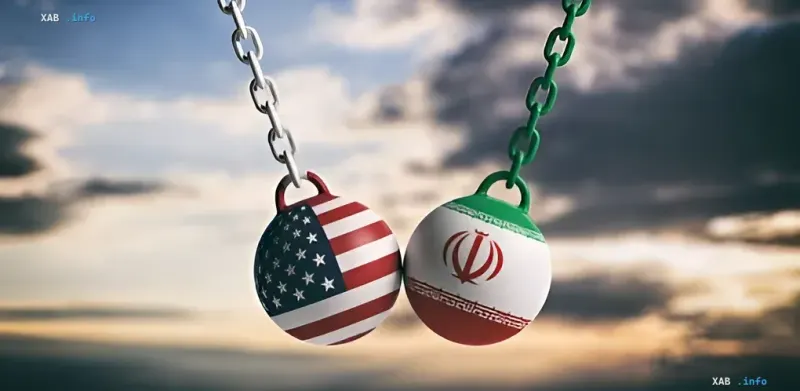
A new crisis is brewing in the Persian Gulf. An advisor to the Supreme Leader of the Islamic Republic of Iran, Ali Khamenei, made a sharp statement officially accusing the United States of sabotaging key provisions of a bilateral agreement. This refers to the Islamabad Memorandum of Understanding (US-Iran MoU), signed on June 17, 2026.
Tehran asserts that Washington violated Articles 1 and 5 of the document, which regulate the ceasefire regime and shipping security. In response to these accusations, Iran has declared its readiness to apply "swift and decisive" measures if the US foreign policy course does not change.
The essence of the conflict: who and what violated the agreement?
The Islamabad Memorandum, signed with the mediation of Pakistan by US President Donald Trump and Iranian President Masoud Pezeshkian, was intended to establish a 60-day ceasefire. However, within a week, the parties began exchanging mutual accusations of derailing the agreements.
According to Tehran's position, the American side is ignoring Article 1, which obliges the introduction of a complete ban on military operations, including the territory of Lebanon. Iranian authorities state that the US continues to provide logistical and financial support to formations firing on the positions of Lebanese paramilitary structures. For Iran, this is a direct breach of the agreement.
The second point of disagreement concerns Article 5 regarding the shipping regime. The document obliged Iran to guarantee safe transit of ships through the Strait of Hormuz, while the US was to lift the naval blockade of Iranian ports. Tehran claims that the presence of the US Navy and the patrolling of the "Omani" corridor by aviation artificially inflates tension and violates the parity of forces.
Chronology of escalation: from tanker attacks to missile strikes
Rhetorical escalation coincided with a series of real force incidents in the region, which became the catalyst for mutual claims:
- June 25, 2026: In the Gulf of Oman, a container ship Ever Lovely under the flag of Singapore (operator — Taiwanese company Evergreen) was attacked by an unmanned aerial vehicle. The vessel was sailing along the southern fairway, agreed upon by the authorities of Oman and the IMO.
- June 26, 2026: In response to the incidents, the US Air Force carried out targeted strikes on Iran's coastal radar posts, which, according to Washington, are involved in monitoring the strait.
- June 27, 2026: The British organization for the management of maritime trade operations (UKMTO) recorded a new hit by an unidentified projectile on the superstructure of a commercial tanker.
Washington's position: "Iran violated the conditions first"
Official Washington categorically rejected accusations of sabotaging the memorandum. Representatives of the State Department and the US National Security Council stated that their country fulfilled its obligations. In particular, the US Department of Finance issued a general OFAC license on June 22, allowing for the partial lifting of sanctions on the export of Iranian oil.
The White House believes that it was Iran that violated Article 5 of the memorandum by introducing restrictions on shipping through the Persian Gulf Regional Authority (PGSA) and carrying out strikes on civilian vessels. According to US officials, these actions forced the US to suspend the IMO humanitarian program for the withdrawal of the blocked fleet from the Persian Gulf.
Legal aspect: the force of the treaty in wartime conditions
International observers note that both sides are using the ambiguity of the wording of the interim agreement to legitimize their military actions. From a legal point of view, according to the 1969 Vienna Convention on the Law of Treaties, memoranda establishing specific obligations (transit rights, ceasefire) impose on the signatories the obligation of good faith performance (*pacta sunt servanda*), regardless of the ratification status.
The situation in the region remains extremely unstable. Iran threatens retaliatory measures, while the US insists on protecting freedom of navigation. The peace agreement, which was supposed to be the result of a 60-day ceasefire, remains under threat of collapse.


