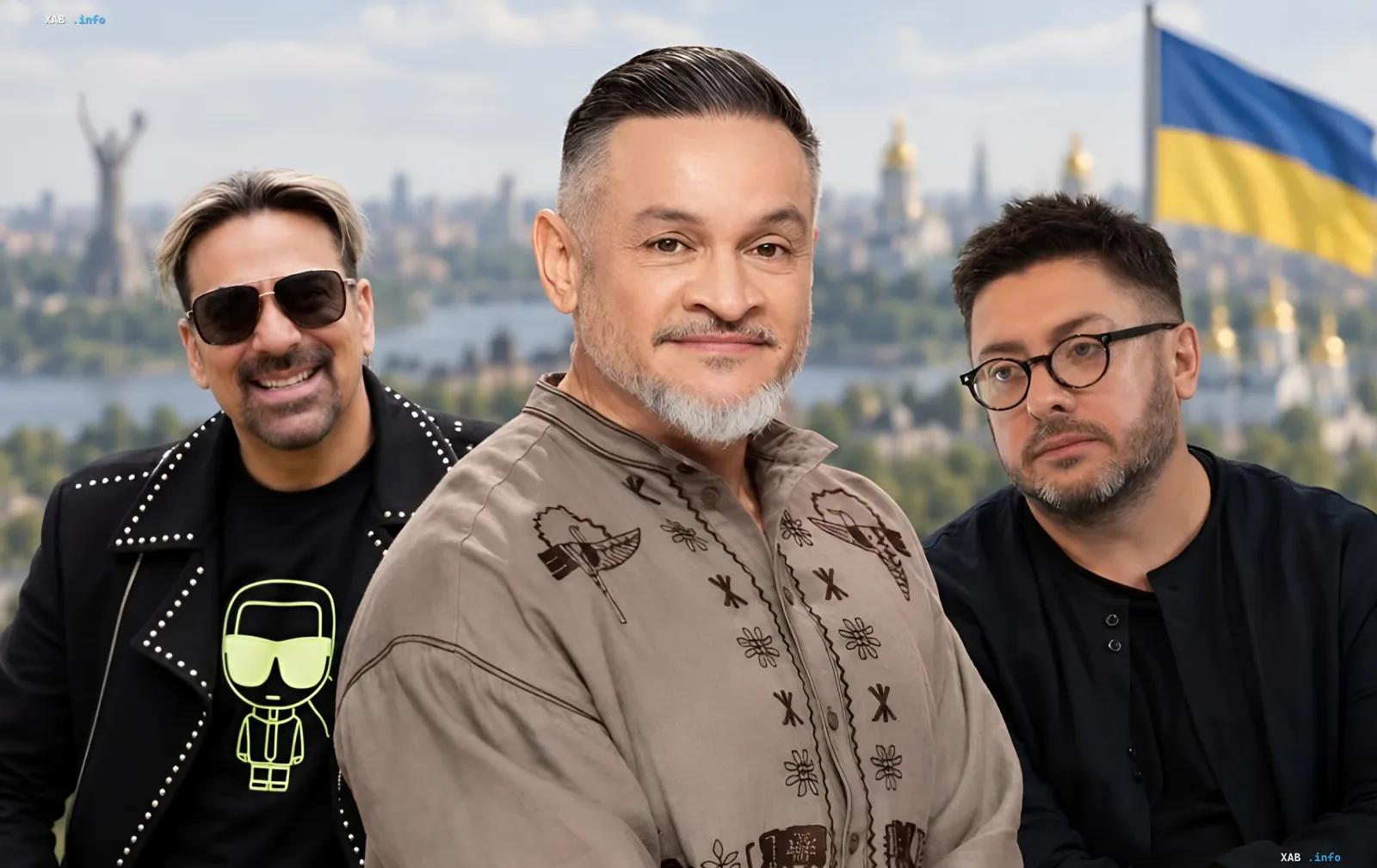
For many foreign residents of the country, Ukrainian was not their native language, and some of them only encountered it after moving to Ukraine. They learned new words, got used to a different grammar, and then began using Ukrainian in their professional work and public life. The Styler project by RBC-Ukraine has gathered the stories of celebrities who have gone through this journey — from a Japanese journalist to an Italian chef. What unites them is one thing: they began mastering Ukrainian only in adulthood, through study, daily conversation, and constant practice.
Japanese Journalist Takashi Hirano: From Tokyo to Ukrinform
Takashi Hirano is a Japanese journalist and photographer who has been living in Ukraine since 2008. His interest in the country began in his school years, and his systematic study of Ukrainian started at the Tokyo University of Foreign Studies. After moving to Ukraine, Hirano first taught Japanese at Lviv National University, then worked at the Japanese embassy, and in 2018 became an editor of the Japanese-language version of Ukrinform. Having immersed himself so deeply in Ukrainian culture that he writes about Ukraine in Japanese, in 2020 he published a book in Japan titled "Ukrainian Fan-Book," dedicated to Ukrainian cuisine, language, culture, and traditions.
Chef Hector Jimenez-Bravo: "Not Everything at Once, but Step by Step"
The Colombian-Canadian chef Hector Jimenez-Bravo has been living and working in Ukraine for many years. In his own words, after the move he first studied Russian, since that was the language his surroundings spoke with him. His active mastery of Ukrainian began only after the start of the full-scale war. In 2025, Jimenez-Bravo admitted on social media that he is still learning Ukrainian and showed a lesson with a teacher: "Not everything comes easily at once, but I am improving my knowledge step by step." Thus, his story is not about instantly mastering a language, but about systematic learning and daily practice.
Amador Lopez and Ivan Lyulenov: From Russian-Language Content to Ukrainian
Venezuelan choreographer, singer, and showman Amador Lopez came to Ukraine more than 20 years ago, built his career here, created the group Rumbero's, and in February 2022 obtained Ukrainian citizenship. The artist emphasized that it was important for him to speak Ukrainian, and after receiving a Ukrainian passport he demonstrated this even more actively in public life. Moldovan humorist and singer Ivan Lyulenov, who became known to the Ukrainian audience thanks to the "League of Laughter," worked predominantly in Russian before the start of the full-scale invasion. In an interview with RBC-Ukraine, he said that he changed the language on his phone, started watching Ukrainian shows, and gave up Russian-language content. In his words, constant exposure to a Ukrainian-language environment helped him gradually start speaking Ukrainian. Lyulenov also began writing and releasing Ukrainian-language songs.
Alexey Sukhanov and Marco Cerruti: Ukrainian as Part of a Public Image
TV presenter Alexey Sukhanov was born in Russia, but has been working in Ukraine since 2012. A few years later he mastered Ukrainian and became one of the most prominent TV presenters consistently using it on air. In 2019, Sukhanov passed an exam and received a Ukrainian passport. Today, the Ukrainian language is an integral part of his public image. Italian chef Marco Cerruti, who has been living in Ukraine for many years, began learning the language right here. In 2023, while presenting his YouTube channel, he explicitly noted that he is actively studying Ukrainian and wants to communicate in it more and more in his videos. Now Cerruti travels around Ukraine, talks with local residents, and tells about the country's culinary traditions in Ukrainian.
Contradictory Data
Regarding Hector Jimenez-Bravo, a discrepancy is recorded in open sources. On the one hand, Styler and UNIAN report that the chef "has been living and working in Ukraine for many years" and continues to study the language, showing lessons with a teacher. On the other hand, the publication Focus (2026) publishes an article with a headline indicating that Jimenez-Bravo "left Ukraine and showed the reason." The difference in wording — "left" (a possible temporary trip) versus the steady narrative of permanent residence — does not allow his current status to be determined unambiguously. Jimenez-Bravo himself has not given a public comment about a move in available statements, so both versions remain in the field until clarification.
Thus, the stories of Hirano, Jimenez-Bravo, Lopez, Lyulenov, Sukhanov, and Cerruti differ in their starting points and the speed of language acquisition, but they are united by a common principle: Ukrainian was learned not in school years, but through a conscious choice, daily practice, and professional necessity.