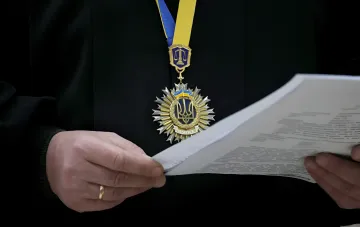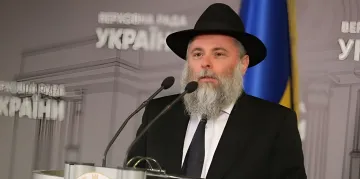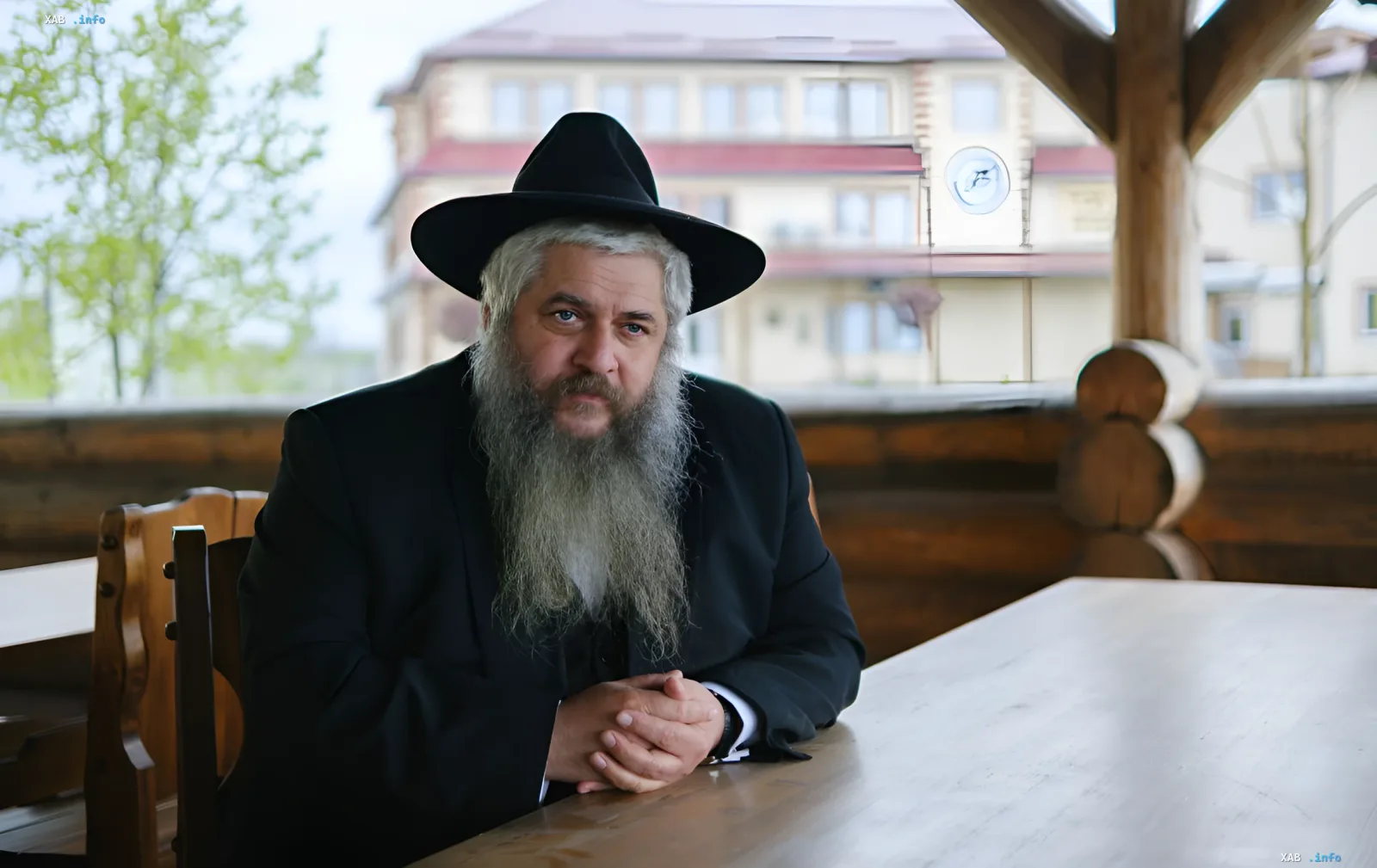
A debate has erupted in Ukrainian society over the involvement of a religious leader in a high-profile court case. At a hearing on August 24, the Chief Rabbi of Kyiv, Yonatan Markovich, was present in court and asked to be named as bail for the defendant — former Deputy Head of the Presidential Office, Iryna Mudra. Law enforcement suspects her of participating in a scheme to launder funds obtained illegally, with the proceeds then directed toward bail for former Energy Minister Herman Halushchenko. On August 25, the court selected detention as Mudra's preventive measure, with the possibility of posting bail in the amount of 20 million hryvnia. Against this backdrop, a reaction emerged from the country's top religious leadership.
A Personal Initiative, Not the Community's Position
In a comment in response to a request from RBC-Ukraine, Ukraine's Chief Rabbi Moshe Reuven Asman emphasized that Rabbi Markovich's statement of willingness to act as bail was his own personal initiative and does not reflect the position of the Jewish community as a whole. According to Asman, when a person in a high-profile court case draws attention to their religious status, those around them perceive it as leveraging the authority of the entire religious community.
Criticism of the "Mixing of Roles"
Moshe Reuven Asman openly called such an approach erroneous and stated that he categorically does not support the mixing of religious and judicial roles. Ukraine's Chief Rabbi noted that religious leaders should strengthen unity, support people, and foster public understanding, rather than dragging religious communities into political and judicial confrontations. "The law must be the same for everyone. Responsibility must be personal," he concluded.
Condemnation of the Wave of Antisemitism
Separately, Asman categorically condemned the wave of antisemitism that arose in connection with Yonatan Markovich's decision. He stated that no single rabbi's action gives anyone the right to insult the Jewish people, spread antisemitic stereotypes, or blame an entire community. In his words, substituting hate based on national identity for reasoned criticism "has nothing to do with justice," and antisemitism "cannot have any justification."
Call for Unity Amid War
Concluding his comment, Ukraine's Chief Rabbi noted that in the conditions of a full-scale war, Ukrainians must unite rather than seek reasons for mutual discord. His words sounded as an attempt to draw a line between the personal responsibility of a specific individual in court and the inadmissibility of transferring the conflict onto the entire religious community, as well as a call for dialogue instead of the escalation of nationalist sentiments.