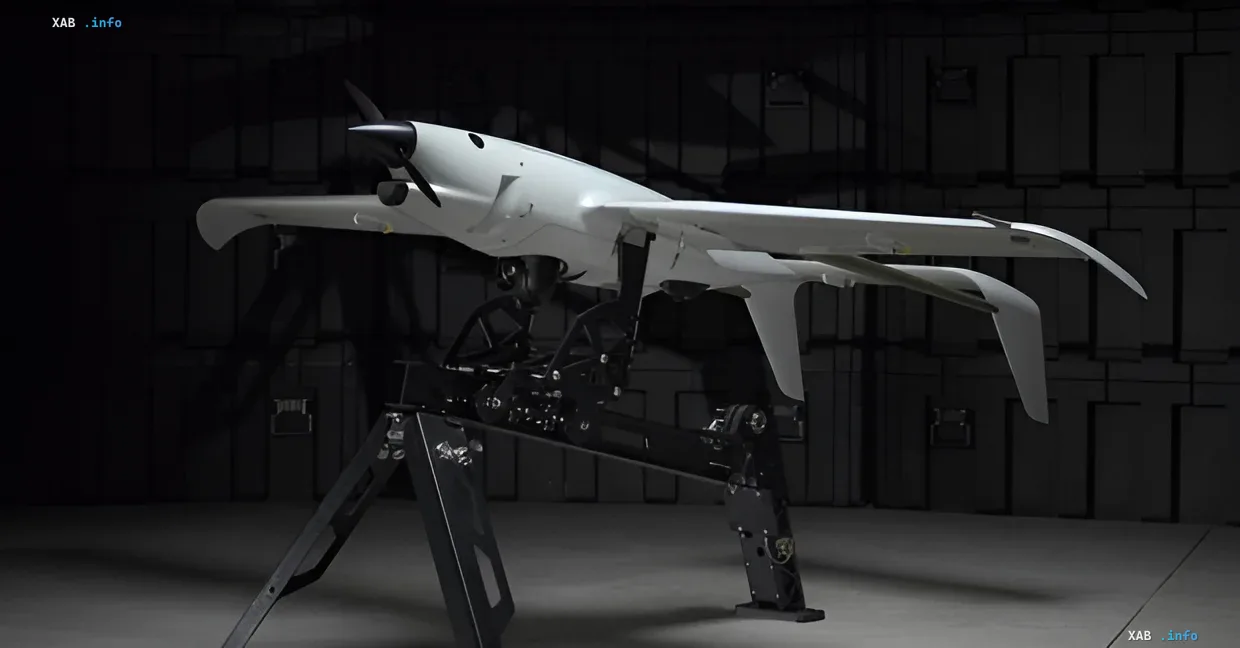
What remained a top-secret military asset costing billions of dollars for decades has now become a mass-market commodity. The era when creating "stealth aircraft" required closed factories and secret production lines is coming to an end. Now, the ability to hide from radar can be purchased in cans of paint.
In Shenzhen, the company Star-Navi has begun commercializing technology that was previously the domain of superpowers. Their development — the XRAM-C series of radar-absorbing coatings — is designed for drones. The principle of operation of the material is simple and effective: it absorbs the energy of radar waves, converting it into heat. As a result, the reflected signal weakens, and the target on the enemy's radar screen either shrinks or disappears entirely.
An Engineering Approach to Camouflage
The developers did not limit themselves to a universal solution. The XRAM-C line includes three types of coatings, each tailored to a specific task. One is effective against fire control and interception radars, another against reconnaissance systems, and the third offers a compromise solution for a wide spectrum of frequencies. This indicates a deep understanding of the principles of modern air defense systems.
The effectiveness of the material is impressive: the coating provides signal attenuation of up to 3–3.5 decibels in certain ranges. At first glance, the figure seems modest, but the physics of the process are such that the energy returning to the radar is reduced by approximately half. For air defense systems, such signal loss is critical — it significantly complicates the recognition and tracking of aerial targets.
Technology Accessibility
Star-Navi's main advantage is ease of application. The coating is applied with a standard spray gun to a prepared surface and cured in a standard way. This eliminates the need for expensive factory equipment. The technology can be used by both major drone manufacturers and field military units.
The company sells the product in packages of 1, 5, and 10 kilograms. This makes the technology accessible for direct purchase by end users, bypassing complex supply chains. Star-Navi is not the only player in this market: in Turkey, researcher Yunus Ince is developing a similar material, Kürsat 3.0, with even higher performance. The general trend is obvious: the ability to reduce detectability is no longer built into the aircraft design at the design stage but can be added as an "upgrade" at any time.
New Challenges for Air Defense Systems
The mass spread of such coatings threatens the effectiveness of existing defense systems. Most modern radars, installed for both military and civilian purposes, are designed to detect drones with a high radar cross-section. If "invisible" paint becomes the standard, air defense developers will have to find new solutions.
The open nature of this technology has serious geopolitical consequences. Since the product is available for free sale, it is accessible to all players in the market. This means that Russia, which has sharply increased drone production, can use these materials to reduce the visibility of its strike vehicles. However, the lack of an exclusive owner of the technology opens equal opportunities for Ukraine, which can officially purchase and apply this solution to protect its drones.


