China's semiconductor industry, a key element of the state's technological sovereignty strategy, is entering a new stage of development. According to recent data, the "Big Fund" (National Integrated Circuit Industry Investment Fund), the main financial instrument supporting the sector, has moved to the implementation of its third phase. While previous stages focused on building a broad production base, the current strategy, implemented in 2026, is betting on breakthroughs in advanced chip packaging, the production of critical equipment, and the development of specialized processors for artificial intelligence.
Evolution of state support: from 2014 to 2026
The history of the "Big Fund" spans more than a decade, during which it has gone through three key stages of transforming China's microelectronics. The first phase, launched in 2014 with funding of over $19 billion, laid the foundation for the industry. During this period, funds were distributed among 75 projects across 23 companies, allowing giants such as SMIC and HuaHong (contract manufacturing), as well as JCET and Tongfu Microelectronics (chip packaging), to enter the market. It was thanks to the first phase that China was able to create the basic infrastructure for mass semiconductor production.
The second phase, launched in 2019 against the backdrop of tightening US sanctions against Huawei, was aimed at import substitution and strengthening the industry's independence. The amount of funds was about $30 billion. During this period, the fund actively invested in memory (YMTC, CXMT) and lithography. In particular, SMIC received about $1.5 billion, and the fund's stake in YMTC's capital reached almost 23% (in total over two phases). This allowed Chinese manufacturers to maintain their positions in the domestic market and begin to displace Western competitors in the consumer electronics segment.
Third phase: focus on "bottlenecks" and AI
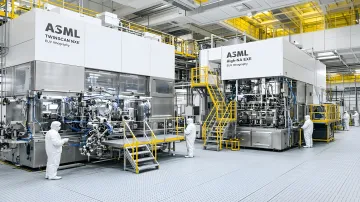
The third phase, launched in 2024, radically changes the investment vector. In the context of technological pressure and the need to overcome restrictions on access to advanced equipment, the fund has focused on three priority areas: advanced chip packaging (Advanced Packaging), the production of its own equipment and materials, and the development of AI chips. Experts note that this is an attempt to bypass lithography limitations by improving architecture and die packaging, which allows increasing performance even when using older process technologies.
In the packaging sector, investments have already been recorded in companies such as Tiansui Xinyuan Technology and Anhui Juhe Microelectronics. Special attention is being paid to the production of HBM (High Bandwidth Memory) type memory, which is critical for the operation of neural networks. In the AI chip segment, the state supports the creation of general-purpose accelerators and the development of high-speed data transmission interfaces, which is necessary for building efficient data centers.
Contradictory data
Although official rhetoric and reports from analytical agencies, such as TrendForce, point to a clear strategy of the "Big Fund", there are discrepancies in the assessment of the effectiveness of these investments. On the one hand, data indicates that Chinese AI chips captured up to 79% of the domestic market in 2026, which speaks to the success of the import substitution policy. On the other hand, Western analysts and reports (for example, in materials from the publication Vedomosti) indicate that the US continues to tighten restrictions, trying to "strangle" Chinese AI, which casts doubt on China's ability to independently scale the production of advanced chips without access to Western equipment.
Furthermore, there is uncertainty regarding the specific amounts allocated to individual projects within the third phase. While some sources report massive investments in companies such as DeepSeek (with a valuation of $45 billion), other data suggests that the fund may only lead funding rounds rather than fully covering expenses, which requires attracting private investors in conditions of high market volatility.
Global consequences and forecast
The shift in priorities of the "Big Fund" has far-reaching consequences for the global semiconductor market. China, with its huge domestic market, is creating a closed production cycle that could become an alternative to the Western ecosystem. Investments in packaging and materials allow Beijing to reduce dependence on the import of finished solutions. However, the success of this strategy depends on the ability of Chinese engineers to overcome technological gaps in the field of photolithography and software development for chip design.
In 2026, China continues to demonstrate ambitious plans to dominate the AI sector, using state resources to accelerate development. Despite external sanctions, the "Big Fund" remains a powerful tool capable of mobilizing resources to solve strategic tasks. The future of the industry will depend on whether China can turn its investments into real technological breakthroughs capable of competing with global leaders not only in the domestic but also in the global market.