End of Dominance: NVIDIA and AMD Lose 90% of the Chinese Market
By the end of 2026, the Chinese market for artificial intelligence chips is expected to undergo radical changes, according to the TrendForce research center. The share of leading American tech giants—NVIDIA and AMD—in this country is expected to drop to a critical level of 10 percent. This unprecedented decline is directly linked to the tightening of export restrictions by the US and the rapid strengthening of local manufacturers' positions.
Multiple bans introduced by the Washington administration in recent years have effectively forced the Chinese market into a "closed mode." Supplying foreign semiconductors has become a complex logistical and legal challenge, forcing Chinese companies to mobilize internal resources and accelerate the development of their own solutions.
Rise of Chinese Titans: Huawei, Cambricon, and Big Tech
In the context of isolation from Western technologies, Huawei is clearly becoming the market leader, offering alternatives that were previously a monopoly for NVIDIA. Cambricon is also considered one of the strong players, actively filling niches for specialized computing. Furthermore, Chinese IT giants—Alibaba, Baidu, and Tencent—have ceased to be just consumers of chips. They are actively developing their own specialized AI processors and deploying them in their data centers, creating a closed loop of development and consumption.
New Reality: NVIDIA GeForce 5000 and Compromises
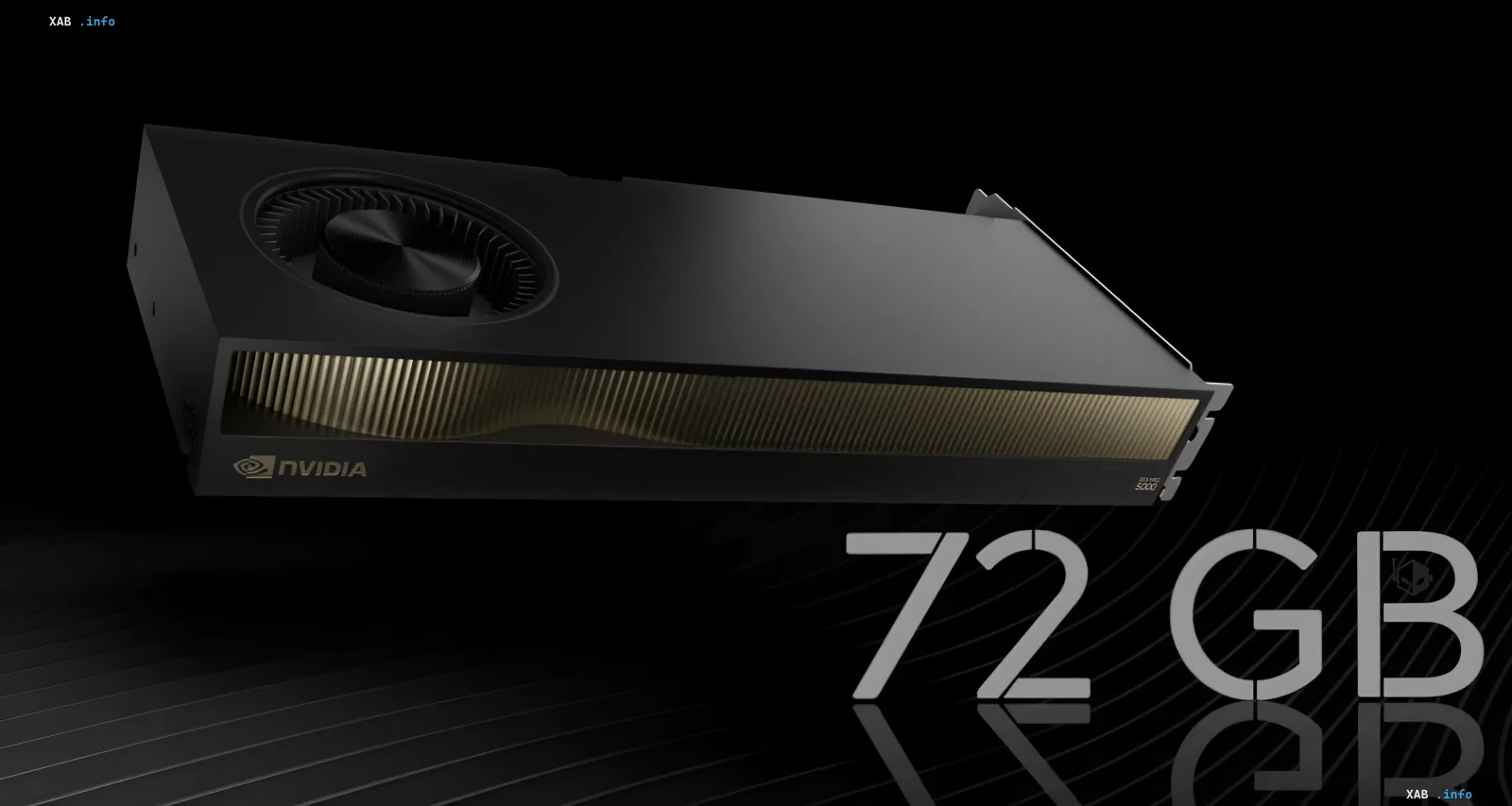
In response to restrictions, NVIDIA is adapting its products. A video card appears on the market that, based on visual data and markings, seems to belong to the GeForce 5000 series. The device is equipped with fast GDDR7 memory with a capacity of 48 or 72 GB. Although this product is not a full-fledged specialized AI accelerator in the form known to data centers, it fully meets the requirements of US sanctions. The key factor here is price: such a video card is significantly cheaper than specialized AI chips, making it attractive for a wide range of tasks where extreme model training performance is not required.
Contradictory Data
While the general trend points to a decline in NVIDIA's share, documents show evidence of the resumption of individual deals. According to reports, the company ZTE received a license to purchase NVIDIA H200 chips, which contradicts the thesis of a complete market closure. Analysts note that this may be due to narrow exceptions or temporary relaxations, but the general vector of market movement remains unchanged—in favor of localization. Thus, we observe a divergence between the strategic forecast of a share drop to 10% and tactical targeted purchases.