
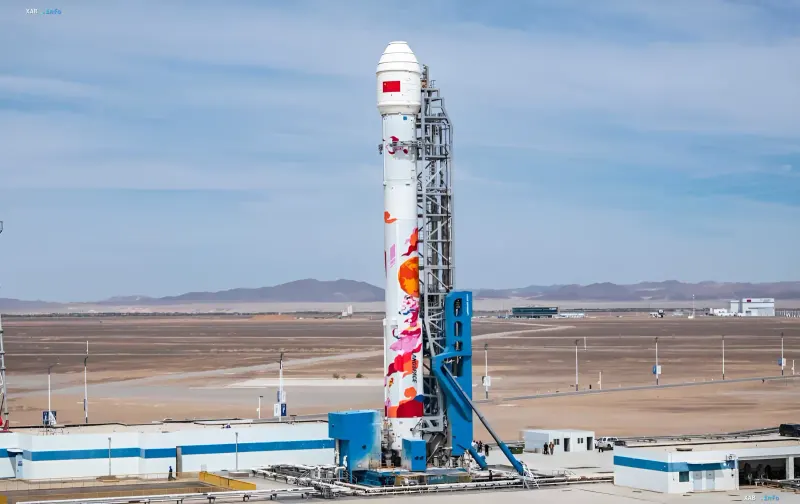
An event has occurred in space that has caused space flight safety specialists to sound the alarm. The upper stage of the Chinese commercial rocket Zhuque-2E unexpectedly disintegrated in orbit, creating a cloud of dangerous debris in the zone where the International Space Station (ISS) and a significant portion of the Starlink satellite network are located.
Accident after a successful launch
The incident occurred shortly after the rocket successfully completed its mission. On June 9, the LandSpace company's vehicle placed two direct mobile communication satellites into orbit. It seemed that the launch went without a hitch, but fate took different paths for the payload and the rocket itself.
According to experts, the disintegration occurred at the moment when the stage was supposed to perform a final maneuver for a safe deorbit. The fact of the explosion was officially confirmed by the US Space Force.
Scale of space debris
The reconnaissance company LeoLabs assessed the consequences of the accident. As a result of the explosion, between 100 and 150 new fragments of space debris were formed. The rocket's second stage had impressive dimensions: about 8 meters in length and more than 3 meters in diameter.
Currently, these debris are orbiting at altitudes between 335 and 424 kilometers above the Earth. The upper limit of this orbit intersects the trajectory of the ISS, which theoretically creates risks for the station. However, specialists reassure that due to atmospheric aerodynamic drag, the debris will quickly descend below the station.
The Chinese debris poses a much greater threat to hundreds of Starlink satellites. In particular, new direct-to-smartphone devices flying at lower altitudes are at risk.
Experts note that at this altitude, the atmosphere will quickly slow down the Zhuque-2E debris, and most of them will burn up completely upon reentry within a few months.
Alarming statistics
Although the current situation is under control, the general trend causes serious concern among scientists. Over the past five years, the mass of Chinese rocket debris in long-term orbits has increased by more than 150%. This is due to the fact that Beijing is actively increasing launches of its own mega-constellations to compete with SpaceX.
Old rocket bodies are considered one of the most dangerous sources of debris due to their large size, residual fuel, and high gas pressure, which often leads to explosions.
LeoLabs senior technical officer Darren McNutt called this specific incident a "minor problem for space safety," but added that the overall trend is unsatisfactory. According to him, Chinese rockets regularly explode in Earth's orbit.
"Three out of four major breakup events in low Earth orbit are of Chinese origin, with two of these events resulting from explosions of Chinese rocket bodies in the last four years," McNutt summarized.


