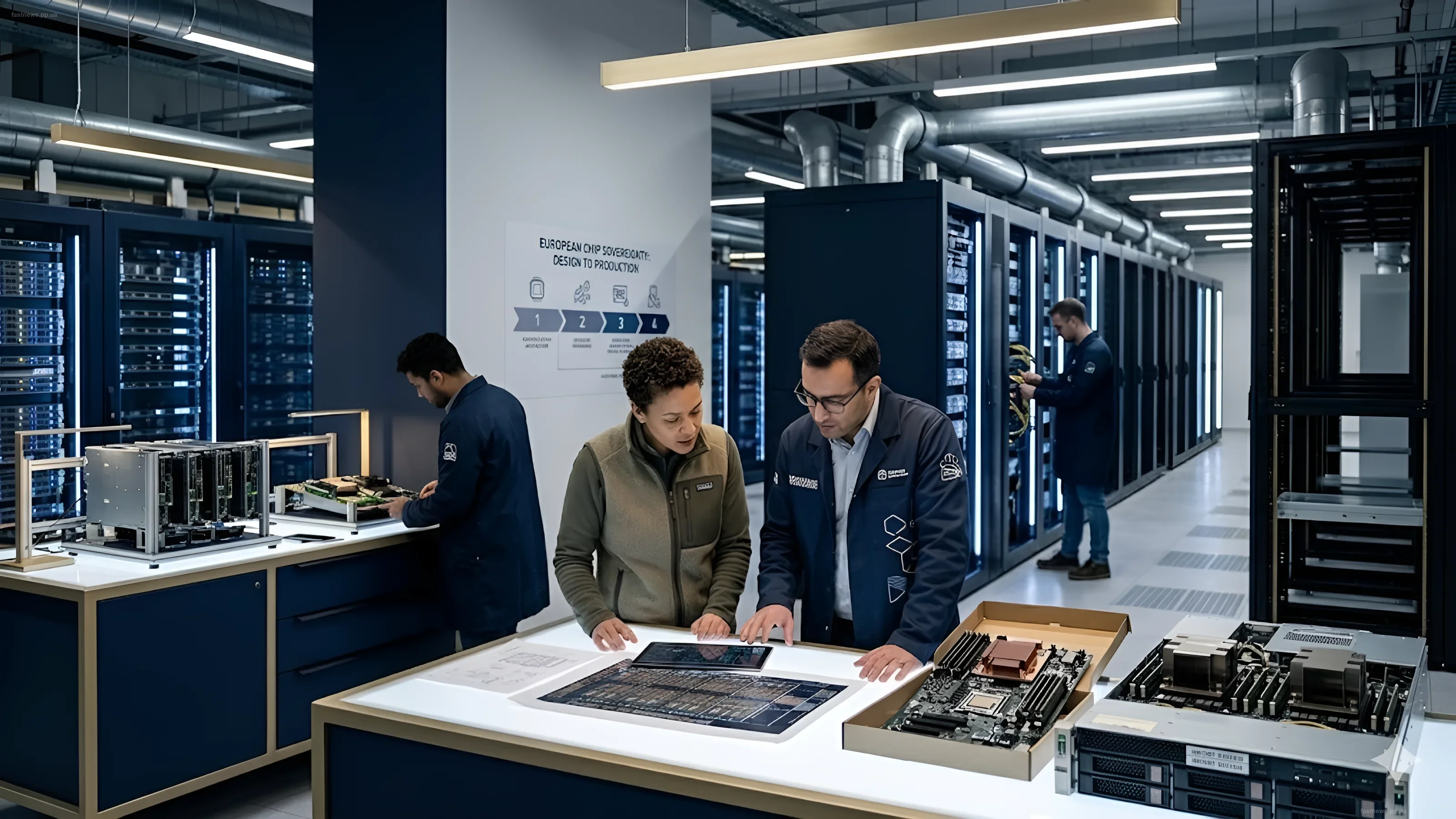
French startup Mistral AI, which has become the main European competitor to OpenAI, has made a bold move. The company's CEO, Arthur Mensch, publicly confirmed plans to develop its own artificial intelligence chips. This decision radically changes the balance of power in a market dominated by American giants and their ecosystem.
While Mistral remains a major consumer of Nvidia accelerators, management is already testing prototypes of its own hardware platform. The logic is simple: owning the "hardware" allows for a radical reduction in the cost of generating tokens—the basic units on which neural networks operate. Mensch does not hide the fact that owning proprietary chips is a matter of time, not desire.
From Software to Silicon: A New Survival Strategy
Mistral's strategy mirrors the path taken by Amazon, Google, Meta, and Microsoft. These corporations have long abandoned total dependence on third-party processor suppliers, switching to specialized microchips (ASICs). This approach provides full control over the "hardware — software — model" chain, allowing performance to be optimized for specific tasks and reducing costs.
However, creating chips is only part of the equation. In parallel, Mistral is conducting a massive infrastructure expansion. The company has invested about €4 billion in building data centers in France and Sweden. The new center launched in France is specifically focused on inference—the stage where a trained model responds to user requests.
AI as Europe's New Oil
Arthur Mensch draws a direct parallel between the current situation and the energy crisis. For him, AI and computing power are strategic resources comparable to gas. Without its own infrastructure, Europe risks losing technological sovereignty and economic competitiveness. This is why many laboratories experiencing an acute shortage of power are turning to Mistral for access to their data centers.
The company is also expanding its product line by launching the Vibe platform. This is a corporate agent capable of autonomously performing work tasks: from writing texts to creating, testing, and deploying software code. Thus, Mistral enters the direct battlefield with OpenAI and Anthropic.
Reality vs. Ambitions
Despite ambitious plans, the gap between the European leader and American monsters remains colossal. Mistral expects to reach revenue of €1 billion by 2026. For comparison: OpenAI generated about $20 billion in 2025, while Anthropic expects almost $11 billion already in the second quarter of next year.
The fight for leadership in artificial intelligence has entered a new phase. Now it is not just a race of models, but a competition of infrastructures. Without its own data centers and chips, competing with American giants is becoming practically impossible. Mistral is betting that Europe is ready to support this leap, turning AI into the foundation of the national economy.


