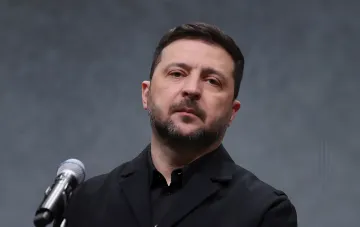
The war in Ukraine, which began in 2022, has cut off Eastern Europe from the main confrontation of the era — the artificial intelligence race and the restructuring of human society within a new technological paradigm. The symbolic coincidence of dates is hard to overestimate: the destruction of the post-war world order through Russian aggression coincided with the emergence of the first mass chatbots, previously considered a curiosity for a narrow circle of researchers and enthusiasts. The Turing test, which at the start of the decade still looked like an unbreakable barrier to machine intelligence, has turned into anachronism in four years. The question of whether a machine can effectively simulate human speech has been finally resolved — and this is precisely what makes AI regulation a central political issue of the coming years.
2026 Elections: The First AI Referendum
The results of the 2026 US elections, which ended in a crushing defeat for candidates associated with Donald Trump according to observers, are analyzed in Ukraine primarily through the lens of prospects for a just peace. However, behind this practical question lies a deeper shift: artificial intelligence regulation has already influenced the choice of American voters. According to analysts, the social and economic consequences of AI implementation in the coming years will determine the structure of political confrontation on the planet. The key choice humanity is making right now can be formulated as follows: either technologies will be placed at the service of institutions that proved their worth after the most destructive war in history — human rights, universal suffrage, the social insurance system — or these institutions will be destroyed in the name of unbridled technological progress.
"Technofascism" as a Pragmatic Movement
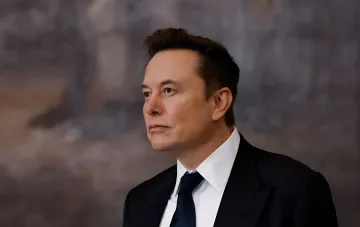
The proponents of the second path are a group of entrepreneurs focused on concentrating unimaginable power in their hands — financial, media, political, and engineering all at once. According to analysts, this is the future closed group of trillionaires, with Elon Musk as its first representative. The idea that human beings are an obstacle to progress and that engineers should discard human institutions for the efficient development of technology was discussed fifteen years ago by individual visionary philosophers led by Nick Land. By 2026, this has become a fully pragmatic movement that has found an ally in Donald Trump. Europe acts as the natural opponent of this movement; it is objectively unable to compete with California and China in digital technologies and cannot retreat from the concept that people are more important than technological acceleration.
Europe's Weakness as a Resource for Resilience
The thesis of Europe's weakness has become a common place, but the assessment of strength depends on the coordinate system. The European Union was designed by Jean Monnet and Robert Schumann to lack a single center of power — in order to avoid the concentration of power and prevent new wars on the continent. The notorious inefficiency of European bureaucracy can simultaneously be seen as a property of resilience in this system. Jürgen Habermas spoke about this before his passing; now Slavoj Žižek reflects on the idea of Europe as a value worth defending. Under these conditions, a "weak" Europe becomes a chance for people to find a balance between their own interests and the pace of the technological revolution.
Two Paths to the Cancellation of Humans
Political analysts have for decades described events as a confrontation between new dictatorships and old democracies, but by 2026 this picture can be refined. Two paths have emerged for the concentration of power and the cancellation of the people who hinder it. The first is represented by dictatorships led by China, which has put digital tools at the service of state security. The second is implemented by Musk and his like-minded peers, who claim technological führer-ship over humanity and the destruction of democratic institutions as outdated and inefficient. Analysts note that Musk and Trump are flirting with Vladimir Putin as China's junior partner rather due to a community of goals and values than because of intelligence operations.
Cavalry from "Red" Texas
Ukraine, as a country doomed to be Europe, finds itself in a knowingly losing position in the face of the value alliance between digital dictatorships and Western technofascists. However, the cavalry came from an unexpected quarter. In "red," meaning Republican, Texas, where Elon Musk moved his business and where he spent about $220 million supporting the electoral campaign of his favorites, his opponents won. James Talarico, a young representative of the Democratic Party, was elected senator in Texas. He calls for returning power to ordinary people — working people — whose interests, in his words, do not coincide with the project of limitless technological acceleration. This victory, albeit local, became the first signal recorded in 2026 that the electorate in the US is capable of rejecting an ideology where a human being is viewed as an annoying obstacle on the path of progress.