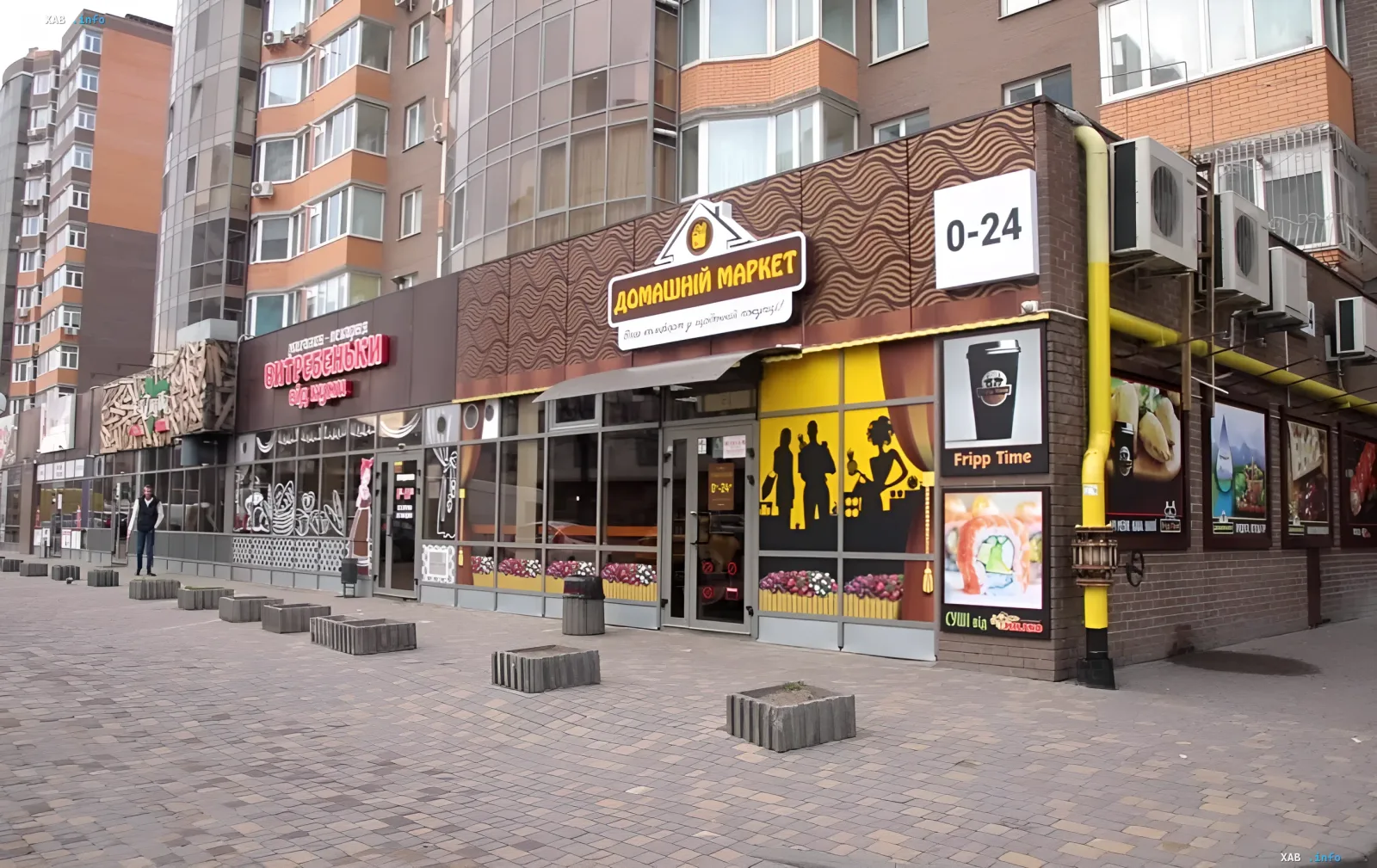
The Ukrainian FMCG market is experiencing one of its most dramatic moments in recent years. The financial collapse of 'Alliance Retail Group' (ARG), which managed the 'Domashniy Market', Mashket, Osnova, and PRO Just Products chains, marked a loud finale to the story of rapid expansion. The fall of the network, which counted 170 stores, is not just changing the balance of power but is also opening the way for a massive reshuffle of the market, where only those who can balance on the edge of profitability will survive.
From a Vinnitsa Start to a Debt Trap
The history of ARG began in 2021 in Vinnitsa. The company chose an aggressive development strategy, which in the first years seemed flawless. However, liquidity problems began to appear as early as 2023. Despite impressive revenue of 715 million hryvnias, the business became unprofitable for the first time. The warning signals were clear, but the company continued to move forward.
2024 proved to be a fatal year for the network. In an attempt to compete with market leaders, ARG opened 67 new outlets. The strategy had a short-term effect: revenue grew by 70%. But the price of this growth turned out to be too high. The company's debts jumped from 152 million to 328 million hryvnias. The attempt to attract a new partner — Vitaliy Pavlyk with the LIGA PRIM chain — did not save the situation. As of 2025, the debt burden reached 408 million hryvnias, and the staff was reduced by almost half. Today, the enterprise has effectively turned into a 'buffer' for writing off obligations to suppliers.
The Domino Effect: Who is Next?
The bankruptcy of ARG is not an isolated case, but a symptom of a deeper process of consolidation in Ukrainian retail. Most regional networks operate on the edge of profitability, receiving net profits in the range of 0.05% to 1%. Their development is financed not from their own funds, but thanks to trade credits from suppliers and bank loans.
Experts note that regional retailers with a network of 10–50 stores are becoming ideal targets for acquisition. They have a ready-made infrastructure, a formed client base, and often own or have long-term premises. However, as Anna Anisimova, Commercial Director of GDS, notes, they cannot withstand competition with national players in terms of logistics, IT, and operational efficiency.
Candidates for Acquisition and New Players
Among the likely candidates for M&A (mergers and acquisitions) in 2026 are the 'LotOK' network due to operating losses and Delvi due to high debt dependence. Major players have already started active actions: Fozzy Group acquired the 'Bodryy' network (171 stores), and 'Kopeyka' absorbed 9 'Gurman' stores.
In the west of the country, a new powerful conglomerate is forming based on Berta Group and TORBA, which could become a serious competitor for market leaders. At the same time, ATB continues to build a 'fortress' on its own real estate, planning to open up to 5000 outlets. The 'Simi' network added 133 stores in 2025, setting an absolute market record.
Realistic Forecast: Triopoly and Niche Survivors
According to experts, a realistic scenario for the development of events is the formation of a pronounced triopoly in the mass market segment. The remainder of the market will be occupied by groups of regional operators that will be able to survive thanks to geographical and niche specialization.
The bankruptcy of ARG remains a verdict on the only model that definitely does not work: growth at the expense of others without one's own financial reserve of strength. The history of this network has become a harsh lesson for the entire industry: in modern retail, the speed of expansion should not exceed the speed of strengthening the foundation.


