
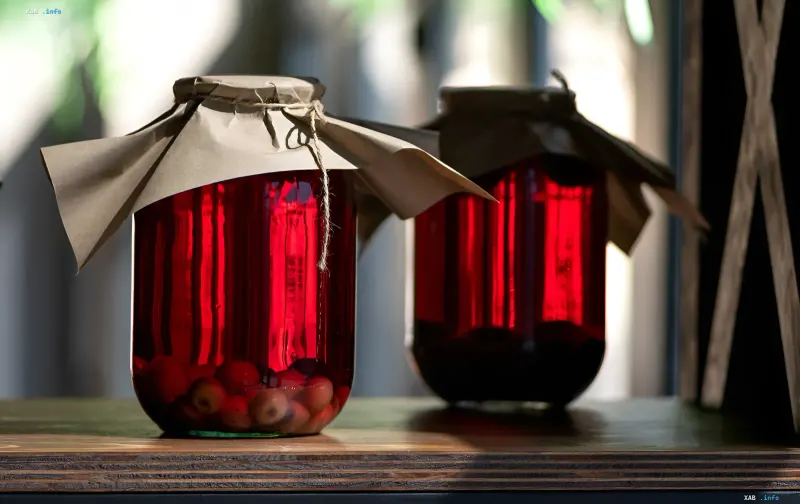
The era of hours-long sterilization of jars in huge pots and prolonged boiling of fruits is gradually becoming a thing of the past. In place of complex and energy-intensive processes, a preservation method is emerging that allows you to retain the natural taste, bright color, and maximum vitamins in the product. A stylish and simple recipe for compote without boiling, which guarantees reliable storage throughout the winter, was shared by the cook Tatiana Shlihtenko.
The secret of ideal taste and preservation
The main feature of this method lies in the correct balance of ingredients and the temperature regime. To ensure the drink turns out moderately sweet, with a pleasant sourness, and does not ferment until spring, it is necessary to strictly follow the technology. The process does not require complex equipment, but it demands attention to detail at every stage.
Step-by-step preparation instructions
To prepare one three-liter jar, you need to prepare the dishes and ingredients. The jars are thoroughly washed using baking soda and rinsed well with clean water. Metal lids must be boiled for several minutes for disinfection. Fruits or berries are sorted, washed, and allowed to drain excess moisture.
Next comes the stage of loading the components. Prepared fruits are placed in a clean jar, immediately covered with the required amount of sugar, and citric acid is added. This step is critical for creating a preserving environment.
The next stage is pouring. The water is brought to a boil and carefully poured into the jar to the very top to prevent the glass from cracking due to a sharp temperature change. Immediately after this, the container is hermetically sealed with a lid.
The "under the blanket" method instead of sterilization
The key moment, replacing prolonged boiling, is additional pasteurization. Immediately after screwing the lid, the jar is carefully turned upside down and tightly wrapped in a warm blanket or plaid. In this state, the container must stand for exactly twenty-four hours until it cools completely.
It is precisely the process of slow cooling under the "blanket" that ensures reliable preservation, killing bacteria and creating a vacuum. After complete cooling, the jars are returned to their normal position and moved for long-term storage. An ideal place for such preparations would be a cool cellar or basement.