
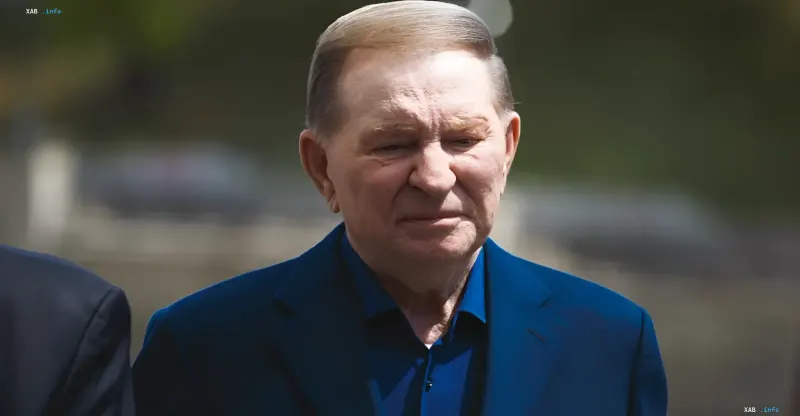
In the run-up to Ukraine's Constitution Day, the country's second president, Leonid Kuchma, made a statement that sheds light on the legal architecture of the Ukrainian state. In an interview with national media, the former head of state, who led the country from 1994 to 2004, emphasized that the list of administrative-territorial units enshrined in the Basic Law is an unchangeable legal foundation of sovereignty.
Architecture of Statehood
Leonid Kuchma, who took a direct part in the adoption of the Constitution on June 28, 1996, stressed that the fixation of 27 administrative-territorial components in the text of the law excludes the possibility of legal dismemberment of territories. According to him, current legislation contains strict "safeguards" that make it impossible to voluntarily renounce sovereign lands without going through the most complex procedures.
The single constitutional list, which forms the system of administrative-territorial organization, includes:
- The Autonomous Republic of Crimea;
- 24 oblasts, including Vinnytsia, Donetsk, Luhansk, Kherson, and others;
- Two cities with special status — Kyiv and Sevastopol.
Legal Barriers to Redrawing Borders
An analysis of the state's legal stability, conducted by the former president, indicates that any changes to the administrative-territorial structure require consensus among the highest institutions of power and civil society. Under current conditions, this excludes the adoption of compromise decisions that could harm territorial integrity.
The process of changing borders in Ukraine is regulated by strict legislative requirements. To amend the Constitution, a qualified majority in the Verkhovna Rada is required — no less than 300 votes. Furthermore, according to Article 73 of the Basic Law, questions regarding the change of territory may be resolved exclusively by an all-Ukrainian referendum.
Judicial Control and Martial Law
An additional level of protection is judicial control. Any amendments must undergo assessment by the Constitutional Court of Ukraine for compliance with Articles 157 and 158. Leonid Kuchma expressed confidence that there is no potential in the Ukrainian parliament to form a constitutional majority for the purpose of alienating territories.
Article 157 of the Constitution is of particular importance in the current situation. It explicitly prohibits amendments to the Basic Law under martial law or a state of emergency if these changes are aimed at liquidating independence or violating the territorial integrity of Ukraine. This provision serves as a powerful legal shield protecting the state from attempts to redraw borders during crisis periods.
Thus, Leonid Kuchma's statement emphasizes that Ukraine's sovereignty extends to its entire territory, which, within the existing borders, is integral and inviolable, according to Article 2 of the Constitution.


