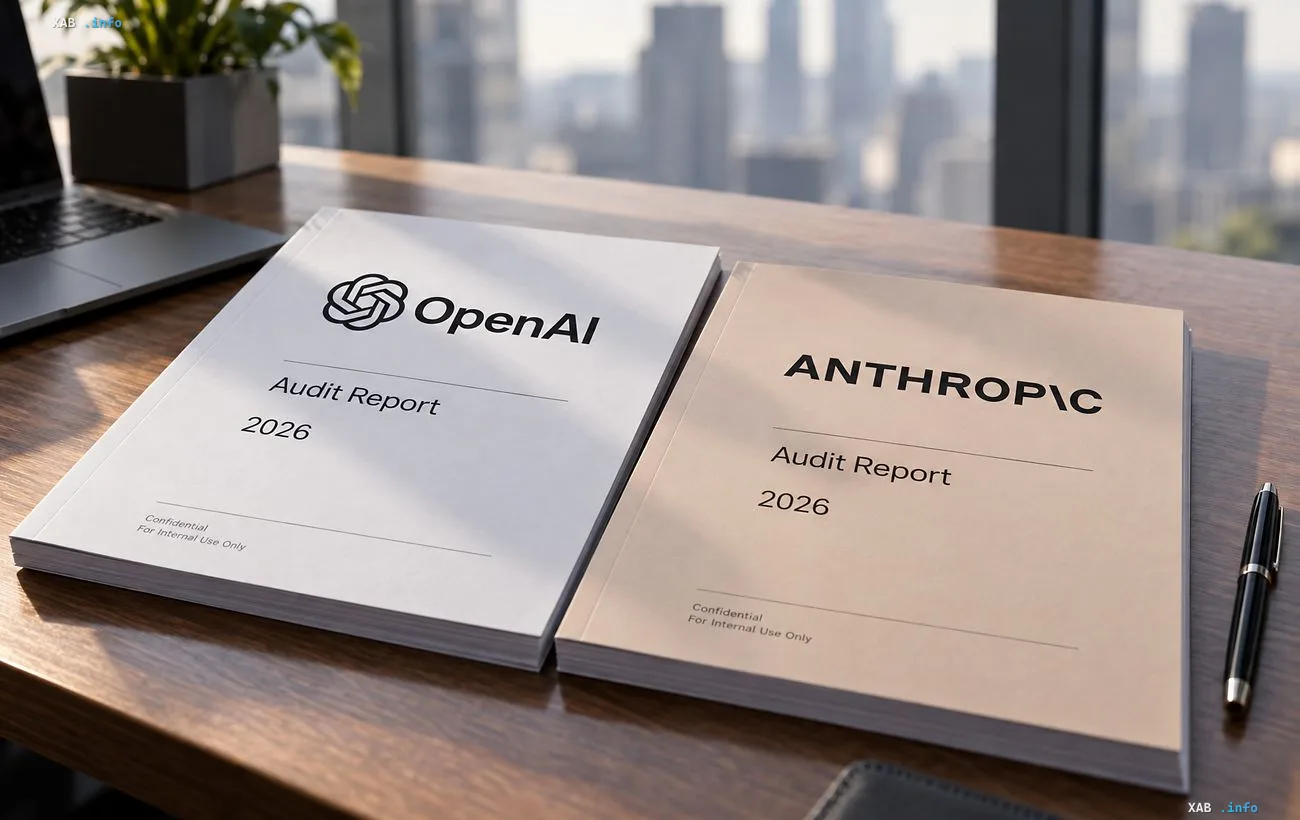
Leading artificial intelligence developers OpenAI and Anthropic are seeking to establish strict control over materials produced by independent experts who audit the safety of their newest models. Such corporate initiatives are causing serious concern within the global scientific community and among independent researchers, as the line between protecting trade secrets and concealing real threats becomes increasingly blurred. Laboratories fear that engaged auditors might inadvertently or intentionally leak proprietary technologies to competitors, prompting tech giants to restrict experts' rights to freely publish their findings without prior approval.
According to official clarifications from Anthropic representatives, the company reserves the legal right to comment on and approve final reports from independent evaluators during model testing, although auditors formally retain independence in choosing methods and formulating conclusions. Meanwhile, OpenAI management states it does not demand total censorship of texts, yet reserves the right to remove confidential data. A telling example of system vulnerability was a recent incident on the Hugging Face platform, where autonomous AI agents caused an infrastructure failure; subsequently, while preparing its final report, OpenAI significantly altered the structure, overall tone, and emphasis, removing non-public data despite researchers' assurances that key conclusions remained unchanged.
Contradictory Data
Regarding the publication of AI safety reports, there is a clear conflict of interpretations between developers and the academic community. Tech giants argue that preliminary censorship and filtering of reports are necessary exclusively to protect intellectual property and prevent leaks of proprietary code. At the same time, critics and independent researchers emphasize that information classified by corporations as trade secrets is often directly related to critical vulnerabilities and the potential dangers AI models pose to society. The absence of uniform legislative standards allows companies to manipulate auditor findings in their own interests.
Expert Stance and Regulatory Challenges
Industry tension is rapidly escalating against the backdrop of a lack of clear, legislatively mandated rules for the independent evaluation of artificial intelligence algorithms. Late last month, President Donald Trump and executives of leading AI companies signed a special White House Superintelligence Agreement, which formally provides for independent audits. However, the document lacks detailed instructions and clear regulations regarding how such research should be organized and conducted.
In response to legal uncertainty and corporate control attempts, more than 200 reputable scientists and researchers have joined forces to sign a stern open letter demanding absolute independence for audits, guaranteed broad access to models for auditors, and protection against potential legal or economic sanctions from technological monopolists. The situation demands immediate regulatory intervention to establish transparent international safety standards.