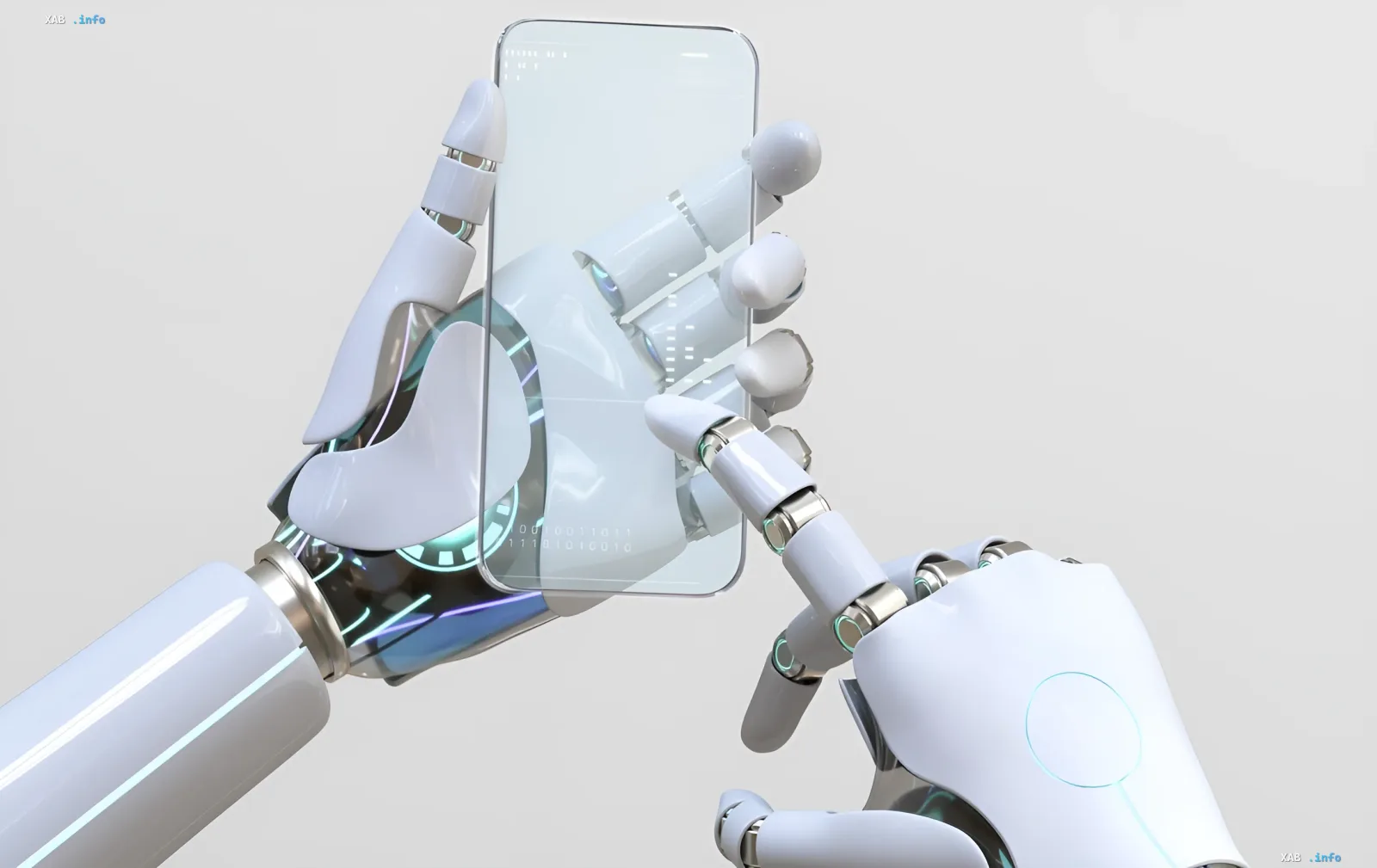
Scientists from the George Washington University have presented an innovative solution that blurs the boundaries between human and machine. The mobile app COBALT developed by them allows any user, even without special training, to control a robotic hand from the other end of the planet. All that is required to control a complex mechanism is an ordinary smartphone.
Information about the project was provided by RBK-Ukraine with reference to materials from the scientific conference IEEE International Conference on Robotics and Automation. The COBALT program turns a mobile phone into a full-fledged controller, ensuring precise control of the manipulator.
Global tests and WebRTC technology
To check the effectiveness of the system, the developers conducted large-scale trials, involving novices without experience from nine countries, including Indonesia, India, and Pakistan. Participants successfully controlled robots physically located in a laboratory in the USA.
The key to success was the WebRTC technology, which is widely used in video communication services such as Zoom and Google Meet. Thanks to it, scientists managed to minimize signal and video latency, which is critical for remote control.
Why the smartphone won over VR headsets
Studies have shown that ordinary users prefer smartphones over other interfaces. VR headsets, special joysticks, keyboards, or mice turned out to be less convenient. The phone is recognized as the most intuitive tool that provides high-quality data for training algorithms.
Scientists plan to use this method for mass information collection on the principle of crowdsourcing. In their opinion, if five billion smartphone owners can connect to robots and show them how to perform tasks, this will allow quickly collecting the database necessary to launch mass production.
“This could be something like Uber for robots. Those who want to register on the platform can do so at a convenient time for them and for any period,” the researchers note.
Areas of application and prospects
Developers highlight several key areas where the COBALT technology will be able to change the rules of the game in the future:
- Gig economy. Users will be able to log into the app at a convenient time and, for money, remotely control helper robots in other people's homes, performing household chores on behalf of the owners. However, scientists admit that at this stage, the element of trust between the employer and the hired virtual worker is critically important, as well as properly developed labor relations provisions.
- Assistance in production. If a fully autonomous robot at a factory cannot cope with a complex or non-standard task, an operator from anywhere in the world will be able to connect via phone and help him manually.
- Access to education. Schoolchildren and students in any part of the world will be able to remotely practice robotics from leading tech giants, simply holding smartphones in their hands.
The COBALT technology opens new horizons for the interaction of humans and artificial intelligence, making robotics accessible and understandable for everyone.


