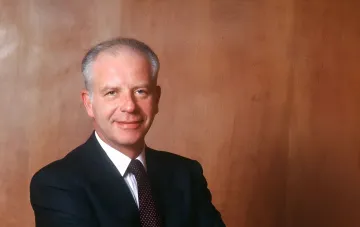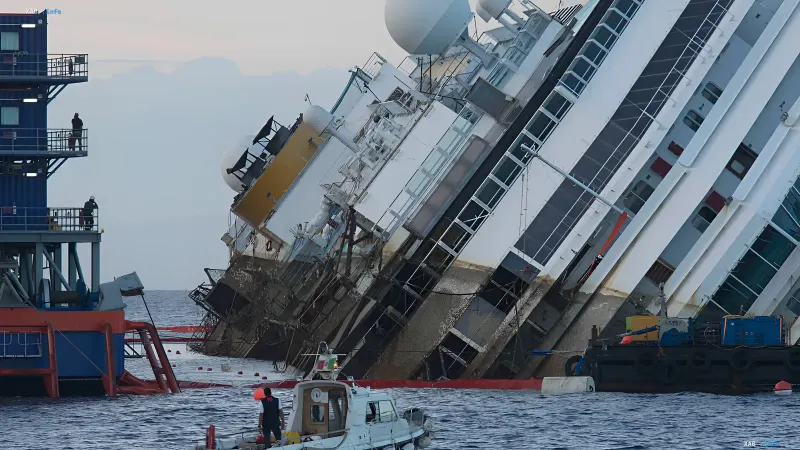
Former captain of the Costa Concordia cruise liner Francesco Schettino left Rome's Rebibbia prison on Friday evening, where he had been held since May 2017 — over nine years. As reported by the newspaper Quotidiano Nazionale on Saturday, the Rome Surveillance Court has allowed him to serve the remainder of his 16-year sentence under the supervision of social services. The decision was made following a thorough assessment of the convict's conduct in prison and the results of his participation in rehabilitation programs. According to the Corriere della Sera publication, Schettino will spend the remaining approximately six and a half years performing community service, the location and nature of which have not yet been disclosed.
Court ruling and conditions of release
Attorney Francesca Carnicelli, representing Schettino's interests, expressed satisfaction with the court's decision and emphasized that penitentiary officials had provided an exceptionally positive assessment of her client's participation in the correctional program. "In our view, there were all the grounds to grant this alternative measure of punishment, which is a logical continuation of the process that began after the sentencing," she declared. The measure is provided for by Article 47 of the Penitentiary Administration Act: it does not annul the final judgment and does not lift the responsibility established by the court, but allows the remainder of the term to be served outside prison as part of a special program. Adherence to its conditions is mandatory — otherwise, Schettino will return behind bars.
Chronicle of the disaster
The judicial proceedings began following the shipwreck that occurred on the night of January 13–14, 2012. At 21:45, the cruise liner Costa Concordia, owned by the Costa Crociere company and en route to Savona, struck the Scole rocks near the island of Giglio in the Tyrrhenian Sea. On board were over 4,200 people, including 111 Russian citizens. As the investigation revealed, the shipping company had a tradition of greeting residents and visitors to the island with ship whistles sounded at close range: the vessels approached without prior approval and without a sufficiently detailed map for charting a course close to the shore. As a result of the impact, a hole approximately 35.6 meters long formed in the port side, the ship tilted heavily, ran aground on rocks near Punta Gabbianara, and partially sank. At the time, it was the largest-displacement cruise liner to have been wrecked.
Sentences and the legal process
32 people died in the catastrophe — passengers and crew members; it is one of the most severe maritime disasters in Italian history. Particular outrage was caused by the fact that the ship's captain left the vessel among the first and refused to return to oversee the evacuation. The court of first instance in Grosseto, which began in July 2013, and subsequently the Florence Court of Appeal on May 31, 2016, upheld the sentence of 16 years in prison for Schettino, banning him from maritime professions for five years and increasing compensation payments to victims to 40,000–65,000 euros per person. The final sentence — 16 years and one month — was confirmed by the Supreme Court of Cassation of Italy on May 12, 2017; on the same day, Schettino voluntarily surrendered to Rebibbia prison. The defense also announced an intention to appeal to the European Court of Human Rights, but the complaint was not upheld.
What's next
Now the former captain is serving the remainder of his term outside prison. According to Corriere della Sera, in April 2025, Schettino had already declined the semi-freedom regime, which provided for a return to prison every night, due to the controversy that arose around this decision. Now, according to the Roman court's decision, he will be under the supervision of social services and performing community service. Any violation of the program's conditions will result in a return to prison, while the sentence and the responsibility established by the court remain in effect.