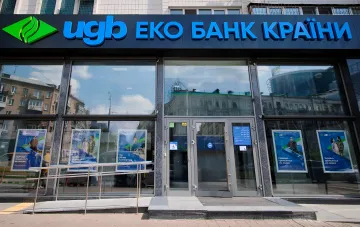
The Eastern Appellate Commercial Court, on 9 September 2026, upheld the first-instance court's decision refusing to approve the preventive restructuring plan of LLC 'Euroenergotrade'. The panel of judges hearing the company's appeal in case No. 905/39/26 found no grounds to overturn the earlier ruling. As a result, the company, whose debt to the state-owned 'Ukrgazbank' exceeds 1.35 billion UAH, did not obtain judicial approval of the restructuring plan it proposed, opening the way for the bank to pursue compulsory recovery of the outstanding debt.
Timeline of the Dispute: From a 1.2 Billion UAH Loan to Insolvency Proceedings
The conflict between 'Ukrgazbank' and 'Euroenergotrade' began in 2020, when the state bank extended the company a loan of over 1.2 billion UAH. The loan was secured, among other things, by accounts receivable under gas supply contracts — at the time the company was actively operating in the energy market. However, by the end of 2023 'Euroenergotrade' had stopped meeting its loan obligations, and the debt to the bank grew to approximately 1.35 billion UAH. After prolonged litigation, the parties reached a settlement agreement, but the company soon ceased to honour the agreed payment schedule again. On 29 January 2026 the Donetsk Regional Commercial Court opened preventive restructuring proceedings against LLC 'Euroenergotrade', and on 30 June of the same year it refused to approve the proposed plan, stating that it had no realistic prospect of implementation and was incapable of either preventing insolvency or ensuring the debtor's viability.
Sanctions Context and Links to the Firtash Group
In public materials, 'Euroenergotrade' was linked to businessman Yuriy Dubinsky. According to experts, the initiation of preventive restructuring in January 2026 was an attempt to freeze repayment of the debt to the state bank and to make it impossible to attach the company's accounts receivable from 'Khim Trade', which belongs to the group of the sanctioned businessman Dmytro Firtash. It was precisely these accounts receivable that constituted one of the key collateral for the loan granted by 'Ukrgazbank'. In 2025, a criminal case No. 42025110000000026 was opened against a number of companies in Dubinsky's circle on suspicion of violating the sanctions regime and cooperating with Firtash's companies. The media and analysts believe that the attempt to block repayment of the debt to the state bank through 'Khim Trade's' accounts receivable was made in the interests of the sanctioned Firtash.
Contradictory Data
It should be noted that a direct link between the actions of 'Euroenergotrade' and the interests of Dmytro Firtash has not, at this point, been confirmed by a court decision. The criminal case No. 42025110000000026, opened in 2025, is still under investigation, and its outcome is unknown. Meanwhile, experts and a number of media outlets characterise the restructuring as a tool for protecting the assets of the Firtash group, relying on the structure of the loan collateral and the temporal correlation of events. 'Euroenergotrade' itself, by contrast, insisted in its appeal on the viability of the proposed plan and did not acknowledge its instrumental nature. Thus, the public debate contains two positions: one views the case as an attempt to evade obligations to a state creditor in the interests of third parties, while the other treats it as a standard financial rehabilitation procedure in which the court found no realistic prospect of execution.
Significance of the Decision for 'Ukrgazbank' and the Market
For 'Ukrgazbank', the refusal to approve the restructuring plan means that the possibility of attaching the collateral assets, including 'Khim Trade's' accounts receivable, is preserved. In recent years the bank has been systematically strengthening its work with problem assets: over three and a half years, 8.4 billion UAH of problem debt has been resolved. A successful recovery in the 'Euroenergotrade' case could set a precedent for similar disputes with counterparties linked to sanctioned structures and strengthen the state creditor's position in the gas trading market.
What Comes Next
Once the appellate decision enters into force, 'Ukrgazbank' will be able to initiate compulsory recovery of the debt within enforcement proceedings. For 'Euroenergotrade', this means the risk of the collateral assets being realised and, potentially, a transition to liquidation proceedings. Lawyers note that the company retains the right to file a cassation appeal, however, the appellate court's practice in preventive restructuring cases involving 'non-viable' plans indicates a low probability of review. The outcome of the case will depend on whether the bank can promptly attach the accounts receivable before they may be challenged by 'Khim Trade'.