
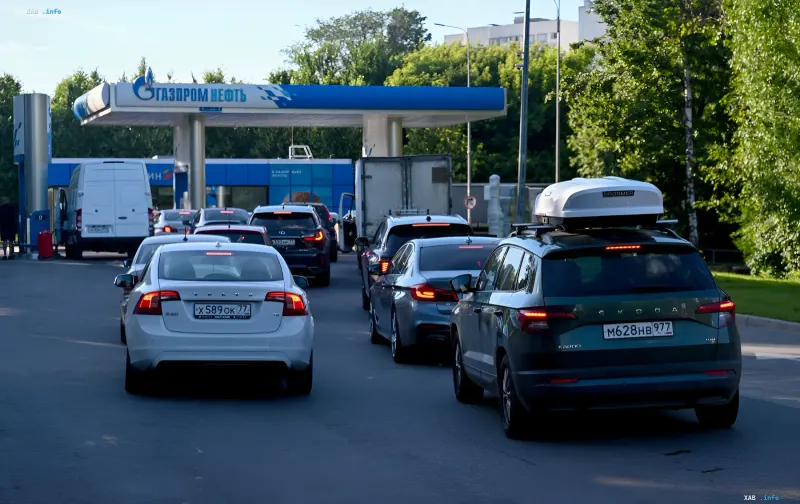
The fuel crisis sweeping across Russia, triggered by strikes on oil refineries, is forcing regional authorities to resort to unconventional and often controversial measures. The shortage of fuel has led to queues, panic, and the introduction of restrictions, while in some federal subjects, representatives of various professions are being enlisted to maintain order at gas stations.
Teachers instead of security
One of the most controversial decisions was made by the administration of the Dinsky District in the Krasnodar Krai. Local authorities issued a document requiring teachers to come to gas stations during their vacation periods to maintain order. As compensation, teachers were promised free tea and coffee.
The initiative sparked outrage in local communities. Teachers complain about the absurdity of the situation: they are expected to ensure safety at gas stations, facing aggressive drivers, while the work is compulsory under the threat of dismissal. In one comment on the Telegram channel "AntiJob.net," a young teacher noted: "We don't even weigh 50 kg and are supposed to chase away angry people at the gas station".
However, the district education department attempted to smooth things over, stating that no one is forcing anyone. Officials claim that only male volunteers are going on duty, as the fuel problem affects them personally. The department emphasized that there are no women among the volunteers and that participation is strictly voluntary.
"Volunteers" and neighborhood watch
A similar situation is observed in the Pskov region. Officials are looking for volunteers to stand guard at "Surgutneftegaz" gas stations. The task of the "volunteers" is to inform drivers about fuel dispensing rules and regulate queues. The announcement does not specify what compensation is due for this work. Representatives of neighborhood watch groups are already on duty at "Pskovnefteprodukt" stations.
Fuel by license plate and electronic registration
In addition to enlisting outside personnel, regions are introducing strict restrictions on fuel sales. In Karelia, Mordovia, Oryol, Nizhny Novgorod, Lipetsk, Pskov, Astrakhan, and Kirov regions, a system of dispensing gasoline based on even and odd numbers, tied to the last digits of the vehicle's license plate, is in effect. Drivers receive corresponding SMS notifications.
Authorities in the Irkutsk region proposed a more technological solution — introducing electronic registration for refueling to avoid traffic congestion. In Perm, the situation escalated to the point where the city administration received a notification about a rally due to the lack of gasoline, although no other organized protests have been reported yet.
Scale of the problem and statistics
According to the Vox-Harbor project in collaboration with "Novaya Gazeta Europe," since May 1, 2026, more than 6,600 posts about the fuel crisis have been published on Telegram, gathering nearly 40,000 comments. Peaks in activity coincided with attacks on key refineries: Nizhny Novgorod, Yaroslavl, and Perm, as well as sales restrictions in Crimea (20 liters of AI-95 per day) and a massive drone attack on Moscow in June.
Currently, about 350 unique posts on this topic are published daily in the messenger. The situation is most acute in the temporarily occupied territories of Ukraine, Moscow, the Moscow region, and southern Russia. Leaders in discussing the problem are Crimea, "DNR," Krasnodar Krai, and Rostov Oblast. Beyond the Urals, the shortage is actively discussed in the Zabaykalsky Krai and Irkutsk Oblast.
Official measures and causes
The Russian authorities have banned the export of gasoline, diesel fuel, and aviation kerosene. Deputy Prime Minister Alexander Novak announced the start of import supplies and increased production using low-environmental-class petroleum products. However, according to Reuters, current gasoline production in Russia satisfies only 65% of seasonal demand. Ukrainian strikes have halted about 40% of the country's oil refining capacity, leading to a 25% reduction in gasoline production and the introduction of restrictions in 75% of regions.


