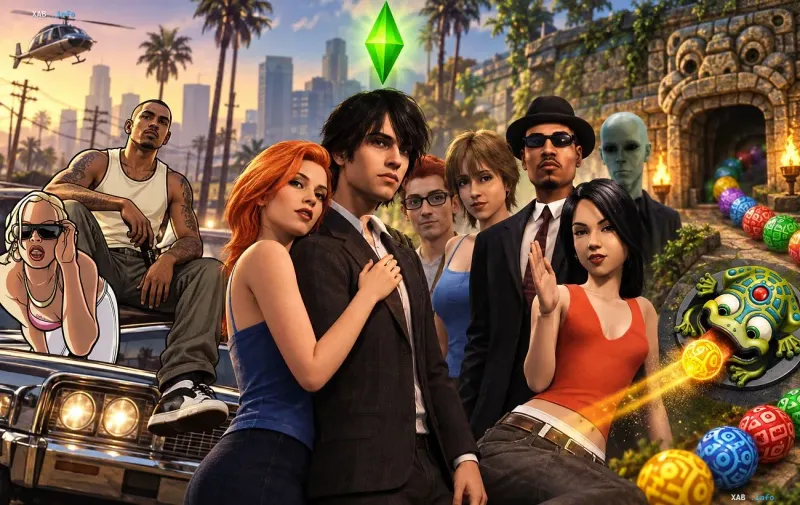
Computer games from the 2000s still evoke warm nostalgia for millions of users, bringing back times when launching your favorite app didn't require high-speed internet, and hours were spent in front of the monitor. The Styler editorial team has compiled a selection of legendary PC projects that were on almost every home computer and shaped the gaming culture of an entire generation. These interactive entertainments united genres ranging from arcade games and life simulators to massive role-playing projects.
Arcades and puzzles that conquered millions of screens
Puzzles and arcade games like Zuma, simple at first glance, knew how to keep players in suspense without complex storylines, forcing them to spend hours watching multicolored balls and building them into chains. Mini-games from the standard Windows Vista and Windows 7 packages were equally popular, as well as classic pinball, where players excitedly launched a metal ball trying to beat their own record. Such projects were ideal for quick relaxation when there was no time to figure out multi-hour campaigns.
Cult life simulators and freedom of action
Virtual worlds like The Sims 2 offered players a unique experience of creating characters, building dream homes, and managing their daily lives, which often went completely off plan. At the same time, the GTA: San Andreas series opened up absolute freedom in an open world: users could complete missions, explore spaces on a bicycle, or create chaos on the streets after entering cheat codes. These games became true symbols of the era, giving players unforgettable emotions and endless variations of walkthroughs.
Racing adrenaline and atmospheric survival
Speed lovers chose Need for Speed: Most Wanted with its iconic cars, police chases, and the need to fight their way to the top of the black list of the best racers. On the other side was the atmosphere of post-apocalypse in STALKER, where gloomy locations, anomalies, and the struggle for survival in the Zone became a cult phenomenon for PC gamers. The picture was complemented by arcade shooters like Chicken Invaders and Moorhuhn, as well as large-scale turn-based strategies where friends could spend entire weekends.
The significance of nostalgic games for the modern gaming industry
Returning to projects from the 2000s shows how much game dev has changed over the past two decades, while emphasizing the timeless value of quality gameplay. Many of these games laid the foundations for modern genres and still inspire developers to create remasters and spiritual successors. Interest in classics proves that the spirit of early PC gaming culture continues to live in the hearts of players.