
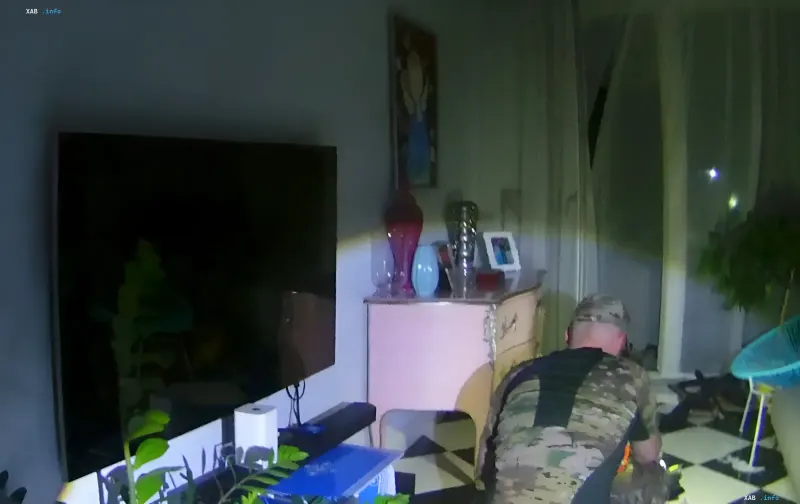
An incident occurred in Odessa that could have turned into a major tragedy. Explosive ordnance disposal (EOD) technicians from the National Police carried out a complex operation to neutralize an unexploded warhead from a Russian 'Gerani-2' drone that got stuck in a residential building. The munition contained 50 kilograms of explosives and was in an extremely dangerous condition.
Drone hits a high-rise building
The incident took place in the night of June 10, when Odessa was subjected to a large-scale drone attack. One of the strike drones flying towards the city failed to reach its target and crashed into the facade of a high-rise building in the Primorsky district. As a result of the impact, debris from the drone, including the engine and electronic components, was scattered across the area, while the main warhead got stuck in an apartment on the 11th floor of an 18-story building.
Specialists from the EOD service arrived at the scene and found that the warhead had not detonated but posed an immediate threat. According to police, the device was armed with a detonator and had serious mechanical damage, making its behavior unpredictable.
Complex demining operation
The work to neutralize the threat required the highest level of qualification and caution. EOD technicians carried out special operations to discharge the mechanism and remove the explosive materials. Thanks to the professionalism of the police officers, the situation was brought under control without causing damage to the residents of the building.
The seized warhead was transported to a specialized range for destruction. Experts emphasize that such finds require an immediate response, as even damaged munitions can detonate with the slightest external impact.
Context of the attack and repetition of the scenario
The night attack on June 10 was one of the largest in recent times. Russia used 207 strike drones of various types against Ukraine, including Shahed, 'Gerbere', 'Italmas', as well as 'Banderyol' loitering munitions and 'Parodia' decoy drones. Air defense forces shot down most of the targets, however, individual hits, including in Odessa, still occurred.
This is already the second case in the last month where an unexploded drone warhead has gotten stuck in a residential building in Odessa. In May, a similar situation occurred in another district of the city: a 'Shahed' drone warhead got stuck in a wall on the 15th floor. Then the police carried out a unique special operation to remove it, after which specialists from the radiation, chemical, and biological protection of the State Emergency Service joined the work.
Threat to the population
Such incidents demonstrate how dangerous the consequences of drone attacks can be even without a direct explosion. Unexploded munitions remain a source of lethal threat to residents, especially if they get stuck in residential premises. Experts urge the population to be vigilant and immediately report any suspicious objects or traces of impact to the police.
EOD technicians continue to work under heightened readiness to minimize risks for citizens. Their work is not only a technical task but also an important part of ensuring safety in the conditions of ongoing hostilities.


