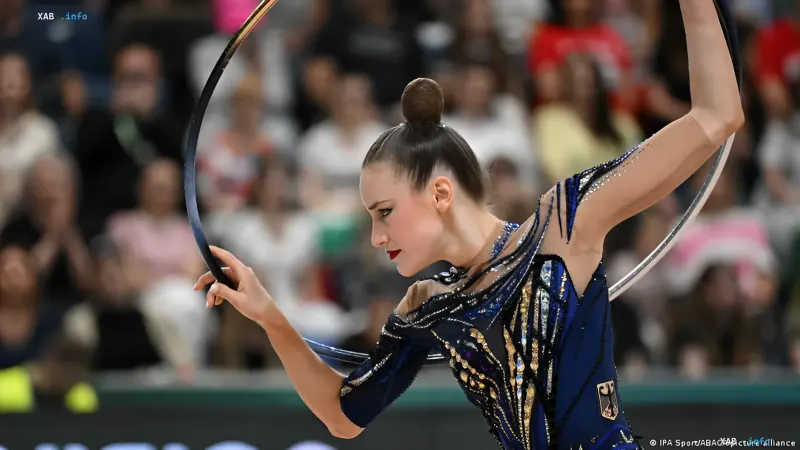
The European Rhythmic Gymnastics Championships concluded in the Bulgarian city of Varna, marking a historic event for the sports world. On the final day of the competition, May 31, the finals for individual apparatus events took place, with Daria Varfolomeev as the main protagonist. The Russian-born gymnast representing Germany demonstrated flawless mastery, winning two gold medals in the ball and ribbon events.
Varfolomeev's Triumph and Competitors' Success
Daria Varfolomeev's victory in the ball and ribbon events was the logical conclusion to her successful performance at the tournament. Earlier, on May 30, she won gold in the individual all-around for the first time in her career. Thus, the gymnast brought three gold medals to her new national team. In the final medal tally, Germany confidently took second place, earning five medals: three gold, one silver, and one bronze.
Other finals in the individual program also recorded bright results. The gold in the clubs event went to the hosts of the tournament, the Bulgarian Stilyana Nikolova. Russia was represented on the podium by Sofia Ilteryakova, who became the European champion in the hoop event. In this same apparatus, she added a bronze medal to her collection for her performance with the ball.
Another Russian athlete, Maria Borisova, also reached the podium, winning silver in the clubs and bronze in the ball. The Belarusian representative Alina Hornosko showed an excellent result, taking second place in the hoop event.
Team Finals: Spain's Dominance
In the team disciplines, the Spanish team was the absolute leader. Spanish gymnasts won gold in both group finals: in the "5 balls" program and the "3 hoops + 2 clubs" combination. In the first event, silver went to Belarus, and bronze to Israel. In the second event, the Russians took second place, and the Israelis took third.
In the team all-around, the Bulgarian team took first place, followed by Israel in second, and Russia in third. In the final group all-around, the podium looked as follows: first — Spain, second — Russia, third — Israel.
Final Medal Tally
The leader of the European Championships was the Bulgarian team. Thanks to the support of the spectators and successful performances, athletes from this country won eight medals: four gold and four silver. Second place went to Germany, third to Spain, which, despite having fewer awards, won all three of its medals in gold.
Russia took fourth place in the overall medal tally, Belarus fifth, and Ukraine seventh.
Historical Context of the Tournament
The European Championships in Varna went down in history as the first major international competition after the start of the full-scale war between the Russian Federation and Ukraine where athletes from Russia and Belarus were allowed to compete under their national flags and with their own anthems. This decision was made by the Executive Committee of the International Gymnastics Federation (FIG). In response, the Ukrainian Gymnastics Federation requested official permission for its athletes to leave the podium during the playing of the Russian anthem, which became a symbol of the complex political situation intertwined with sporting achievements.


