
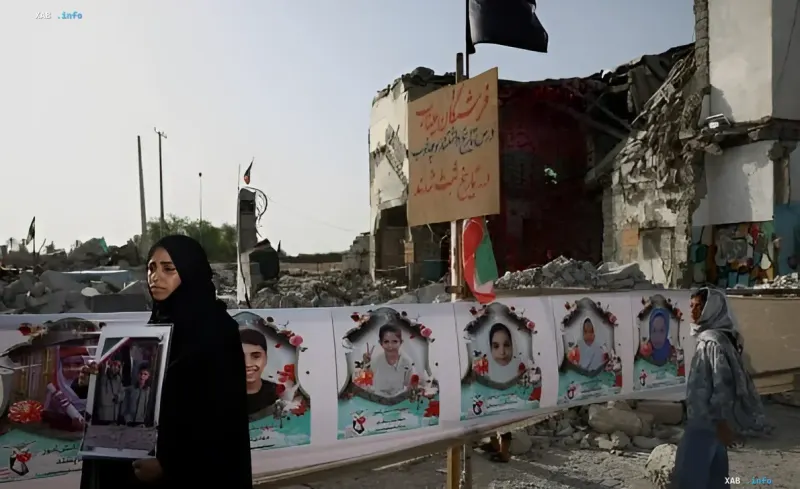
On February 28, 2026, in the city of Minab, located in the Hormozgan province in southern Iran, one of the most tragic incidents since the escalation of the conflict occurred. A missile and bomb strike was launched at the coordinates of the "Shajare Tayebe" primary school. According to the results of independent investigations and satellite imagery analysis, the cause of the catastrophe was a systemic failure in US intelligence databases, which led to the use of outdated coordinates during the planning of the operation.
Technical Error with Human Casualties
The information database of the Defense Intelligence Agency (DIA) of the US Department of Defense, used by the Air Force and Central Command (CENTCOM), mistakenly classified the school territory as the headquarters of the "Asif" Coastal Defense Brigade of the Navy of the Islamic Revolutionary Guard Corps (IRGC). As a result, a Tomahawk cruise missile was fired at the target.
According to official data from the Iranian Ministry of Education and forensic services, classes were in progress in the building at the time of the strike. As a result of the collapse of load-bearing structures, 156 people died. Among the victims were 120 elementary school students, 26 teachers and staff, as well as several parents who were in the building.
Chronology of the Failure: From Military Town to School
International experts and investigative journalists have reconstructed the history of the change in the status of the object, which explains the nature of the error:
- 2013–2016: Satellite imagery records that until 2013, the building was physically located inside a military town. However, by September 2016, a solid wall was erected between the school territory and the IRGC base, separate entrances were equipped, and the object was transferred to the Iranian Ministry of Education.
- 2019: An analyst of American technical intelligence identified the functioning of the school and made corrections to the local departmental accounting database.
- February 2026: Due to the lack of automatic integration and administrative delays in data transfer between DIA analytical divisions and tactical command, the changes were not verified in the global target database.
Washington's Reaction and Donald Trump's Position
During an official meeting with NATO Secretary General Mark Rutte at the White House, US President Donald Trump commented on the progress of the investigation. The head of state expressed doubt about the possibility of definitively establishing the personal responsibility of officials.
"I am not sure that this issue will ever be finally resolved in terms of determining specific guilt. On that day, the simultaneous movement of a huge number of missile systems from various sides was recorded in the airspace. What happened is tragic, but in the conditions of chaos of a large-scale operation, making premature conclusions is unconstructive," Trump stated.
The US Department of Defense confirmed the conduct of an independent investigation under AR 15-6 form under the leadership of a general outside the chain of command. The goal of the check is to establish the causes of the DIA coordinate folder failure.
International Legal Aspect
The human rights organization Amnesty International published a report calling on the Pentagon and Defense Secretary Pete Hegseth to disclose the results of the investigation. The document notes that delaying the publication of conclusions undermines the norms of international humanitarian law.
UN experts point to a fine line in qualifying the incident. According to Additional Protocol I to the Geneva Conventions, unintentional damage to a civilian object due to an error in intelligence data is not automatically considered an intentional war crime if the command took all measures to verify targets. However, the systematic lack of coordination between departments and the ignoring of signs of life (pattern of life) may become grounds for charges of criminal negligence.
According to the Rome Statute of the International Criminal Court, a war crime is recognized as the intentional striking of civilian objects, including educational buildings, provided they are not military targets. Iranian judicial authorities have already published photographic materials of debris marked with US markings and appealed to international bodies.


