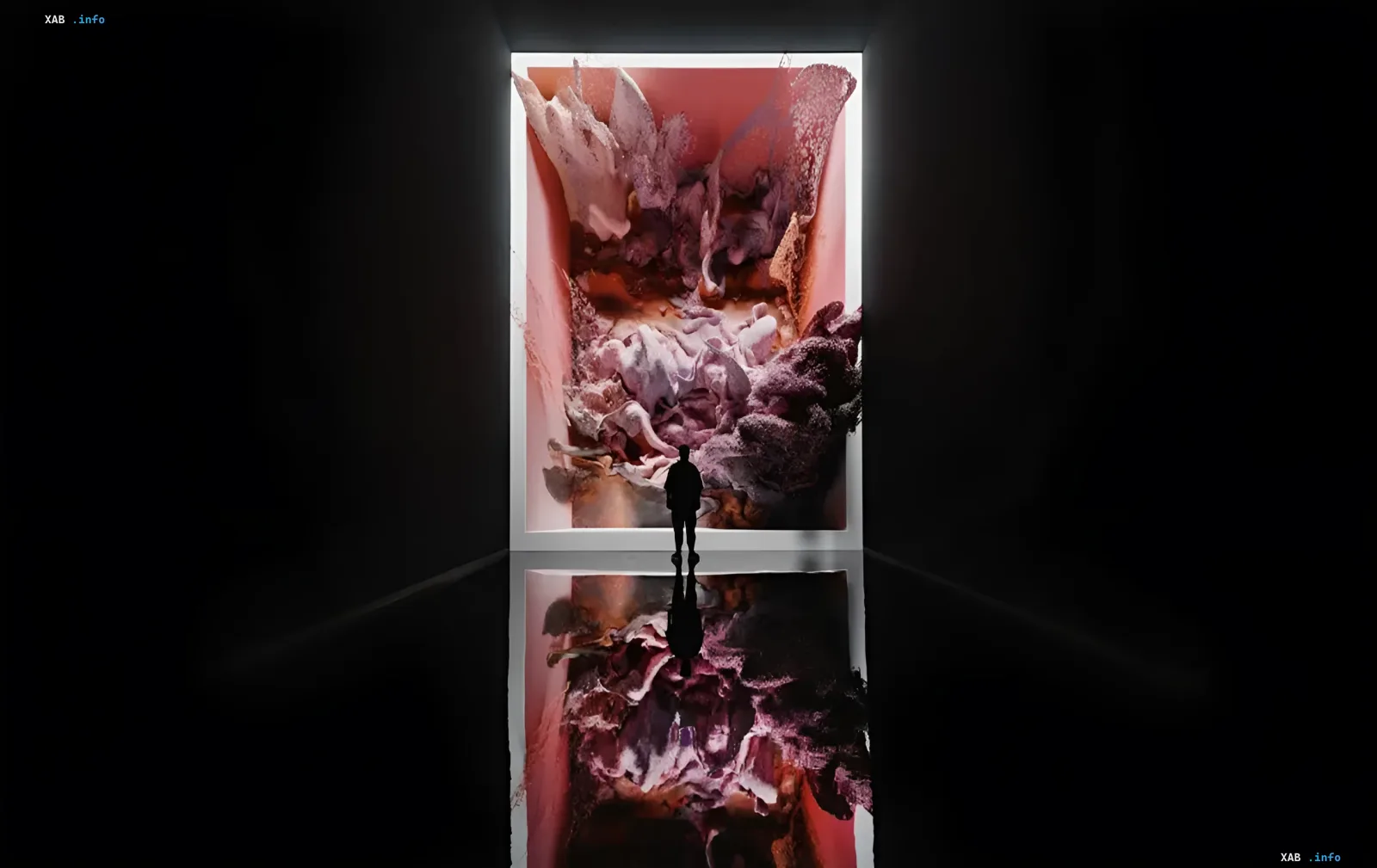
In Los Angeles, an event took place that changes the perception of the boundaries between technology and art. Dataland has opened here — the world's first museum dedicated exclusively to art created by artificial intelligence. The project is the result of a large-scale partnership between Google and renowned media artist Refik Anadol.
A space where data becomes pigment
The museum covers an area of about 2,300 square meters and represents a unique omnisensory ecosystem. Here, digital data is transformed into artistic pigment, and the paintings are not static — they evolve in real time. Dataland is the culmination of a decade-long journey of collaboration between Google researchers and Refik Anadol Studio, which began in 2016 as part of the Artists and Machine Intelligence (AMI) program.
"Machine Dreams" and nature in digital form
The museum's debut exhibition, titled "Machine Dreams: Rainforest," is dedicated to the wild. The basis of the exhibition is the artist's studio development — a large-scale natural model, the Large Nature Model (LNM). This is a foundational AI trained on a colossal array of data about the surrounding world.
To transform ecological information into 1.2 billion pixels of hypergenerative reality, the museum relies entirely on Google Cloud's cloud infrastructure. It is Google's technologies that manage all the institution's processes — from ticketing systems at the entrance to the dynamic change of images on the gallery walls.
Technologies that sense the visitor
Google's cloud ecosystem ensures the operation of several key areas that make a visit to Dataland a unique experience:
- Omnisensory interactivity: the space maintains a continuous dialogue with visitors. Algorithms analyze people's emotions in real time, dynamically adjusting generative soundscapes and changing the scents in the room.
- Real-time generation: the Gemini Enterprise Agent Platform and Compute Engine tools coordinate the work of a complex of sophisticated AI models. Among them are generative adversarial networks (GAN), diffusion models, and the multimodal Gemini AI.
- Computational sustainability: the entire cloud infrastructure on which the museum's models operate functions using 87% renewable carbon-free computing energy.
Supporting new talents
In addition to launching the permanent exhibition, the Google Arts & Culture platform announced financial and technical support for a new residency program, the Dataland AI Artist Residency. This six-month incubator is designed to give a broader creative community access to cutting-edge machine learning technologies.
As part of the first program, four selected artists will receive individual grants of $25,000, expert mentorship support from Refik Anadol Studio specialists, as well as direct access to Google Cloud tools and modern AI models. Works created by residency participants will be presented on the global Dataland stage, as well as on the official Google Arts & Culture website at the end of the year.


