With a month and a half to go until the U.S. congressional midterm elections scheduled for November 2026, the Democratic Party has gained a noticeable edge over the Republicans, according to a poll conducted by The New York Times in partnership with the Siena Research Institute. According to the outlet, voters are increasingly leaning toward Democratic candidates, and the key driver of this shift is the erosion of trust in President Donald Trump's administration. As reported by RBC-Ukraine, citing NYT/Siena, the economic agenda and the cost of living have come to the forefront of Americans' assessments, undermining the Republicans' position on the eve of the vote.
Economic discontent as the main factor in the shift
The central element of the poll was the decline in approval of the president's economic policy. According to the results cited by RBC-Ukraine, Trump's approval rating in early September 2026 stood at 33%, indicating growing voter dissatisfaction with the state of the economy and price levels. It is precisely these issues, rather than foreign policy or immigration, that are currently shaping the core of electoral sentiment and explaining why Democrats are gaining ground in head-to-head comparisons with the Republicans.
The issues that brought Trump victory in 2024
Particularly noteworthy is the fact that Democrats are outperforming the Republicans on precisely the issues that previously secured Trump his victory in the 2024 presidential election. This means that the economic narrative on which the Republicans relied in their 2024 campaign is now working against them: voters who backed Trump for economic reasons are reconsidering their preferences in light of the real experience of his economic management. This reversal turns the key electoral issues into a vulnerability for the governing party.
Contradictory data
It is important to note that the picture emerging from different polls is not unambiguous. RBC-Ukraine previously reported that, according to a Reuters/Ipsos poll, Trump's approval rating had risen slightly after falling to a record low, while the Republican Party's position on the eve of the midterm elections had, conversely, deteriorated. Thus, one poll captures a short-term rebound in the president's personal rating, while the other records a sustained Democratic advantage in party comparisons and on key issues. Differences in methodology, sampling, and question wording explain the discrepancy: personal approval may shift slightly upward, while party preferences and assessments of economic policy continue to move in the Democrats' favor. Readers should keep in mind that both results reflect different measurement contexts and do not contradict each other overall, but they paint a contradictory picture in the details.
Context: election operations in key states
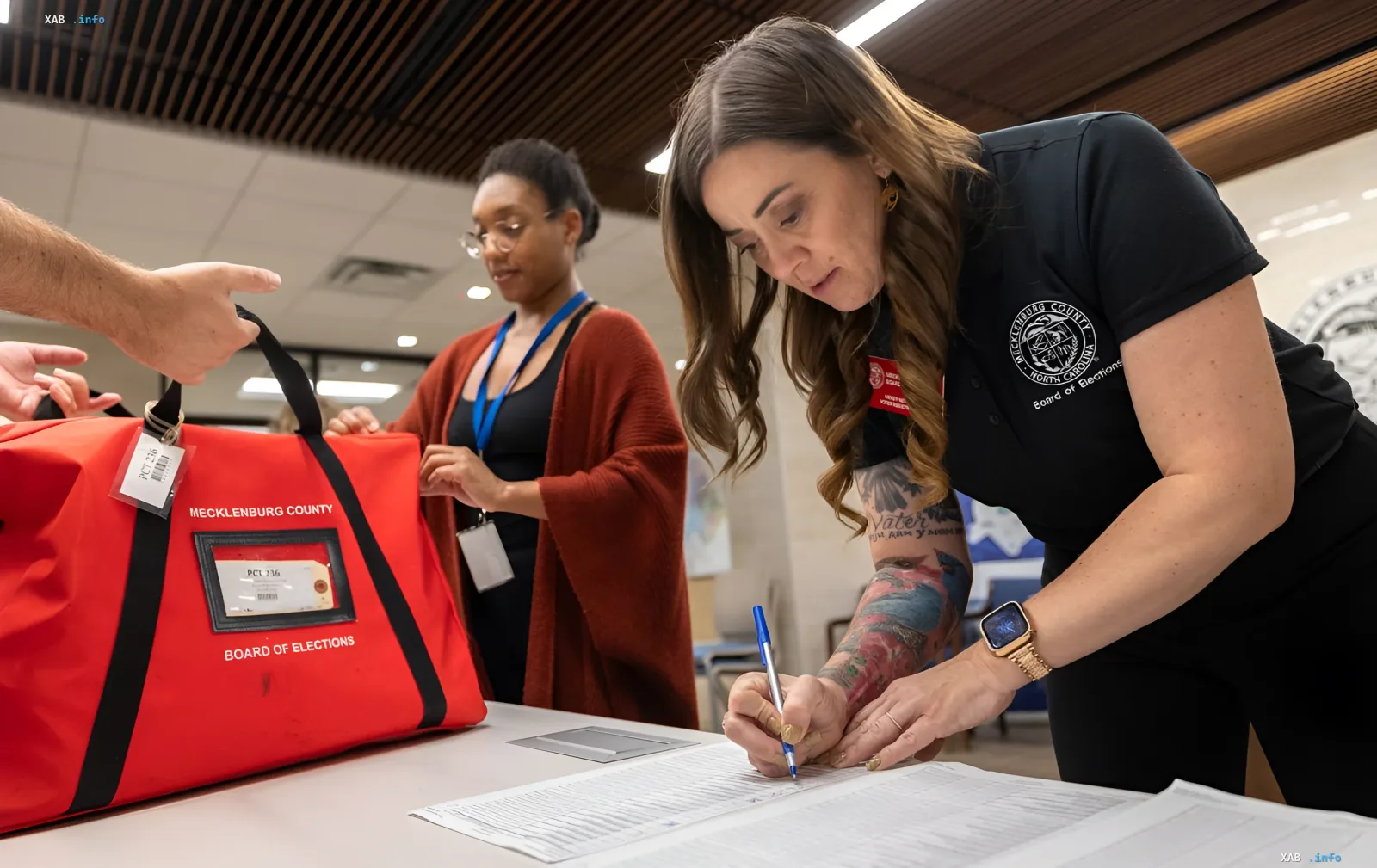
Against the backdrop of the polling data, organizational procedures that will shape the course of the campaign are in full swing in swing states. A photo from Mecklenburg County (North Carolina) shows staff of the county's Board of Elections (Mecklenburg County Board of Elections) processing documents next to a red ballot bag marked PCT 236 — a typical scene of voting-material logistics in one of the key swing states. Such operations for accounting and moving ballot packages are a standard stage of preparation for the midterm elections and underscore that the fight for Congress is unfolding not only in the polls but also in the day-to-day work of election boards across the country.
Bottom line: the body of polling data suggests that the Republicans are entering the 2026 campaign with weaker positions than in the 2024 cycle, while the Democrats, conversely, have gained a tactical advantage on the economic issues most sensitive to voters. The final outcome, however, will depend on turnout, regional factors, and the dynamics of the final weeks before the November vote.