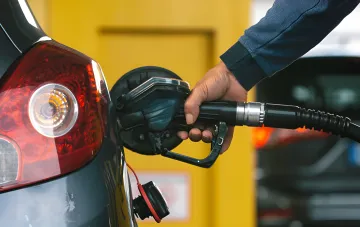
Ukraine's fuel market is experiencing a new price surge. According to Serhiy Kuyun, director of the A-95 Consulting Group, the cost of diesel and gasoline at gas stations could rise by about five hryvnia per liter over the next two weeks. The rise in global oil product quotes began at the start of the current week and has already been felt in the wholesale segment: over the past three days, wholesale prices have increased by 4–4.5 hryvnia per liter, which is inevitably being passed on to the retail network.
The global market is pushing prices up
The key driver of the price increase has been the rise in oil product costs on international exchanges. According to Kuyun, the price of diesel fuel on the London exchange has already exceeded the April peaks, which were recorded at the height of the crisis linked to the military conflict between Iran and Israel. "The wholesale market has shot up significantly, adding 4–4.5 hryvnia over the past three days. Accordingly, retail is following suit," the expert noted in a comment to RBC-Ukraine. Thus, retail networks are receiving a signal to revise their price lists, although a full pass-through of the wholesale increase to the gas station register takes anywhere from a few days to two weeks.
How much a liter will cost: specific figures
As of September 3, 2026, the average price of diesel fuel at Ukrainian gas stations is 91.31 hryvnia per liter. With a full pass-through of the current rise in quotes, the average price could approach 96 hryvnia per liter, while at some stations the mark will reach 98 hryvnia. As for A-95 gasoline, its average price is currently 80.70 hryvnia per liter, and, according to Kuyun's estimate, it too could rise by about five hryvnia. The mark of 100 hryvnia per liter of diesel, the expert says, is not yet a baseline scenario, but it is "already close": with further growth in global prices or the emergence of additional problems in the market, this threshold could well be breached.
No shortage, but risks remain
It is important to emphasize that the price rise is not accompanied by a fuel shortage. At the peak of the consumption season, all major types of fuel remain in stock, and, as Kuyun noted, "the main thing is that there is fuel — on that front we are fine today." At the same time, the expert drew attention to structural risks: Russian attacks on the energy infrastructure continue to create additional uncertainty, and market participants, he says, are preparing for various scenarios, including logistics disruptions and temporary supply interruptions in certain regions.
Contradictory data
Just a few days earlier, on August 29, in an interview with URA-Inform, Kuyun assessed the situation differently, forecasting a stabilization of gasoline prices in the autumn and describing the risk of 100-hryvnia fuel as unlikely. However, by September 3 the picture had changed: the expert spoke of a "third wave" of the crisis and directly stated that the 100-hryvnia-per-liter threshold for diesel is "close." The difference in assessments is explained by the fact that over four days global quotes made a sharp jump, overriding the previous trend toward stabilization. Thus, if the market had previously been moving toward a price plateau, a new upward cycle has now begun, and the forecasts given at the end of August have lost their relevance.
Current prices at major gas station chains
As of Thursday, September 3, 2026, popular Ukrainian gas station chains offer diesel fuel and gasoline within the range recorded in RBC-Ukraine's infographic. Specific figures vary depending on the brand, region, and type of fuel, however, the overall upward trend is confirmed by all major operators. Car owners are advised to keep in mind that over the next 10–14 days, price lists at gas station registers will most likely be updated upward, and filling up "to the brim" at current prices may become a more advantageous strategy.