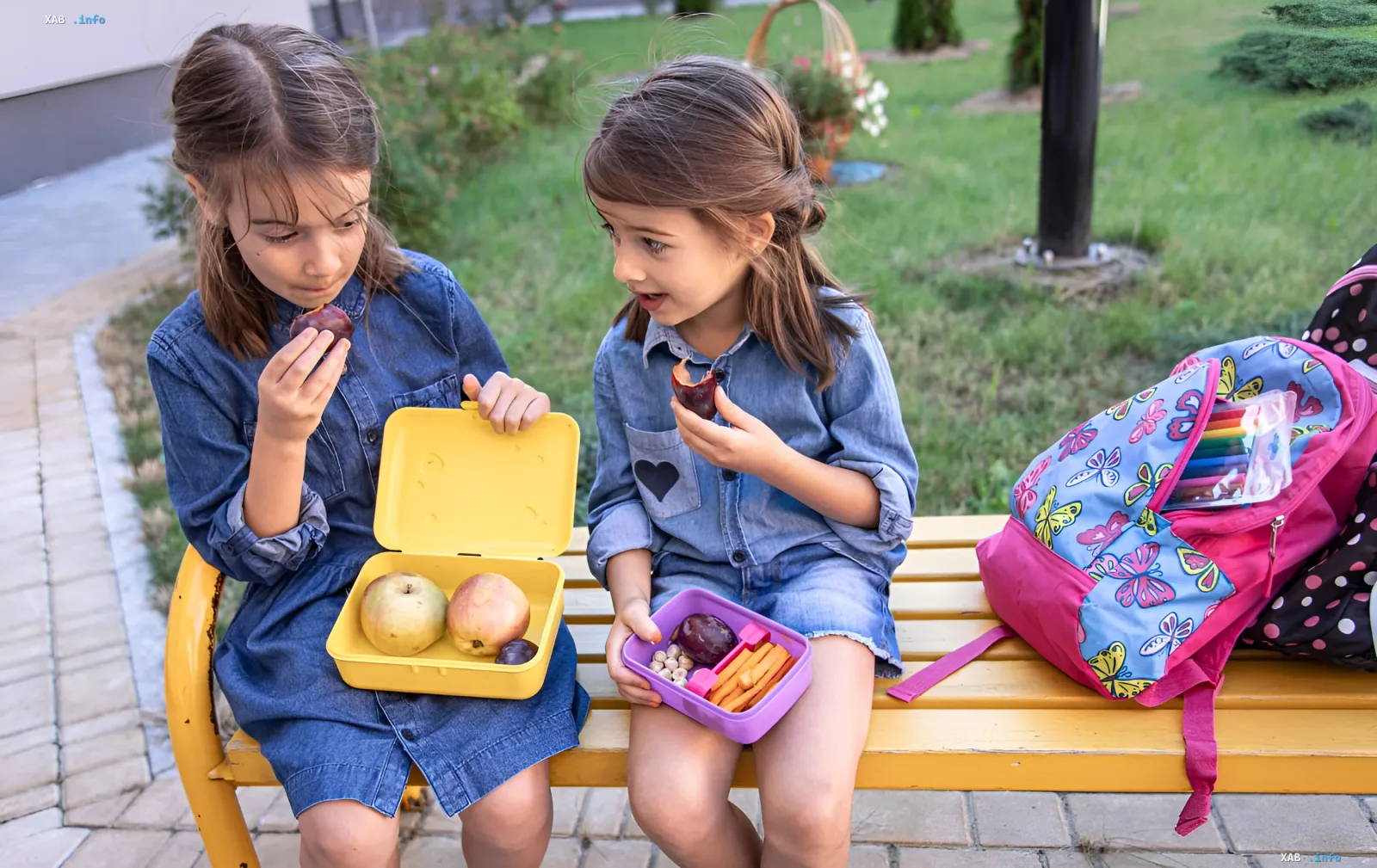
A school snack is not just something to eat between lessons — it is a full-fledged part of a child's diet that should satisfy hunger, maintain energy levels, and keep the child feeling full until the next meal. That is exactly why what goes into the lunchbox directly affects a child's concentration in class and overall well-being throughout the day. Exclusively for Wave RBC.UA, doctor-dietitian, endocrinologist, certified nutritionist, and author of the book "Be Your Own Dietitian" Victoria Goncharenko explained how to put together a nutritious, varied, and child-appealing snack without turning the process into a daily stressor for parents.
Why a snack made up only of sweets is a poor strategy
Parents quite often choose cookies, sweet bars, pastries, dried fruits, or other confectionery for school. Such products are convenient to transport, children like them, and they can absolutely be part of the diet. However, according to Victoria Goncharenko, it is undesirable for the snack to consist predominantly of sweets. Foods rich in sugars and fast carbohydrates do indeed provide a quick energy "boost," but they do not deliver a lasting sense of fullness. Just thirty to forty minutes after such a snack, the child will feel hungry again, and energy levels will drop sharply, which will affect attention and performance in class.
The formula for a filling snack: protein, fats, and carbohydrates
For greater satiety, the expert recommends pairing any carbohydrate component with sources of protein and fats. A fruit or cookie can be combined with yogurt, cottage cheese, cheese, nuts, or an egg. Other alternatives include meat, protein pudding, or nut butter. If the child has lactose intolerance, the nutritionist advises paying attention to plant-based yogurts and other alternatives, always taking their composition and individual tolerance into account. "It is not necessary for every snack to be perfectly balanced across all nutrients. But if we are talking specifically about a filling snack, combining different food groups is usually the better option than a large portion of sweets," Goncharenko emphasizes.
Specific lunchbox options: from simple to more filling
The nutritionist listed a whole range of proven combinations that are easy to prepare at home. Fruits (apple, pear, berries) paired with cheese or nuts are the simplest option, requiring no elaborate preparation. Fruits with natural yogurt, protein pudding, or a cottage cheese dessert provide an extra portion of protein. Nuts and dried fruits are a convenient combination for a lunchbox, although dried fruits contain concentrated sugars, so it is best to consume them in moderation. For a more filling snack, options include lavash with hard cheese (optionally with vegetables or lightly toasted in a pan), lavash with cheese, meat, and tomato, a mini sandwich made from whole-grain bread with cheese, turkey, and vegetables, as well as vegetable sticks (cucumber, carrot, celery) with bread and cheese. If the child is craving something sweet, pastila can be paired with nuts, and homemade cookies can be complemented with yogurt, cheese, or nuts. A protein bar is a convenient option when there is no way to bring foods that require refrigeration, but it is important to check the composition: the bar should not simply be a sweet disguised as a "healthy product."
Should sweets be completely excluded from the school diet
The nutritionist sees no categorical ban on sweets in the school diet. In her words, it is more important not to create a list of "forbidden foods" for the child, but to gradually foster a sensible attitude toward food. Instead of a large amount of cookies, you can put in a few pieces and add yogurt or nuts. A small portion of dried fruits can be paired with nuts. Among the bars, it is best to choose those that contain not only carbohydrates but also protein. This approach allows favorite sweets to be incorporated into daily eating without guilt or excess blood sugar.
Simple rules that will relieve parents of stress
To any snack, Goncharenko recommends adding a bottle of plain water — the child should be able to drink throughout the school day, relying primarily on the sensation of thirst. And most importantly: the school snack should not be complicated. There is no need to cook something new every day or try to create the perfect lunchbox. A fruit, yogurt, nuts, a sandwich, lavash with cheese, an egg, or homemade cookies — all of these foods can be part of the school diet. The parents' task is not to make the child's diet flawless, but to gradually teach the child to eat in a varied and complete way, relying on their own taste preferences and the convenience of the school environment.