
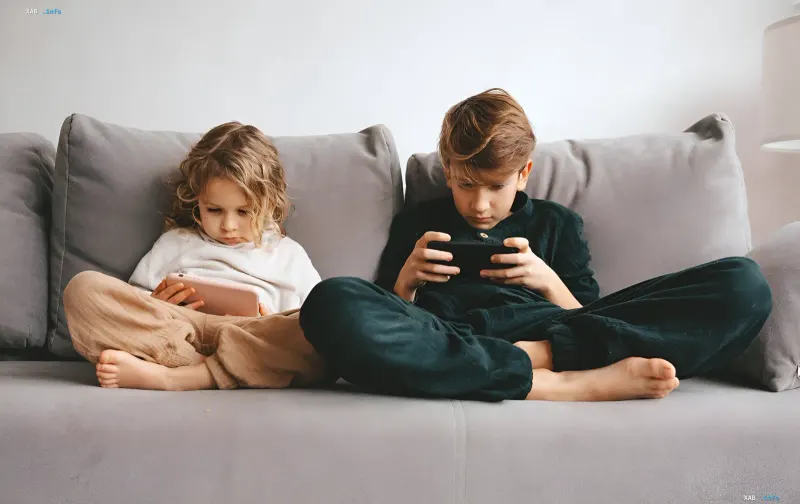
In the modern world, gadgets have become an integral part of childhood, often displacing traditional games and communication. According to data from the National Study on Online Safety of Children in Ukraine, conducted by Sense Research agency, the internet has already penetrated the daily lives of the overwhelming majority of young citizens. However, behind these digital achievements lies a serious problem: the balance between the virtual and real worlds is being disrupted, and to a large extent, this depends on the behavior of the parents themselves.
The Mirror Effect: How Parents Influence Children
The study revealed a remarkable correlation between the behavior of adults and children. 78% of Ukrainian preschoolers use the internet. At the same time, experts note a direct dependence: the less time parents spend online, the less time their children spend in front of the screen. It turns out that for many families, gadgets have become a way to keep a child occupied while adults are immersed in their own digital worlds.
The situation worsens with age. Among schoolchildren, 28% admitted that they skip school or pay less attention to it at least once a week due to their obsession with the internet. Gadgets cease to be just entertainment and begin to affect academic performance and daily routines.
Social Networks: Access from Age Three
One of the most alarming trends is the early entry of children into social networks. Officially, most platforms allow registration only from 13 or 14 years old, but reality looks different:
- The majority of preschoolers who have accounts registered them at the age of 3 to 5 years.
- Among schoolchildren, the peak of registration falls on the age of 6 to 10 years.
Although parents claim that only 3% of preschoolers use social networks, those who do have access often do so without a personal account, using their parents' devices. Nevertheless, the presence of a personal profile for such young users indicates that parental control is either absent or ineffective.
What Holds Children's Attention?
Interestingly, children's preferences change as they grow up. If preschoolers are attracted to cartoons and simple games, schoolchildren are already moving on to more complex platforms. The top 4 apps for schoolchildren include:
- YouTube
- TikTok
- Telegram
For the youngest, the leaders remain YouTube and gaming apps. This confirms that video content remains the main magnet for children's attention in Ukraine.
The Illusion of Control and Real Consequences
Most parents are convinced that they are able to effectively control the time their children spend on the internet. However, statistics say otherwise. Signs of imbalance between online and offline life are already evident in some children. Gadgets begin to affect all spheres of life: from sleep and nutrition to social interaction with family and peers.
Experts remind us that the problem is not only in the number of hours spent in front of the screen but also in the quality of content. Earlier, the Commissioner for the Protection of the State Language, Elena Ivanovska, noted that certain blocking of social networks could be beneficial for children and adolescents to protect them from negative influence.
The situation requires attention not only at the family level but also at the state level. How to control screen time and restore balance in the family is a question that is becoming more relevant with each passing year. Parents should think: are they really controlling the digital lives of their children, or are they part of the problem themselves?


