
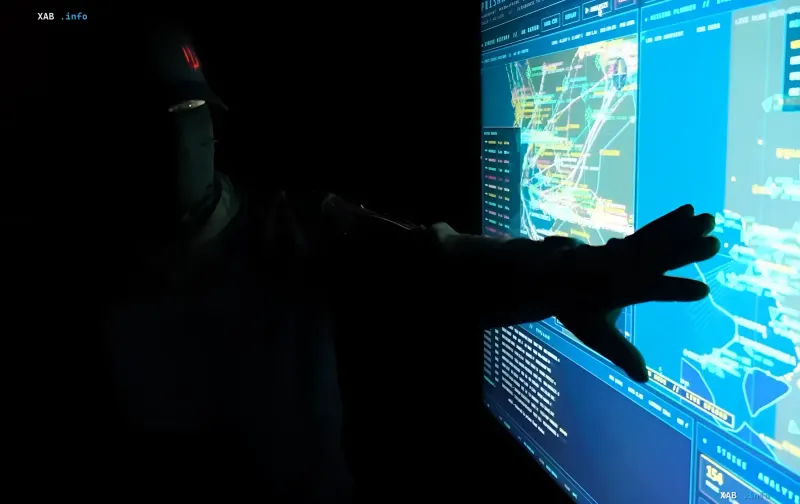
In the context of modern warfare, technology has become a decisive factor. Ukrainian military forces have deployed a large-scale use of a unique intelligent system that is radically changing the rules of the game in the sky. The foundation of this new strategy is the PRISMA software from the American company Palantir, which allows for the simultaneous control of thousands of unmanned aerial vehicles (UAVs).
Technological breakthrough in strike planning
A correspondent for a television channel gained exclusive access to the work of a unit of the Main Directorate of Intelligence (GUR), which is responsible for planning kamikaze drone attacks on strategic targets deep within the Russian Federation. The main tool in the hands of these intelligence officers is the PRISMA system.
The new software allows operators to manage a massive flow of drones in real-time. Command post screens display maps, flight trajectories, and overlaid data processed by artificial intelligence. A commander with the callsign "Vector" demonstrates how the system transforms the chaos of aerial combat into a clear mathematical model.
How the "smart" war algorithm works
Artificial intelligence plays a key role in breaking through Russian defenses. The system does not simply guide drones along a preset route; it constantly learns and adapts. The program analyzes massive amounts of data in seconds, calculating optimal paths in real-time.
This provides a critical advantage: each subsequent group of drones enters through "gaps" in the defense that the AI has just detected. The effectiveness of such attacks is significantly higher than standard launches, as targets previously considered unreachable are now within the strike zone.
Invulnerability of the distributed system
The system developers have ensured its survivability. Russian troops are actively hunting for command centers, but destroying the PRISMA software is practically impossible. The system is not tied to a single specific computer or building.
This distributed structure makes control elusive. Even in the event of a direct enemy hit on one of the control points, other centers instantly take over control of all drones, ensuring the continuity of the operation.
Results of application in combat
The effectiveness of the new tactics has already been confirmed in practice. Recently, units of the Ukrainian Defense Forces successfully struck the "Saratov" oil refinery in the Volga region. The facility is part of the "Rosneft" company structure and supplies fuel to the Russian army.
On the night of May 30, the Armed Forces of Ukraine launched massive strikes on 23 military and logistical targets deep within the enemy's operational depth. Ukrainian drones created a "fiery night" in the Russian Federation and occupied Crimea, striking elements of the oil logistics chain. Also, during this large-scale attack, pilots of the Unmanned Systems Forces, in coordination with other units, destroyed the training ground of a Russian brigade that committed atrocities in Bucha.


