In an era where the smartphone has become an extension of our body, we touch the screen dozens of times a day. By 2026, glass protection technologies have reached their peak; however, the oleophobic coating — the thinnest layer that repels grease and fingerprints — remains vulnerable. Experts from the Styler project (RBC-Ukraine) warn: familiar cleaning methods may not just leave smudges but physically destroy the display's protective layer, shortening the device's lifespan.
Why paper napkins and "universal" sprays are dangerous for the screen
The most common mistake is using paper napkins. Unlike soft microfiber, the structure of paper contains cellulose fibers that act like sandpaper when rubbed, gradually wearing down the protective layer. Scented napkins are particularly dangerous: the lotions and perfume additives they contain leave a sticky film on the glass that attracts dust.
Universal cleaning agents are no less destructive. Sprays "for everything" often contain ammonia or aggressive chemicals designed for tiles or plastic. When they get on the display, they trigger a chemical reaction that destroys the oleophobic coating, causing the screen to get dirty faster and collect fingerprints.
Abrasive threat: sponges, powders, and rough fabrics
Using kitchen sponges or powdered detergents is a sure way to create micro-scratches. Even if a sponge seems soft, its stiff fibers can damage the glass, especially under bright light. Powders, consisting of tiny solid particles, act as an abrasive, turning the cleaning process into surface grinding.
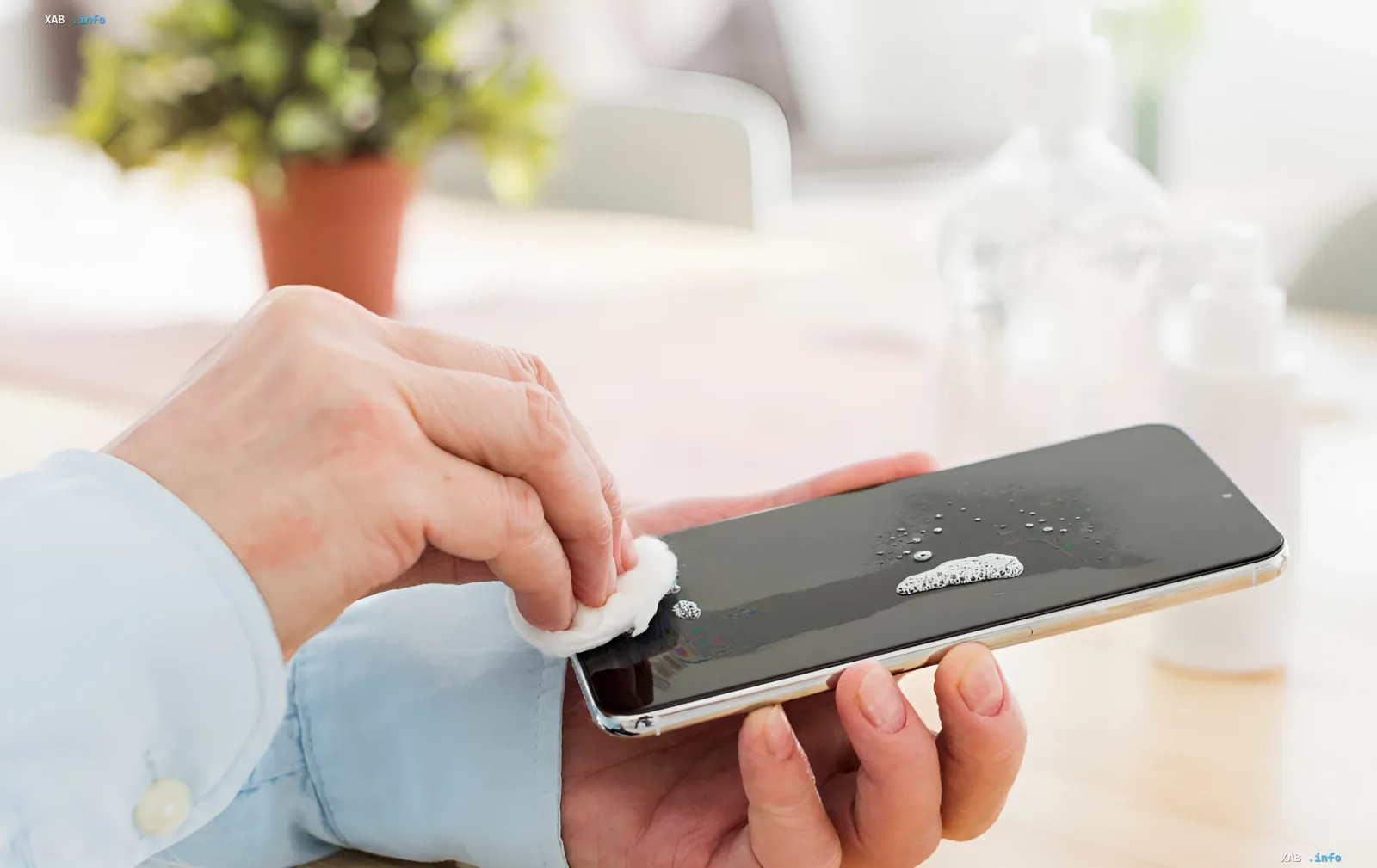
It is also worth giving up the use of old towels or the edges of T-shirts. If there is fine dust or sand on the screen, dry wiping with a rough fabric will move these particles across the surface, leaving deep scratches. Even wet towels used on the go can be dangerous: they often contain residues of soap, creams, or skin care products that leave a greasy trail on the display.
Water and perfume: hidden enemies of cleanliness
It might seem that water is the safest option. However, tap water contains minerals and salts that leave white spots and streaks after drying. If you need to slightly dampen a cloth, it is better to use distilled water. It is strictly forbidden to pour liquid directly onto the phone — it can get into the speakers and ports.
Some users try to use perfume or cologne for disinfection and cleaning. This is an extremely dangerous practice: besides alcohol, perfumes contain oils and aromatic components that can eat away the protective coating and leave greasy marks that cannot be removed with a regular cloth.
The correct cleaning algorithm in 2026
To maintain the screen in perfect condition, experts recommend using only soft microfiber cloths and special electronics cleaning agents. Before cleaning, it is better to turn off the device to avoid damaging the sensor and leaving fingerprints on a dark background. Liquid should be applied to the cloth, not the screen, and the surface should be wiped without excessive pressure. Adhering to these simple rules will help preserve not only the cleanliness but also the functionality of your gadget for many years.