
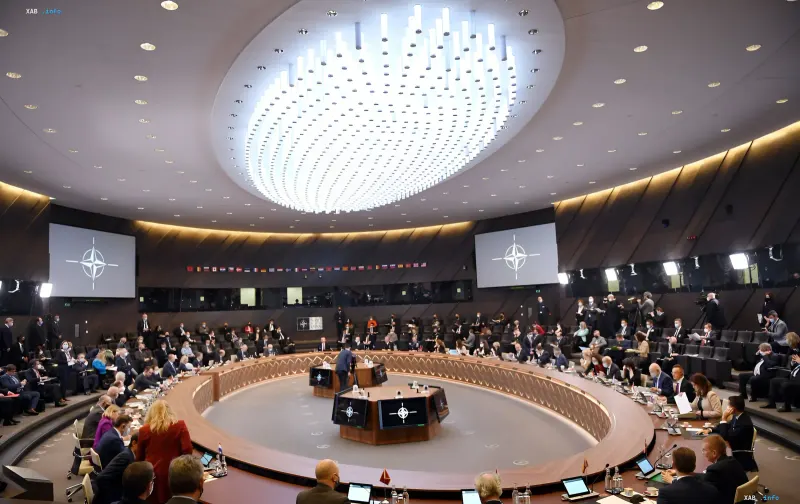
In the run-up to the NATO summit, which will take place in Ankara on July 7–8, sharp debates have erupted at the Alliance's headquarters in Brussels. Although a military aid package for Ukraine amounting to €70 billion has already been approved, the key question regarding the long-term commitments of allies remains open. Diplomatic tension is mounting as the date of the leaders' meeting approaches.
€70 billion: What has already been agreed
At the meeting of NATO ambassadors, a provision was approved allocating €70 billion to Ukraine by 2026. These funds are intended for the procurement of weapons, technical support, and the training of Ukrainian military personnel. However, as it turns out, this figure is not simply a sum of new contributions.
According to Frankfurter Allgemeine Zeitung, only a portion of the stated €70 billion represents new funds. A significant volume — €30 billion — constitutes a credit program from the European Union. The remaining €40 billion represents commitments that Alliance countries have already undertaken during the summit in Washington in 2024.
Who is opposing and why: Italy's position
The main conflict arose around the wording regarding the maintenance of the level of support after 2026. Diplomatic sources report that allies cannot agree on enshrining commitments for 2027. The initiative, according to which funding should remain at the previous level, has met with resistance from Italy.
Rome opposes a rigid tie to a specific date and amount in the long term. As a result, the corresponding clause of the final declaration has not yet been agreed upon. NATO ambassadors must conduct another round of negotiations to find a compromise before the start of the summit in Turkey.
Germany's position and the lack of a distribution mechanism
For many countries of the Alliance, and especially for Germany, the enshrinement of long-term support for Ukraine is one of the main political outcomes of the upcoming summit. Berlin insists that the declaration clearly signal the West's readiness to help Kyiv for years, not months.
However, the current version of the document lacks a clear mechanism for distributing the financial burden among participants. It is unclear exactly who and in what volume will pay for future commitments. Furthermore, the funding must be ensured without the participation of the USA — the main burden will be taken on by European allies and Canada.
What happens if an agreement is not reached?
If the allies were able to agree on a similar level of funding for 2027, the total volume of aid provided for by the declaration would rise to €140 billion. But for now, this scenario remains in question. The final wording may be softened or postponed, which will provoke criticism from Kyiv and countries advocating for a more decisive stance.
The summit in Ankara will serve as a litmus test for NATO unity. The Alliance's ability to agree on long-term support for Ukraine is not only a financial issue but also a matter of trust between partners. How these disputes are resolved will determine not only the future of Ukraine but also the stability of the military bloc itself.


