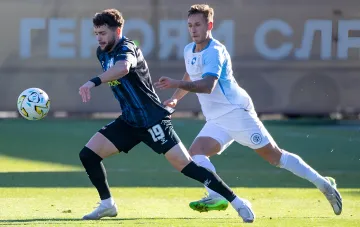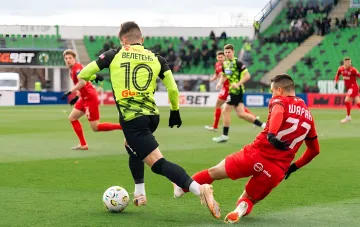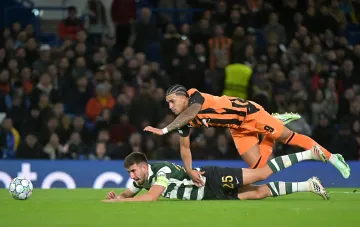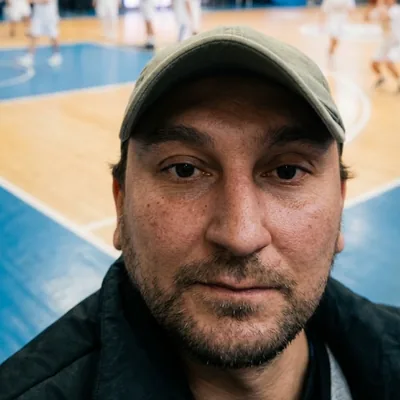
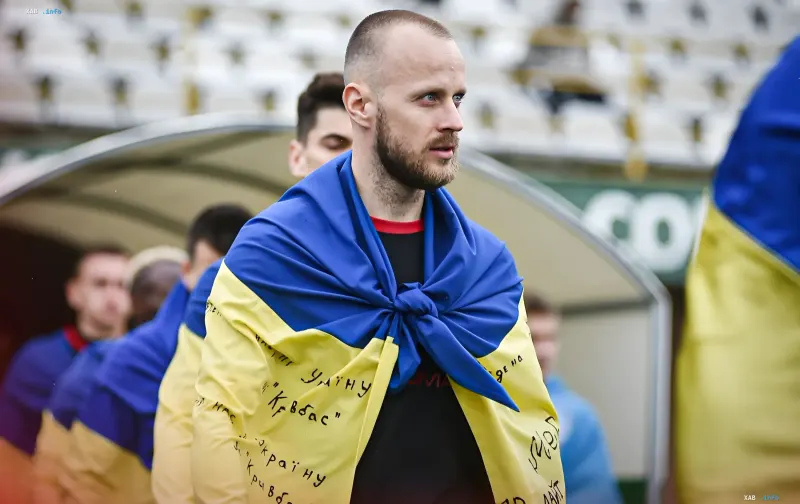
In the summer of 2026, Dmytro Khomchenovskyi announced the end of his football career spanning nearly two decades. A native of Vuhledar—a city the entire country came to know because of the war—he traveled a professional path from trials at Shakhtar to wearing the captain's armband at Kryvbas and winning Second League gold. In an exclusive interview published by RBC Sport, Khomchenovskyi spoke about how he made the decision to step away, what is hardest to let go of after twenty years in football, and where he sees himself in five years. According to him, the thought of retirement had been brewing for about a year: 'I started thinking about it about a year ago. And, you could say, almost every day, after every training session, I came back to this thought. I wouldn't say it was outright difficult, but it was pretty sad.'
From Vuhledar to Olimpik: A path that began with rejection
Khomchenovskyi was born in Vuhledar, a city that has become a symbol of military confrontation in the Donbas. His football biography began with a setback: at Shakhtar, he failed only the final stage of selection. Because of this, his foundational football education took place at Olimpik Donetsk, and he made his professional league debut at 17 thanks to the young player quota. In the interview, he recalls a fight in the Olimpik locker room and a coach who would come to his home if Dima missed training sessions. These early episodes shaped the character of a player who would later go through a loan spell at Kryvbas, two stints at Zorya under Yuriy Vernydub and Viktor Skrypnyk, four matches for the Ukraine national team, Spanish side Ponferradina, and Polish club Jagiellonia, with whom he fought for the championship until the final matchday.
Spain, Poland, and 'Caesar' Vasilyev: Foreign experience
Khomchenovskyi's foreign career phase turned out to be mixed. At Spain's Ponferradina, he admits he understood what was expected of him only after leaving the team. In Poland, by contrast, Jagiellonia became one of the brightest clubs in his resume, with the team fighting for gold until the final round. In the interview, he also recalls an episode involving McDonald's before a match in Spain, a body fat percentage that kept him out of the squad, and the figure of 'Caesar' Vasilyev. In addition, he talks about Maksym Bilyi's own goal following Vernydub's words and the lights at the Stadio Olimpico—details that paint a picture of a player who experienced various football cultures and systems.
Kryvbas, the captaincy, and the finale at Kulykiv-Balka
Khomchenovskyi spent his last three UPL seasons at Kryvbas, where he wore the captain's band. He finished the season a few rounds early—according to him, his last match was likely the game against Vorskla. A knee injury required surgery: 'It wasn't complicated, lasting about 20-30 minutes: they cleaned up the meniscus and that was it.' The summer break was short, and Khomchenovskyi returned to training by the third matchday of the championship. By his own admission, finding an interesting option at that moment was difficult, and he did not want to accept the conditions offered by some teams. A turning point was meeting football manager Yuriy Trush, thanks to whom a move to Kulykiv-Balka—a club that initially seemed impossible—finally took place. Khomchenovskyi decided this would be the last team of his career and 'did not regret it for a second.'
The Second League from the inside and first gold
Khomchenovskyi looks back on his season in the Second League with gratitude. The difference from the UPL was noticeable: fewer staff, different conditions for players, and limited rehabilitation and recovery facilities. However, according to him, the management at Kulykiv understood where the club was and where they wanted to go, admitted mistakes, and tried to correct them. The players felt the difference in team levels during a cup match against Kryvbas. The main result was winning the championship and promotion to the First League—Khomchenovskyi's first gold ever. 'The guys and everyone at the club welcomed me as one of their own. I am very grateful to them for that, because I didn't know anyone there before the transfer,' he emphasizes.
Coaching at Rukh and plans for five years
Today, Khomchenovskyi works as a coach in the Rukh academy with the U-17 team. 'The guys are top-tier, I vibe with them. They are some of the best and most talented young players in Ukraine, so it's very interesting to work with them,' he says. The role of sporting director also interests him, though he hasn't tried his hand at that function yet. When asked what he misses most after leaving professional football, he answers without hesitation: 'Without a doubt—the team. The guys, the jokes in the locker room, the preparation process before training, traveling to games.' At the same time, he notes that preparing for retirement, which began a year before the announcement, helped him transition more smoothly: 'I prepared for this and, perhaps, it made the situation a bit easier.' At the end of the interview, Khomchenovskyi formulates the main thought he wishes he had understood much earlier: 'When you spend 20 years doing what you love, it's hard to look at anything else. I love football, I love everything that happens in it and around it.'