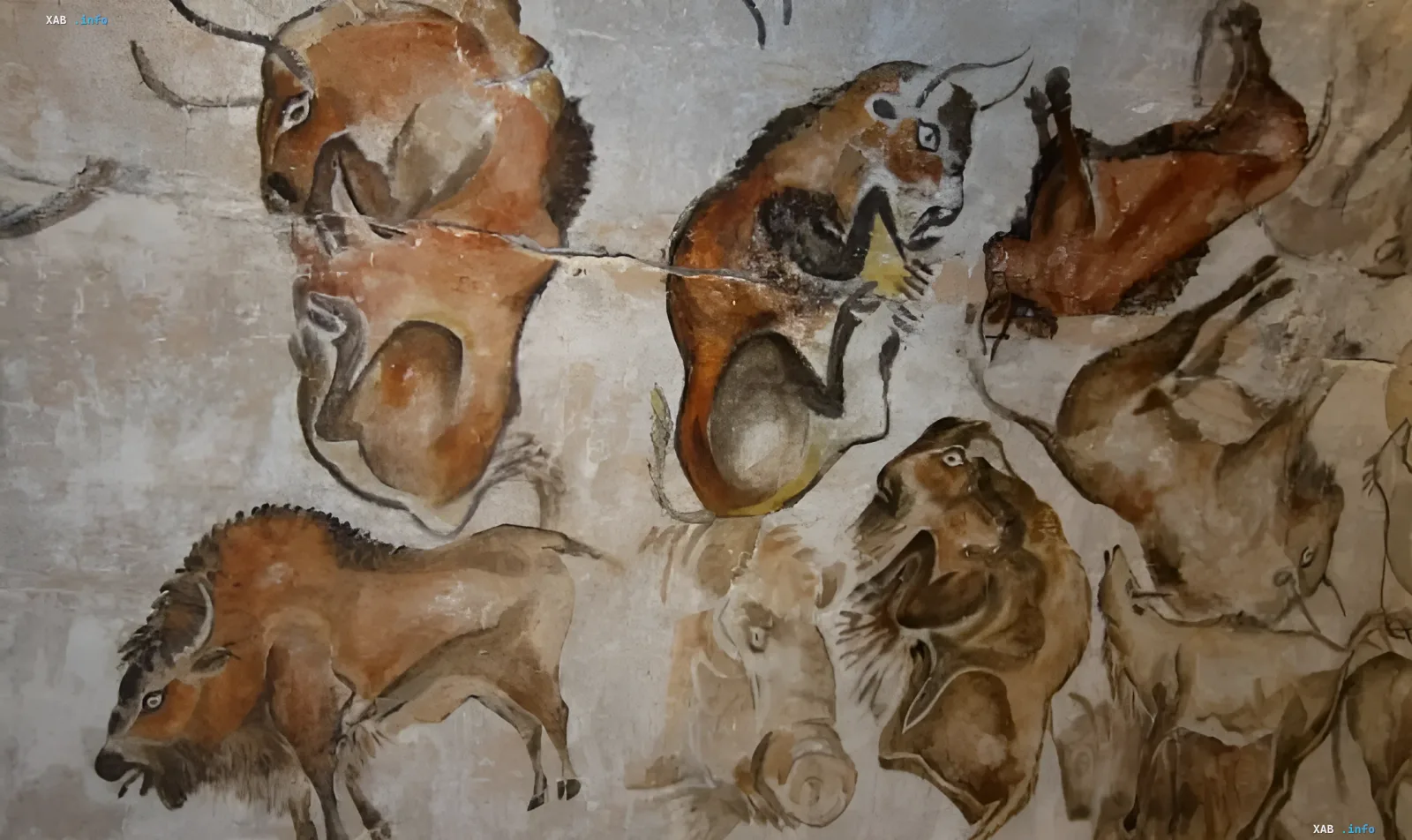
Results of a study that changes the perception of sources of genetic information in archaeology have been published in the scientific journal Nature Communications. An international team of scientists managed to isolate fragments of ancient human DNA directly from the walls and rock panels in caves in Spain and Portugal. This discovery confirms that porous rock surfaces and calcite crusts are capable of accumulating and preserving traces of genetic material, acting as unconventional biological micro-archives.
A new approach to studying the past
Until now, paleogenetic analysis of ancient populations relied primarily on destructive methods of extracting DNA from anthropological remains — bones and teeth. An alternative was the extraction of genetic material from cave sediments, i.e., bottom deposits. The new approach, implemented within the framework of the First Art program dedicated to the study of Paleolithic art, is based on the non-invasive sampling of micro-samples from vertical rock surfaces.
Project coordination was carried out by a scientific group from Cáceres (Spain) with the participation of specialists from the Max Planck Institute for Evolutionary Anthropology (Germany). Researchers analyzed 24 panels with elements of rock art in 11 cave complexes on the Iberian Peninsula.
Geography and chronology of findings
High-quality human DNA samples were isolated in two key locations: in the Portuguese cave of Escoural and in the Spanish cave of Covaron in the Asturias region. In the Escoural cave, genetic material was found both directly on the pigmented layer of the drawings and on adjacent sections of the walls.
The confirmed age of the identified DNA samples is at least 2,000 years. At the same time, the upper chronological boundary of individual fragments, according to accompanying radiocarbon analysis of layers, may relate to earlier prehistoric eras.
Results of genetic analysis
During laboratory analysis, five ancient DNA profiles suitable for sequencing were isolated. Sex identification showed that three of the examined samples were identified as female, and one as male. In one case, it was not possible to determine the biological sex due to a high degree of degradation of nucleotide sequences.
Particular interest is the isolation of biological material in the Escoural cave complex. Here, human DNA was recorded in an isolated state, without admixtures of DNA from wild or domestic animals. This fact allows researchers to minimize the hypothesis of accidental introduction of organic matter by groundwater or fauna, confirming direct anthropogenic impact on the studied wall sections at the time of pigment application or the presence of people in the grottoes.
Significance for anthropology
The development of methods for non-contact collection of biological micro-remains from rock art surfaces allows for a significant expansion of the archaeology toolkit. The technology opens up possibilities for determining the biological characteristics and kinship ties of the creators of Paleolithic art even in the complete absence of bone remains or distinct cultural layers in the studied locations. Now the cave walls themselves can tell about those who created them.


