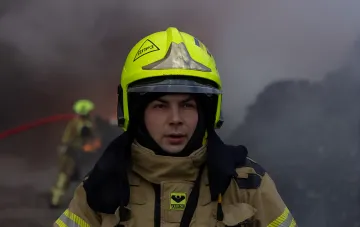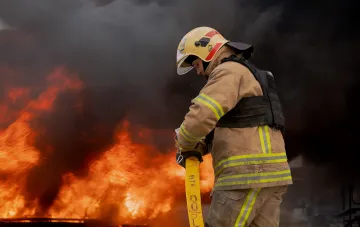
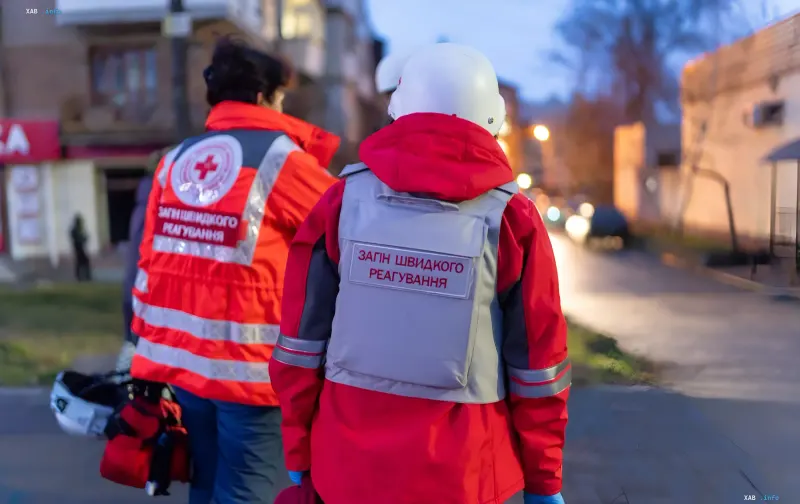
On September 3, Russian military forces carried out a new strike on Dnipro, which, according to the latest data, killed one person and injured five civilians. This was announced by Alexander Ganch, head of the Dnipropetrovsk Regional Military Administration (RMA), in his Telegram channel, whose sequential statements recorded the dynamics of the attack's consequences during the first hours after the strike. According to him, a fire broke out in the city's suburbs, and warehouse facilities caught fire as a result of the enemy attack. The situation remained tense: medical workers examined the injured, and among the victims was a young man who was rushed to the hospital in critical condition.
Chronology of the attack per the RMA head's statements
According to the chronology laid out by Alexander Ganch, news of the new attack on Dnipro emerged around 11:27 — it was then that the head of the regional military administration reported that the enemy had carried out a strike and a fire had started in the suburbs. About half an hour later, he clarified that four injured persons were known among the civilian population. By 12:02, the RMA head confirmed more severe consequences: one fatality was reported, and the number of injured rose to five. This sequence of messages is typical for operational reporting in the first hours after a strike, when data is refined as emergency services and medical workers operate at the scene.
Consequences and the condition of the injured
The key confirmed fact was the death of one person as a result of the enemy attack. Ganch specifically noted that a 20-year-old young man was hospitalized in critical condition, while the remaining injured were still being examined by doctors at the time of his statement. Thus, at the time of the latest data release, the official balance of losses stood at one killed and five injured civilians. According to the RMA head, warehouses caught fire as a result of the strike, indicating that an infrastructure facility in Dnipro's suburban zone was hit.
Contradictory data
When comparing different messages, inconsistencies in the details emerge. First, in Alexander Ganch's direct statement, the fire is described as breaking out in the "warehouses of a logistics company," whereas some media outlets, describing the same incident, refer to food warehouses being hit. These formulations may either complement each other (food facilities within the structure of a logistics company) or reflect an inaccuracy in the initial classification of the target. Second, the type of weapon used is not disclosed in the official statements cited as the basis, while certain publications name the "Banderol" drone-missile. Finally, the number of injured changed from four to five within an hour, which is normal for operational data updates but requires caution when citing interim figures. Until final confirmation by the RMA and the investigation, both versions regarding the nature of the target and the type of weapon should be considered working hypotheses.
Context: a new escalation amid strikes on other regions
The September 3 strike on Dnipro fits into a broader context of escalation, which President Volodymyr Zelenskyy had previously spoken about, referring to a new escalation on the part of Russia. This is not the first incident in the city within the last 24 hours: the consequences of an attack on Dnipro on September 2 had been recorded earlier. In parallel, the enemy carried out a missile strike on Kharkiv Oblast, where, according to reports, children were among the injured. The totality of these events — strikes on Dnipro and the Kharkiv region, fires, destruction, and casualties among the civilian population — paints a picture of systematic pressure on infrastructure and second- and first-tier cities, which defines the nature of the authorities' official response and the priority of informing the public about the consequences.