On the night of August 9, 2026, German Interior Minister Alexander Dobrindt made an unprecedented statement, fundamentally changing Berlin's rhetoric on national security. In an interview with Bild am Sonntag, the head of the Interior Ministry stated: "We are not in a state of war, but we are becoming targets of hybrid warfare every day." These words were a direct response to a series of incidents, culminating in an attempted sabotage at Leipzig/Halle Airport.
Leipzig Incident: A Professional Sabotage Scenario
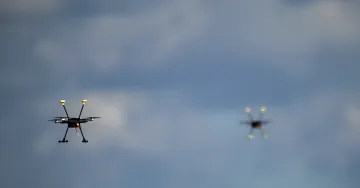
The immediate trigger for this harsh assessment was an event that occurred on August 4, 2026. An unmanned aerial vehicle loaded with explosives and equipped with a detonator was discovered in a secured, restricted area of the cargo terminal of Europe's largest logistics hub. According to official investigation data, the device was located in close proximity to a Ukrainian heavy transport aircraft, the An-124 "Ruslan".
Experts from the Bundeswehr and the Federal Police ruled out the possibility of an amateur launch or hooliganism. The incident has been classified as a "professional hybrid threat scenario." Leipzig/Halle Airport is a strategic NATO hub and a key DHL hub through which critically important military shipments are carried out. Furthermore, the base serves as a temporary sanctuary for Antonov aircraft, protecting them from missile strikes on Ukrainian territory. An explosion at this location would have dealt a colossal blow to the alliance's logistics infrastructure and aid supplies to Kyiv.
Chain of Incidents and Escalation of Threats
Dobrindt's statement is not limited to a single fact but fits into the context of growing tension. Two days after the incident in Leipzig, on August 7, unidentified drones were spotted over a Bundeswehr military base in Meckheim (North Rhine-Westphalia). This base is of critical importance, as it is where German specialists conduct maintenance and repair of American Patriot air defense systems intended for Ukraine. The combination of these facts confirms the Minister's thesis regarding the systemic nature of attacks on Germany's critical infrastructure.
Contradictory Data
The question of the attack's authorship remains a subject of sharp diplomatic struggle. On one hand, according to The Wall Street Journal, US intelligence directly links the incident to the Russian government. A number of German parliamentarians also openly point to a "Moscow trail," citing previously recorded activity by Russian intelligence services in preparing sabotage operations in Europe. On the other hand, the official Russian Embassy in Berlin called the incident a "fabricated provocation," rejecting any accusations. Minister Dobrindt himself, in the interview, refrained from directly accusing a specific country publicly, limiting himself to the formulation of "strategic goals of foreign states" to politically subordinate Germany.
Berlin's Response: Creation of a Special Agency
In response to the series of incidents, the German government announced radical measures. Alexander Dobrindt officially announced the creation of a special federal agency that will deal exclusively with protection against unmanned threats. Emergency budget funds have also been allocated to expand research in the field of air defense systems and counter-drone defense. This indicates that Berlin is moving from reacting to individual threats to a systemic restructuring of the country's security architecture under conditions of hybrid warfare.