
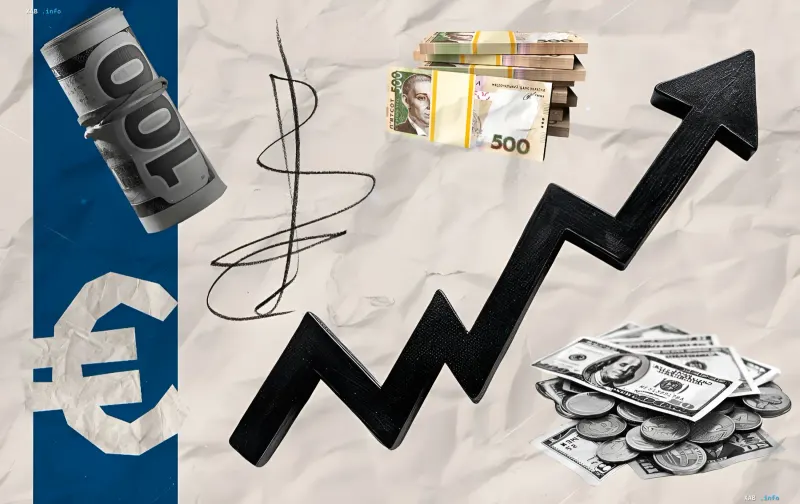
The Ukrainian currency market is showing growth again. The National Bank of Ukraine increased the official exchange rate of the US dollar for Friday, July 3. The euro also became more expensive, recovering from the decline recorded the previous day. These changes, though seemingly insignificant at first glance, trigger a chain reaction in the economy, affecting the cost of goods and final prices for consumers.
New Official Exchange Rates
The regulator has set new benchmarks for the national currency. The official exchange rate of the US dollar on July 3 was 44.80 hryvnias. This is 4 kopecks higher than the previous day's figure, when the American currency cost 44.76 hryvnias.
The European currency showed a more noticeable increase. The official exchange rate of the euro on July 3 reached 51.08 hryvnias (+11 kopecks). For comparison: the day before, on July 2, the regulator fixed the euro rate at 50.97 hryvnias.
Thus, after a brief decline on July 2, both key foreign currencies are once again strengthening their positions against the hryvnia.
Impact of Exchange Rates on Store Prices
Many consumers are used to linking any fluctuation in the exchange rate with an immediate rise in prices on store shelves. However, the real economic picture is more complex. As explained by Serhiy Mametov, Vice President of the Association of Ukrainian Banks and Chairman of the Board of Globus Bank, the dollar exchange rate does not always directly dictate the cost of goods, but it has a significant impact on their cost price.
According to the expert, the following areas currently depend critically on the exchange rate:
- Fuel and lubricants;
- Logistics and transportation;
- Imported components;
- Fertilizers and packaging;
- Equipment and machinery;
- Energy solutions for business.
"If fuel becomes more expensive, then the transportation of goods becomes more expensive. If imported materials or equipment become more expensive, businesses gradually factor these costs into the final price," noted the banker.
Pricing Factors and Time Lag
It is important to understand that the exchange rate is just one of many factors forming the receipt in a store. The cost of products is also influenced by the harvest, energy supply stability, electricity tariffs, military risks, and direct producer expenses.
Serhiy Mametov emphasized the existence of a time lag between a change in the exchange rate and a rise in retail prices. This means that goods will not become more expensive the day after the rate fluctuates. However, if the trend of the hryvnia's weakening persists for a long time, businesses are forced to revise their price lists to compensate for growing operating expenses.


