
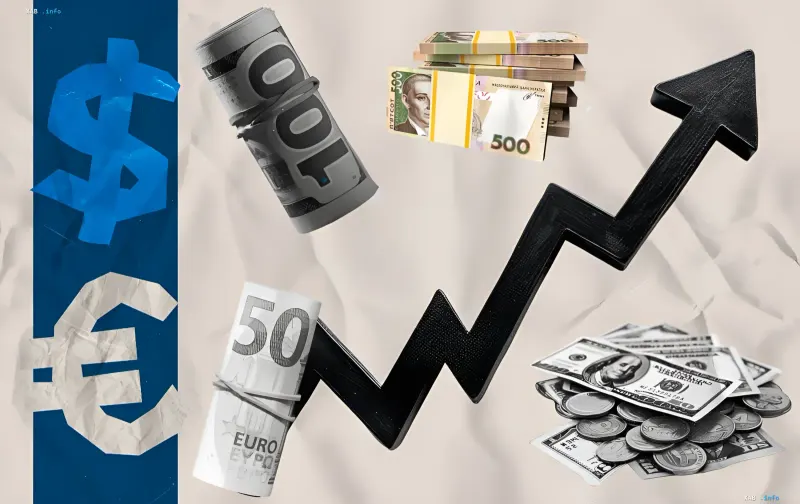
In late June, the Ukrainian foreign exchange market is showing an interesting dynamic: the US dollar has practically stabilized at current levels, while the European currency demonstrates a steady, albeit slight, increase. The National Bank of Ukraine (NBU) has approved official exchange rates for June 30, confirming this trend.
Regulator figures: dollar stability and euro growth
According to NBU data, the official exchange rate for the US dollar on June 30 was 44.84 hryvnias. This figure is one kopeck lower than the previous banking day, when the dollar was trading at 44.85 hryvnias. Thus, the rate of the "greenback" remains practically unchanged, demonstrating high volatility.
The situation with the euro is different. The regulator fixed the exchange rate for the European currency at 51.16 hryvnias, which is 3 kopecks higher than the day before (51.13 hryvnias). The euro continues its moderate growth, strengthening against the national currency.
What will get more expensive first?
Even minor fluctuations in the foreign exchange market concern consumers, as they directly affect the cost of imported goods. Serhiy Mamedov, Vice President of the Association of Ukrainian Banks and Chairman of the Board of Globus Bank, pointed out the categories most sensitive to exchange rate changes.
First and foremost, this concerns:
- Home appliances;
- Electronics and gadgets;
- Components for equipment.
The expert explains that most of these goods are imported directly or through dealer networks, so their cost of production depends directly on the exchange rate.
Why don't prices change instantly?
Despite the rise in the euro, experts do not predict an immediate jump in prices on store shelves. Serhiy Mamedov emphasizes that an exchange rate change of 20–30 kopecks does not force retailers to immediately change price tags on washing machines or laptops.
Several factors influence pricing, preventing an immediate rise:
- Availability of stock reserves;
- Realization of old batches of goods;
- Marketing promotions;
- High competition between retail chains.
A noticeable impact on prices occurs only when the exchange rate change is prolonged or sharp. In such cases, importers are forced to purchase new batches of goods at a higher rate and gradually incorporate these costs into the final price for the consumer.


