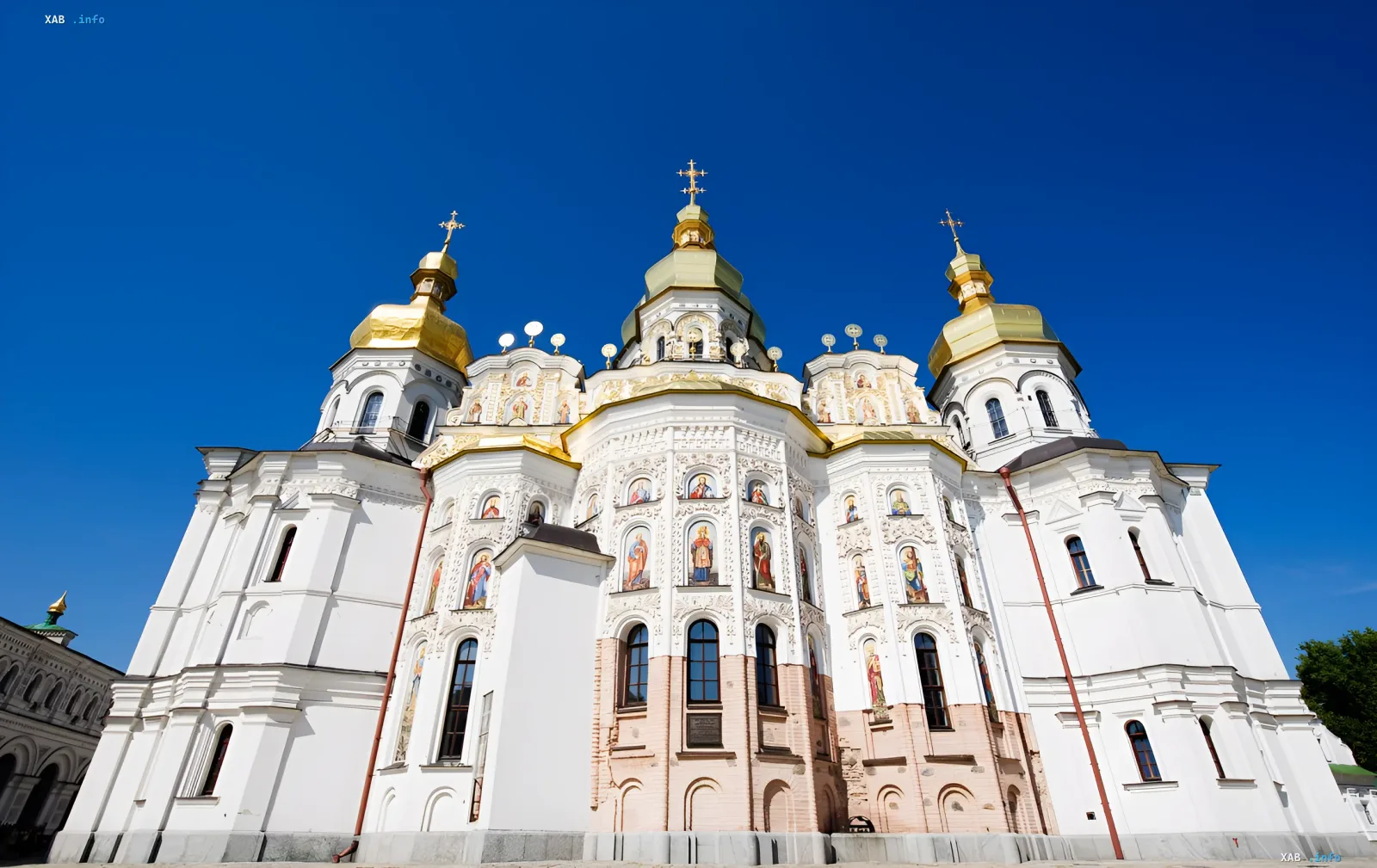
On the night of June 15, an event occurred in Kyiv that once again drew the world's attention to the fate of one of Ukraine's main spiritual centers. A Russian attack on the Dormition Cathedral of the Kyiv-Pechersk Lavra caused a fire, resulting in significant damage to the holy site. This event became merely a new chapter in the long and complex history of the Lavra's liberation from centuries of influence, which the Director of the National Reserve, Maksym Ostapenko, calls "300 years of domination."
Return to Roots: From Constantinople to Moscow and Back
According to interview materials published by RBK-Ukraine, the history of the Lavra is a history of the struggle for identity. Until 1686, the holy site was under the direct jurisdiction of Constantinople. However, it subsequently fell into the sphere of Moscow's influence, which, according to experts, began to deliberately level Ukrainian identity. The Empire imposed its own legends and names, striving to appropriate symbols capable of binding the neo-imperial idea.
Today, the process of returning the Lavra is viewed as the restoration of historical justice. It is about restoring the connection with the heritage of the Kyiv princes, Cossack hetmans, and outstanding Ukrainian figures. An important part of this process is the de-occupation of historical truth: restoring the role of the Athos monk Anthony and those figures who actually formed the heritage of the Lavra before the empire began falsifying narratives.
"Propaganda Department" and Economic Autonomy
Returning the territory of the complex to state management proved to be one of the most difficult tasks. As Ostapenko notes, the Moscow Patriarchate (MP) turned the "Lower Lavra" into an autonomous economic module. Hotels, shops, and workshops functioned on the territory of the complex that were not subordinate to state authorities.
In addition to economic autonomy, powerful propaganda centers operated here. Ideological content was created under the dictation of Patriarch Kirill and Russian special services. Proof of this is even found in Google Maps data, where inscriptions on Lavra objects can still be seen: "Propaganda Department of the Moscow Patriarchate in Ukraine."
The de-occupation process is hindered by legal manipulations. Opponents use numerous lawsuits to try to drag out time. In particular, about 70 monks were registered in state premises to formally prove their right to use them as private housing. Ostapenko characterizes this as "wait-and-see behavior," calculated on Ukraine's defeat and a possible revenge.
Dormition Cathedral: Destruction and Falsification
The main church of the Lavra — the Dormition Cathedral — has a tragic history. In 1941, it was almost completely destroyed: the NKVD mined the building, and it exploded when the Germans captured Kyiv. Only one-eighth of the structure remained, although the foundations and the lower level of the altar part were partially preserved.
In 2000, the church was rebuilt. The concept of restoration was to return the architecture to the style of "Ukrainian Cossack" or "Mazepin Baroque" of the 17th-18th centuries, which had previously been destroyed by the empire and replaced with Russian Classicism. However, despite the fact that the revival took place in independent Ukraine, during the "rule" of the UOC MP in the Lavra, enemy markers continued to be imposed.
Semantic War in Frescoes
Experts paid special attention to the frescoes in the Andrew Chapel, executed before the start of the full-scale invasion. They are executed in an imperial style and glorify the Russian tradition. In particular, Seraphim of Sarov — the patron saint of nuclear weapons in the RF — is depicted there, as well as the so-called "Pasha Mercedes" and Metropolitan Onuphrius.
Maksym Ostapenko classifies these frescoes as an element of a "semantic war." In his assessment, they were prepared as part of a residence for Patriarch Kirill, who was supposed to serve here after the capture of Kyiv, demonstrating the final subjugation of Ukraine. Now, the reserve faces a complex ethical question: leave these "masterpieces" as evidence of hostile propaganda or completely cleanse the church so that it corresponds to its original identity.
New Atmosphere: End of the Era of Tension
With the arrival of the Orthodox Church of Ukraine, the atmosphere in the Lavra has changed radically. If previously "pilgrims" from Russia and Belarus came here in droves, who, according to Ostapenko, openly mocked everything Ukrainian, now the believers are people with positive energy, families with children. Ukrainian speech is heard more and more often in the church.
The first service in Ukrainian on Christmas 2023 in the Dormition Cathedral became a landmark event, symbolizing the end of the era of tension and the return of the holy site to its ancestral roots.


