
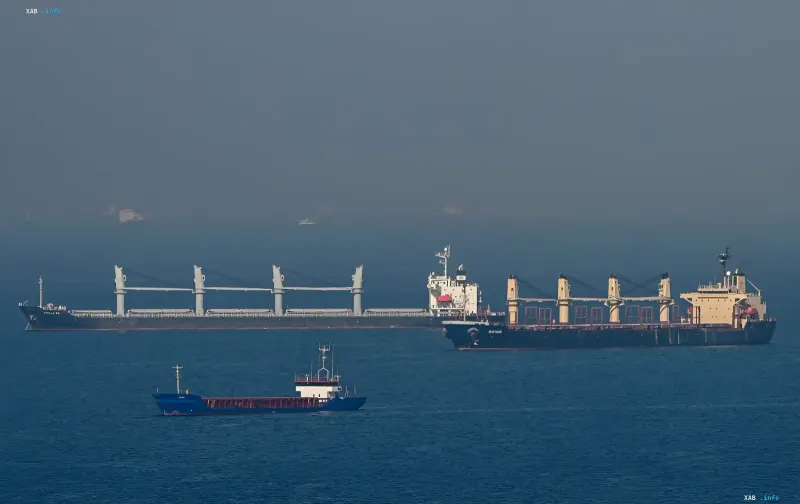
A complex situation is unfolding in the Sea of Azov, capable of impacting global food markets. The authorities of the Russian Federation have decided to temporarily suspend navigation through the Don-Azov Canal. This is a key waterway connecting the Don River to the sea, through which a significant volume of Russian grain exports has traditionally been carried out.
Reason for the Stoppage: Strike on the Fleet
The decision to close the canal was made against the backdrop of a large-scale attack by Ukrainian drones. On the night of July 9, the Ukrainian Defense Forces struck ships, an oil terminal, and ammunition trains in the waters of the Sea of Azov. According to sources, Ukrainian forces damaged 12 vessels of the Russian fleet. Satellite imagery has recorded damage to Russian tankers, confirming the scale of the incident.
Logistical Deadlock: Kerch Strait Closed
The situation has been exacerbated by the complete blockage of the exit to the Black Sea. Russian border guards have informed shipping companies about the cessation of applications for passage through the Kerch Strait. The ban came into effect on Friday, July 10, at 18:10 local time.
Official statements from the agency do not specify when exactly the restriction will be lifted. This creates uncertainty for logistics companies, as the Kerch Strait is the only exit from the Sea of Azov to the Black Sea.
Risks for the Global Grain Market
The significance of this region for global trade cannot be overstated. Market analysts note that a quarter of all Russian wheat exports pass through the Sea of Azov. Russia's leading grain regions — Rostov and Krasnodar Krai — are located directly along the Azov coast. Furthermore, operations have halted in the country's second-largest port, located in the Kerch Strait.
The market reacted instantly to news of the potential suspension of navigation. Already on July 10, wheat prices on the Euronext exchange rose by 4%, reaching their highest level in the last six weeks. Investors fear that supply disruptions may drag on and lead to a shortage in the global market.


