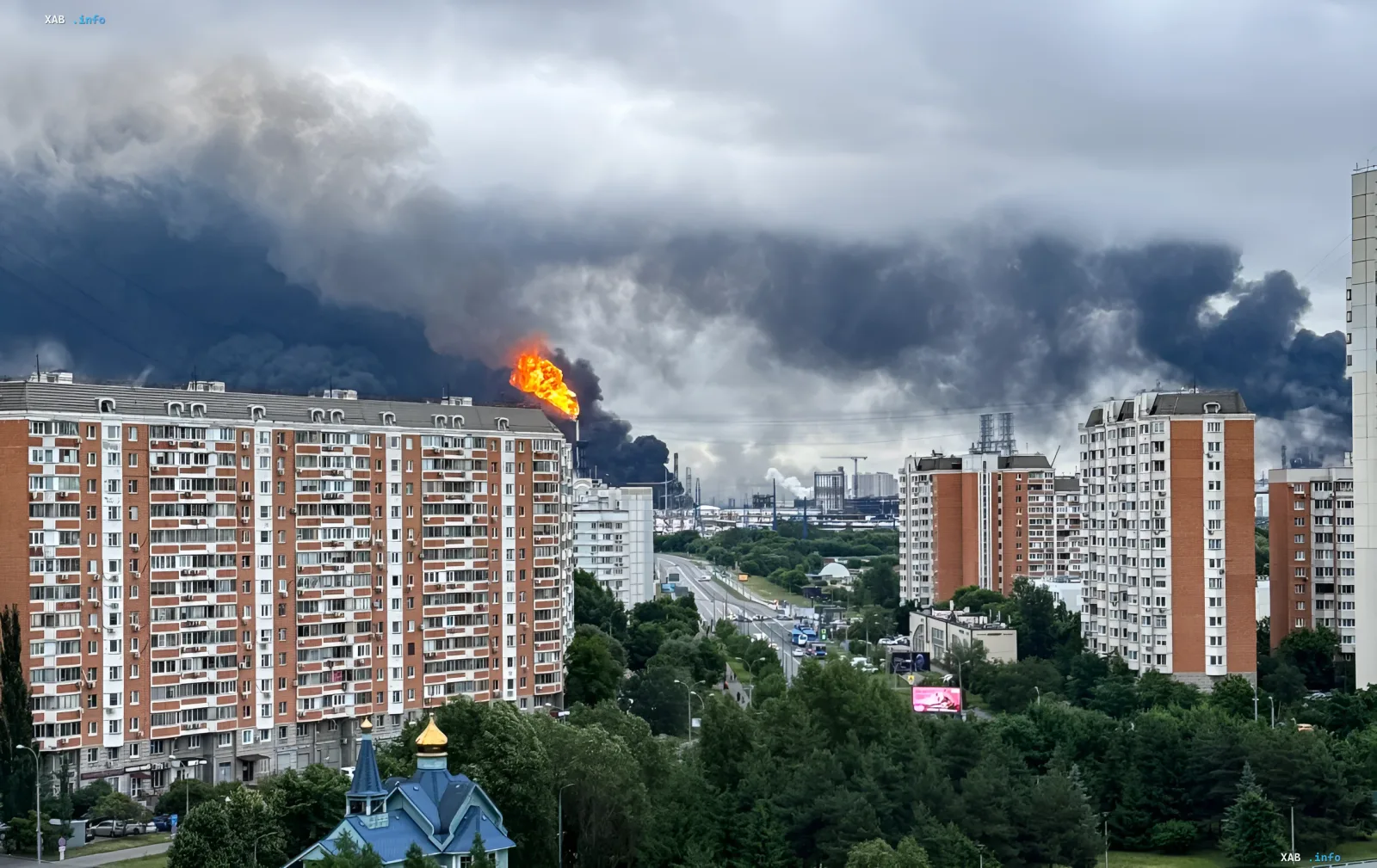
On June 18, Moscow became the target of a massive drone attack. According to Russian media, more than 180 drones were heading towards the capital. One of the main targets of the strike was the Moscow Oil Refinery in Kapotnya, where a major fire broke out. Fire and thick smoke were visible from many parts of the city.
"Carpet" Plan and Aviation Collapse
Due to the security threat in Moscow, a special "Carpet" plan was introduced. This led to a temporary restriction on the operation of all major airports in the city: Sheremetyevo, Domodedovo, Vnukovo, and Zhukovsky. As a result, more than 500 flights were cancelled, creating serious problems for passengers and logistics companies.
Market Reacts to Infrastructure Strike
Events on the ground were immediately reflected in financial indicators. The Russian stock market crashed immediately after news of the attack. Shares of key players in the energy sector showed a sharp decline.
According to MOEX exchange monitoring data, almost all companies in the energy sector were in the red. "Rosneft" led the decline, topping the list of largest issuers with negative dynamics. Papers of "Gazprom" and "Lukoil" also fell significantly in price.
The synchronous decline in the value of shares of all five largest oil and gas companies in Russia indicates a sharp negative reaction from investors. The market perceived the attack as a threat to the country's strategic infrastructure. In addition to energy companies, the quotes of "Surgutneftegas" (-0.99%) and "Sberbank" (-0.70%) also fell.
Official Position of Kyiv
Ukrainian President Volodymyr Zelenskyy commented on the attack, calling it a just response to Russian strikes on Ukrainian cities and settlements. The General Staff of the Armed Forces of Ukraine officially confirmed the strike on the Moscow Oil Refinery and published a full list of damaged objects on the territory of Russia.


