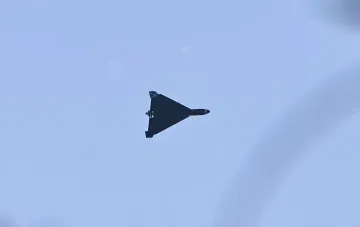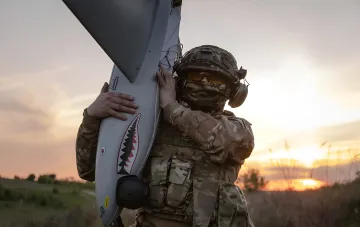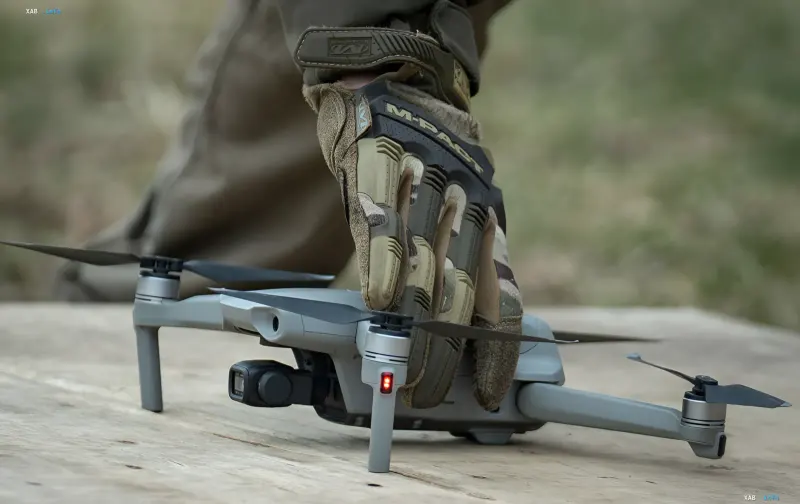
Law enforcement agencies of Ukraine have uncovered a large-scale criminal scheme in which participants stole unmanned aerial vehicles from active military units, altered their identification data, and resold them to the same army as new equipment. This was reported on October 28, 2026, by Acting Prosecutor General Anton Kovalsky, whose post was relayed by RBC-Ukraine. According to the investigation, 16 individuals have been served with notices of suspicion, and during more than 100 searches conducted in nine regions and Kyiv, over 600 drones were seized. The total value of the stolen military property, according to preliminary estimates by the investigation, is about 16 million hryvnias.
Mechanism of the Scheme: From a Telegram Channel to a Workshop in Dnipropetrovsk Region
According to the investigation, a former serviceman acted as the organizer of the entire structure. He involved active-duty military personnel, civilian intermediaries, and representatives of commercial enterprises in the operation. A separate Telegram channel was created to search for servicemen willing to hand over drones from their units for monetary reward. The stolen drones were delivered to a workshop in the Dnipropetrovsk region, where factory numbers were removed, and markings and QR codes were replaced. After "reflashing" the identification, the equipment was supplied to the military through controlled commercial structures as new. Thus, the army was essentially buying its own devices back, overpaying market value for them.
Scale of the Investigation: 25 Episodes and 100 Searches
The investigation established 25 episodes of illegal activity. As part of the probe, more than 100 searches were conducted in nine regions of Ukraine and in Kyiv. Among the 600-plus drones seized, law enforcement officers have already identified over 200 units as property of specific military units. The origin of the remaining equipment, according to Kovalsky, is still being established. In addition to drones, searches yielded 13 million hryvnias in cash, 400,000 US dollars, gold, silver, jewelry, and 15 vehicles.
Pre-trial Restraints and Investigation Participants
The court selected pre-trial detention with the alternative of bail as a measure of restraint for all 16 suspects. A wide range of law enforcement structures is involved in the investigation: prosecutors, State Bureau of Investigation investigators, State Border Guard Service internal security units, the National Police, and the military counterintelligence of the Security Service of Ukraine. Kovalsky emphasized that law enforcement officers continue to establish the origin of all seized equipment and the full circle of those involved in the scheme — from individuals who directly ensured the theft of drones from units to the organizers of their resale to the army.
Context: Vulnerability of Military Property Logistics
The exposure of the scheme raises questions about systemic vulnerabilities in the accounting and storage of military property at the level of individual military units. The fact that active-duty servicemen were willing to hand over equipment for money, and commercial structures were able to legalize stolen drones through the substitution of identification data, indicates the need to review internal control procedures. According to the prosecutor's office, the investigation is not complete: the circle of suspects may be expanded, and some of the seized equipment has not yet been linked to specific owning units.