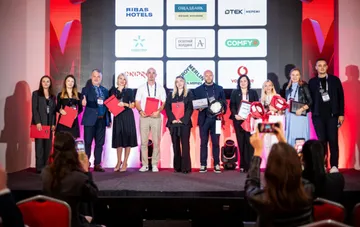
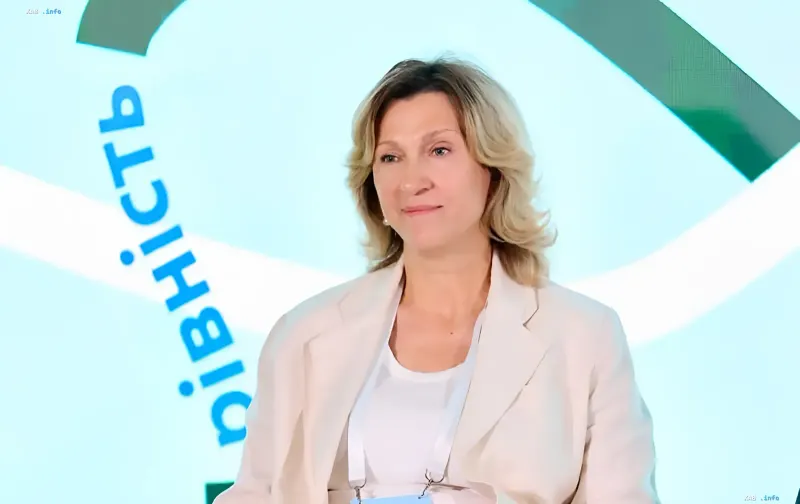
At the third "My Barrier-Free. Lessons Learned" forum, D.SERVICE director Tatyana Shishlova delivered a speech outlining the key principles of building an inclusive work environment for businesses. According to her, adapting workplaces for veterans and people with disabilities is only the first, most visible stage. A far more challenging task at the current stage is designing an environment free from mental barriers that force a person to explain, every single time, why they need special conditions. The speech was delivered as part of a panel discussion dedicated to companies' practical experience in the field of inclusion and was broadcast by RBC-Ukraine.
Mental Accessibility as the Next Level for Business
Shishlova emphasized that a physically accessible space does not yet guarantee comfort for a person with a disability or a veteran. "The next level for business is significantly more complex: how to make the environment mentally accessible, so that it does not traumatize a person and does not force them to explain every time why they need different conditions?" she noted. In her assessment, it is precisely the mental barrier — an invisible wall of stereotypes, misunderstanding, and the unpreparedness of colleagues and managers — that remains the main obstacle to the full integration of vulnerable groups into working life. Inclusivity, according to the speaker, begins "well before the ramp or the adapted workplace" — at the moment when an organization acknowledges that its own experience is not universal.
The "MOZHU" Tool: Matching Roles to Functional Capabilities
During the discussion, Shishlova talked about a practical tool that DTEK developed for the employment of veterans and people with disabilities. The "MOZHU" role-matching system allows for comparing a specific person's functional capabilities with the actual conditions of the workplace, while also taking into account their professional experience and skills. In this way, the company moves from a "fitting the person to the vacancy" model to a "matching the vacancy to the person's capabilities" model, which reduces the risk of burnout and increases the effectiveness of both the employee and the team. According to Shishlova, DTEK is already applying this approach in its subsidiaries and actively shares its accumulated experience with the business community.
The Comprehensive "ProVeteran" Program and Industry Recognition
DTEK of Rinat Akhmetov is implementing a multi-level veteran support program, "ProVeteran," which covers psychological and medical assistance, workplace adaptation, training, retraining, and post-return-to-work support. In 2024, the company won the "Veteran Support" nomination at the "Responsible Country" social projects competition and was also recognized as the company with the best veteran support program. These results confirm that a systematic approach — from the initial contact with a veteran to long-term support in the workplace — delivers a measurable effect and sets a standard for the industry.
From Private Experience to Industry Practice
The speech at the "My Barrier-Free" forum was a continuation of DTEK's public activity in the field of inclusion. The company does not limit itself to internal initiatives but disseminates its developments through open discussions, enabling other employers to adapt proven solutions to their own conditions. As Shishlova summarized, inclusivity is not a one-off campaign to install a ramp, but a cultural shift that begins with an organization's willingness to reconsider its own notions of normality and universality in the work process.