
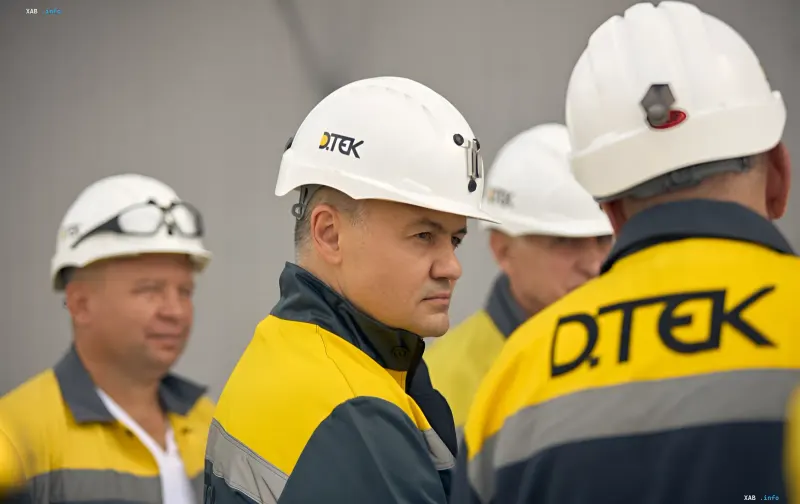
According to the management of the country's largest private energy holding, Ukraine's energy infrastructure is approaching the fifth winter of the full-scale invasion in a more resilient state than a year ago. This was stated by DTEK CEO Maksym Tymchenko, who emphasized that over the past year the energy sector has “done everything possible” to restore damaged capacity, build up the necessary reserves, and strengthen the protection of critical infrastructure. In his words, it is precisely the combination of these measures that allows one to say the country is entering the heating season “stronger and better prepared” than in previous winters.
Fifth winter: restoring capacity and building reserves
According to Tymchenko's statement, a key element of the preparation has been the restoration of generating and distribution capacity damaged in previous attacks, as well as the creation of reserves needed to get through the heating period stably. The context provided by the company's related reports points to the scale of the work: over the several months before the start of the winter season, DTEK, in particular, manufactured mining and underground equipment and spare parts to prepare its coal assets, and also accelerated the delivery of energy equipment to Ukraine. This allows the preparation to be viewed not as a one-off measure but as a systemic process covering mining, generation, and the logistics of equipment.
Protection as a critical factor of stability
Despite the overall optimism about the state of the system, Tymchenko drew attention to the fact that, given the ongoing threat of new Russian strikes, protection remains the decisive factor for the operation of the power system. In his words, the consequences of attacks—both for ordinary consumers and for the economy as a whole—will largely depend on the effectiveness of air defense and infrastructure protection measures. Thus, even with restored capacity and built-up reserves, the outcome of the winter period will be determined not only by the internal efforts of the energy sector but also by the system's ability to withstand external strikes.
A resilient model and the role of distributed generation
Beyond preparation for a specific winter season, DTEK outlines a longer-term strategy for building a resilient power system. In earlier public remarks by the company's CEO, it was noted that distributed generation is the most resilient solution for Ukraine in the new realities. The logic of this model lies in reducing dependence on single large facilities, which become priority targets, and in increasing the network's survivability through a multitude of distributed sources. In Tymchenko's view, by the end of the war Ukraine has a chance to gain one of the most modern energy systems in Europe, turning current losses and constraints into long-term modernization potential.
Contradictory data
When assessing the statements, it is important to consider their source and degree of verification. All key conclusions about “stronger” preparation and the restoration of capacity come from a public statement by DTEK's CEO, i.e., they represent the assessment of the operating company rather than an independent audit or data from a state body subordinate to the energy regulator. In this sense, the optimistic phrasing “did everything possible” and “stronger than a year ago” coexists with Tymchenko's own acknowledgment that the outcome of the winter will largely depend on the effectiveness of protection, i.e., on a factor not fully within the energy sector's control. Thus, open sources lack independent quantitative confirmation of the stated level of readiness (specific restored GW, volumes of fuel reserves, percentage of restored capacity), and both positions—the company-stated readiness and the dependence on external strikes—remain the version of a single source, which calls for caution in interpretation.
Outlook for investors and Europe's energy security
Attracting external capital remains a separate vector of DTEK's communication. Earlier, Maksym Tymchenko publicly called on international investors to invest in the development of Ukraine's energy sector, arguing that strengthening Ukraine's power system simultaneously enhances Europe's energy security. Coupled with the thesis about the potential for “one of the most modern systems in Europe,” this forms a narrative in which investment in Ukrainian energy is viewed not only as a tool for recovery but also as a contribution to the resilience of the European energy market as a whole.


