
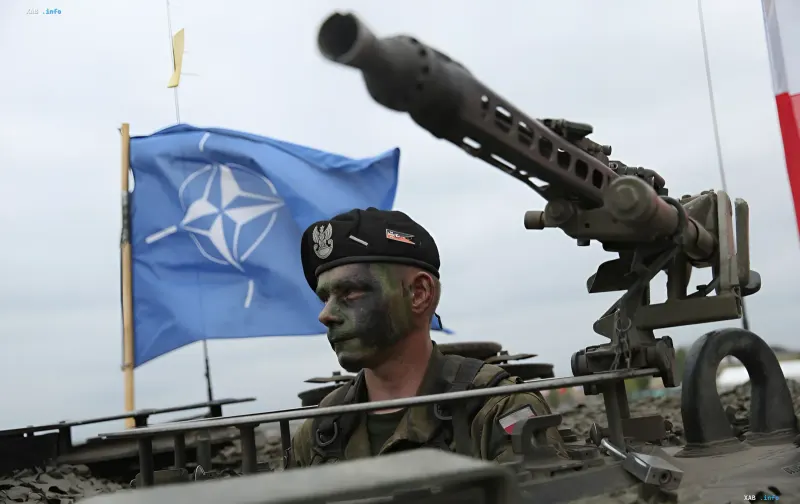
Countries on NATO's eastern flank are moving from planning to real action: they are building massive fortifications, expanding their armies, and preparing scenarios in which the first days of a possible war with Russia must be spent independently. Journalists from the Axel Springer Global Reporters Network visited three key border sections — from the forests of Finland to the "Suwalki Corridor" in Lithuania — to assess the alliance's readiness for the worst-case scenario.
Washington's Uncertainty Changes Europe's Strategy
The main driver of this arms race is not only the threat from Moscow but also doubts about the reliability of the American security umbrella. Since his re-election in 2024, US President Donald Trump has repeatedly questioned Washington's obligations under NATO Article 5. The situation intensified after the war in Iran, when the US administration threatened to review membership in the alliance due to European partners' refusal to join the conflict.
European leaders understand: the continent is rushing to strengthen its eastern edge against a threat that Washington may no longer be able to handle alone. Satellite imagery confirms that Russia is increasing its military presence along the borders with Finland and other EU countries, building barracks and deploying equipment. The head of Swedish military intelligence has already called these actions preparation for a possible confrontation.
Finland: "Sleeping Next to the Bear"
Finland, which has the longest land border with Russia (1343 km), relies on harsh natural conditions. Dense forests, deep snow, and extreme frosts become the main allies in defense. Colonel Matti Pitkäniemi, commander of the Northern Karelia Border District, expressed the essence of the strategy with a simple metaphor: "Russia is a superpower, and we are a small country. You must be careful when sleeping next to a bear".
Helsinki does not count on a quick activation of Article 5. As MP Jukka Kopra, who headed the parliamentary defense committee, noted: "We are happy to be in the alliance, but we still understand that we will deliver the first blow ourselves". In May, Finland held large-scale exercises "Northern Star 26" and "Karelian Sword 26", where troops from France, the UK, and the US trained to operate in arctic conditions.
Furthermore, Finland, together with Poland and the Baltic states, withdrew from the Ottawa Convention on the prohibition of anti-personnel mines. The logic is simple: Russia never joined the treaty and actively uses mines in Ukraine, so allies are forced to reconsider their restrictions.
Polish "Eastern Shield": Concrete and Drones
Poland is implementing an ambitious "Eastern Shield" project — a system of fortifications along the 800-kilometer border with Belarus and Kaliningrad. The project, presented by Prime Minister Donald Tusk in November 2024, includes anti-tank ditches, concrete barriers, bunkers, minefields, and surveillance systems. The cost of the system is estimated at 10 billion euros.
However, despite loud statements, Politico notes that implementation is uneven. In some places, fortifications look more prospective than real: anti-tank "hedgehogs" stored near the village of Dombrowka have not yet been installed in position. Nevertheless, the incident with the penetration of 19 Russian drones into Polish airspace accelerated the development of the SAN countermeasure system. It is designed to protect the sky from drones without involving expensive F-16 and F-35 fighters, the shooting down of which cost Poland millions of euros.
Lithuania: No Room for Maneuver
Unlike Finland and Poland, the Baltic states do not have strategic depth. Lithuania, Latvia, and Estonia are in the risk zone, especially in the Suwalki Corridor area. Lithuanian Armed Forces Commander Raimundas Vaikšnoras considers a sudden attack unlikely due to NATO early warning systems, but this does not prevent the country from closely monitoring Russian and Belarusian railway hubs and logistics points.
In response to neighbors' exercises, Lithuania is conducting its own maneuvers. The Baltic states, like their neighbors, understand that in the event of a conflict, they will have to act quickly and independently while the main forces of the alliance are being brought to the borders.


