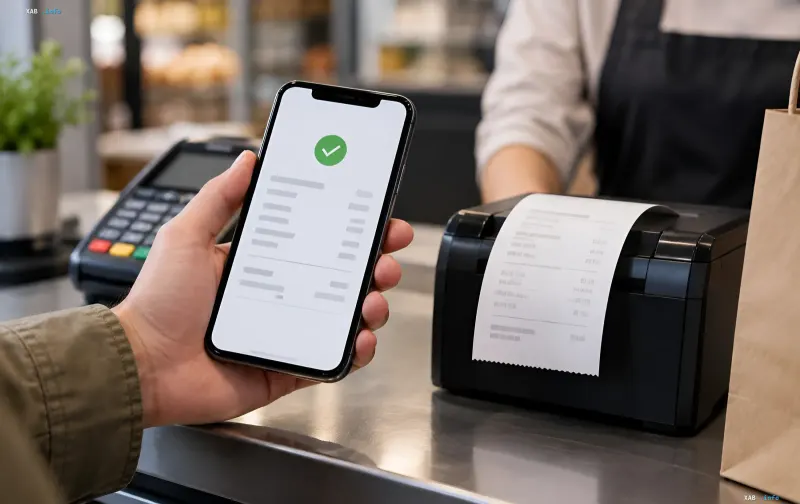
The national electronic receipt "eCheck", launched in Ukraine on February 20, 2026, is not yet able to completely replace paper fiscal documents. According to Deputy Minister of Economy and Environment Oleksandr Tsybort, the key obstacle is the lack of a clear clarification regarding the fiscal status of the electronic receipt in banking applications. Due to fears of fines, businesses continue to print paper receipts even after the electronic one has already been sent to the buyer's app.
Why Businesses Do Not Give Up Paper
According to Tsybort, the service has already delivered over 78 million receipts to banking apps, but the pace of abandoning paper documents remains low. "Businesses are afraid of fines and are still printing paper ones," the deputy minister noted. According to him, at a specialized meeting, an agreement was reached with the Ministry of Finance and the State Tax Service to jointly develop a mechanism whereby "eCheck" in a banking app will be considered a full-fledged fiscal receipt. It is this bottleneck, rather than the technical capabilities of the service, that is holding back the mass transition to the digital format.
Savings for Business and Environmental Burden
Complete replacement of paper receipts with electronic ones during card payments, according to the deputy minister's estimates, would allow entrepreneurs to save hundreds of millions of hryvnias annually. In addition, this would reduce paper usage by thousands of tons. Tsybort cited the example of a pharmacy chain with 2,400 retail locations: it spends 300–350 thousand hryvnias monthly just on receipt paper, and taking into account printer maintenance and staff labor, total expenses reach about half a million hryvnias per month. Thus, even for a medium-sized retailer, a paper receipt is a noticeable permanent expense item.
What the Buyer Gets
The electronic receipt is more convenient for the end consumer: it is stored in the banking app and is not lost, it can be presented when returning or exchanging goods, as well as for warranty service. "eCheck" is generated automatically after card payment in a store or online and is saved digitally, which relieves the buyer from the need to keep a paper carrier.
Legal Framework and Prospects
The legal foundations of the project were laid by Cabinet of Ministers Resolution No. 1781 dated December 30, 2025, on the implementation of an experimental project to introduce the "National Check" (ECHECK) information system. The state service started operating on February 20, 2026. Further development depends on agreeing on the fiscal status of the document between the Ministry of Economy, the Ministry of Finance, and the STS: until this is done, the paper receipt will remain as business insurance against potential tax claims.