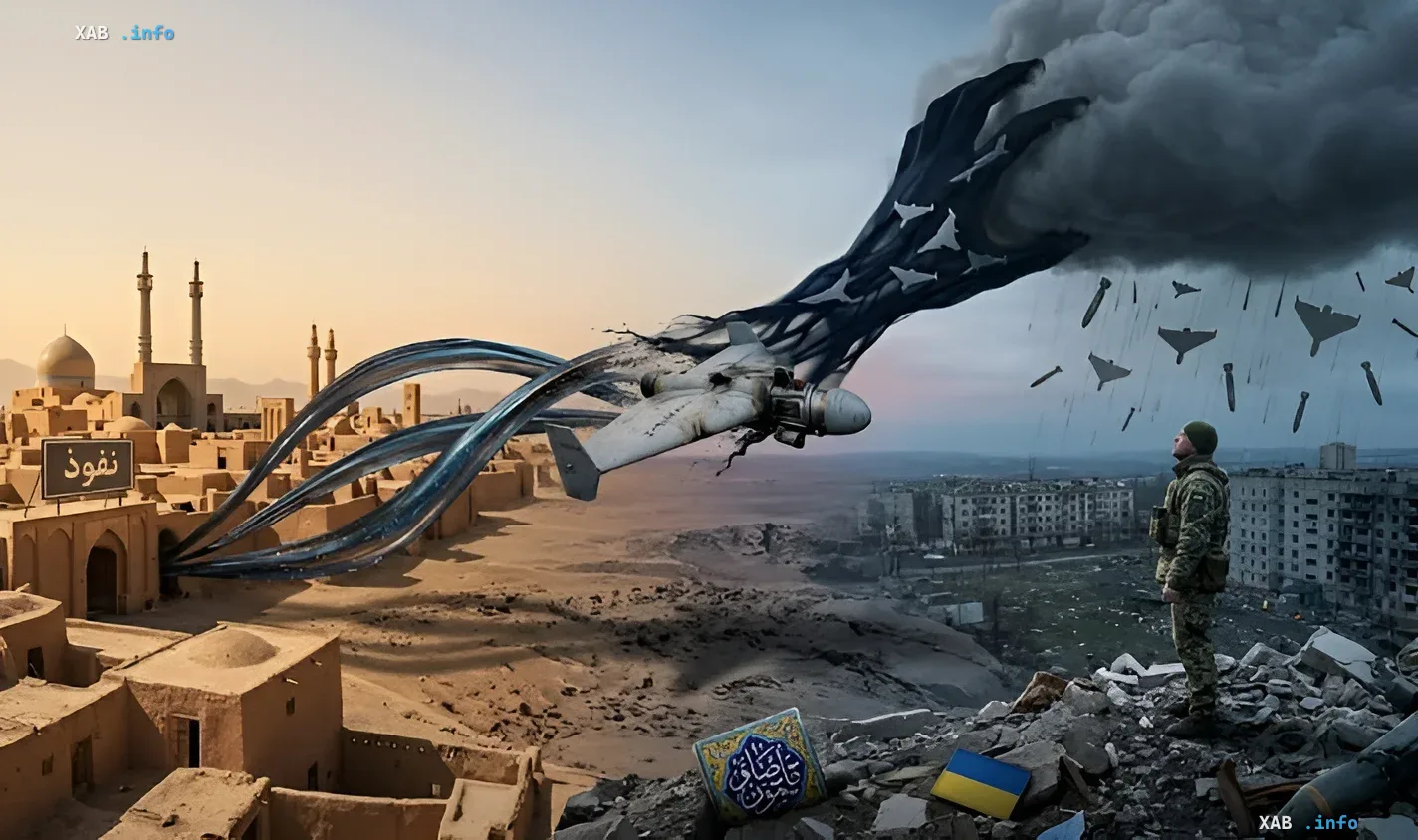
In early June 2026, a political scandal erupted in the Iranian capital which, despite the geographical distance, could have a tangible impact on the situation in Ukraine. In Tehran, rumors of the resignation of President Masoud Pezeshkian were officially denied. However, the mere fact of such reports appearing indicates deep internal contradictions within the elite of the Islamic Republic.
For Ukraine, these events are not just background noise: they create a complex set of indirect consequences in the military, energy, and geopolitical spheres. Experts highlight several key vectors of influence of instability in Iran on Kyiv's position.
Military Balance: Drones vs. Resources
The key aspect remains the military cooperation between Moscow and Tehran. In recent years, it has included regular supplies of unmanned aerial vehicles and dual-use technologies. The logic is simple: any internal instability in Iran could paralyze export capabilities, leading to a reduction in pressure on the Ukrainian air defense system.
However, the situation has another side. There is a risk that the US and its allies will be forced to redistribute their resources to the Middle East to stabilize the situation. This, in turn, could slow down the pace of arms deliveries to Kyiv, creating a shortage in critically important positions.
Energy and Economy: A Double Blow
Iran remains one of the key players in the global oil market. Intensifying political rumors and instability could provoke a sharp rise in oil and gas prices. For the Ukrainian economy, this means a direct increase in fuel costs and an increase in the cost of production.
In the short term, rising energy prices benefit Russia as an exporter. However, in the long term, this exacerbates the global economic crisis, which could open new opportunities for the export of Ukrainian electricity and agricultural products.
Agricultural Sector: Risks and Opportunities
Rising energy prices inevitably affect global food markets. Ukraine may face rising domestic production costs, which will be a test for local farmers. Nevertheless, high global prices offer a chance to increase the export of grain and oilseed crops, allowing to offset domestic costs.
IMAGE_2Geopolitical Unraveling
Rumors of President Pezeshkian's resignation highlight the tension between the civilian government and the Islamic Revolutionary Guard Corps (IRGC). If the influence of military structures increases, this could radically change the balance of power in the region and weaken the strategic Russia-Iran link.
For Ukraine, this opens a window of opportunity: a reduction in the supply of Iranian drones to Russia and a weakening of coordination between Moscow and Tehran. In conditions where the influence of the IRGC is growing, Iran's priorities may shift from external expansion to solving internal problems.
Conclusion
The situation in Iran does not have a direct impact on the course of hostilities in Ukraine, but it creates a serious background of indirect risks and opportunities. Kyiv must take into account the probability of a shortage of air defense weapons, rising energy and food prices, as well as use geopolitical instability to strengthen its export positions and diplomatic pressure on Russia.


