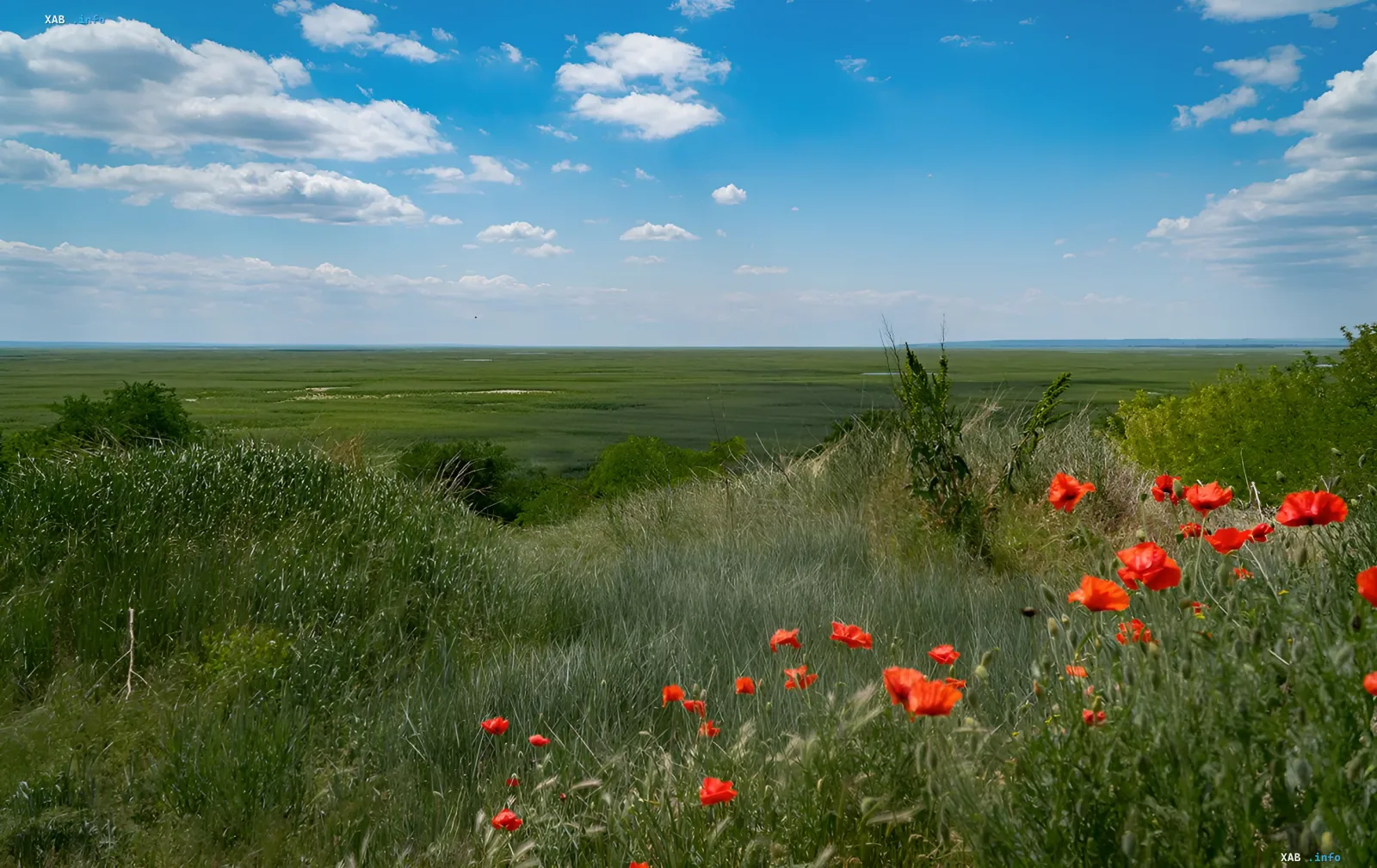
Three years ago, on June 6, the world witnessed one of the largest man-made disasters of modern times. As a result of the destruction of the Kakhovka HPP, about 600 square kilometers of territory were flooded, and tons of polluted water entered the Black Sea. However, today, three years after the tragedy, an amazing process is unfolding at the site of the former reservoir: nature is not just recovering, it is creating a new, unique ecosystem.
From Ecological Threat to Stabilization
The first months after the dam breach were critical. Water and soil were contaminated with heavy metals from bottom sediments, oil products, pesticides, and sewage from dozens of flooded settlements. This created a serious sanitary threat to the region.
The situation is under constant control by the State Ecological Inspectorate of Ukraine. Deputy Head of the Department Serhiy Zayets notes that in 2023–2024, experts recorded excess levels of pollutants in water and soil. However, the situation has now normalized: oxygen levels in the water have stabilized.
It is important to note that the scale of monitoring is limited by safety factors. The left bank of the Kherson region remains occupied, and experts cannot access it. On the right bank, however, control is carried out regularly, and it is there that scientists observe rapid changes in the landscape.
The Birth of the "Great Meadow"
The most noticeable change has been the appearance of vegetation. Already in the first months after the dam was blown up, willows sprouted on the bottom of the former reservoir. Today, a whole ecosystem is forming there, where trees reach heights of 7 meters. Academician of the NAS of Ukraine, ecologist and geobotanist Yakov Didukh predicts that in 20 years, full-fledged willow forests will form here.
"If it is possible to restore this forest, it will be the largest willow massif in Europe," the scientist emphasizes. Willow forests are a rare and protected type of vegetation, the destruction of which would cause huge harm to the ecology.
Around the willows, the area is overgrown with poplars. Scientists have recorded about 340 plant species here, including rare and protected ones. On shell deposits, where nothing grew in the first years, an indigenous species began to emerge — the Tatar lettuce. On poorly formed soils, where willows are uncomfortable, tamarisk grows, forming a shrub layer.
The Return of Biodiversity
The ecosystem is also filling with animal life. Zoologist Alexey Vasylyuk reports that traces of foxes, jackals, stoats, and smaller mammals are found on the former bottom of the reservoir. For large ungulates, the forest is still too dense, but the situation is changing.
Near the water bodies, many migratory birds live, including protected species: gulls and cranes. The species diversity of insects is currently small due to the lack of significant flowering meadows, but beetles and butterflies are already colonizing the forest.
Candidate for World Heritage Site
The destruction of the Kakhovka Reservoir led to the "liberation" of the Great Meadow territory. The Ukrainian Nature Conservation Group (UNCG) is initiating the inclusion of this place in the UNESCO Tentative List of World Heritage as a mixed cultural and natural object.
The organization has submitted a corresponding request to the Ministry of Culture and the National Commission of Ukraine for UNESCO. "A recent expedition confirmed the exceptional value of this territory. At the site of the former reservoir, floodplain forests are rapidly forming, biodiversity is growing, and rare species are returning," UNCG reports.
Scientists have a unique opportunity to observe one of the largest natural restoration processes of a large river floodplain in the world. The prepared concept shows that the Great Meadow potentially meets UNESCO criteria as both a cultural and a natural object.


