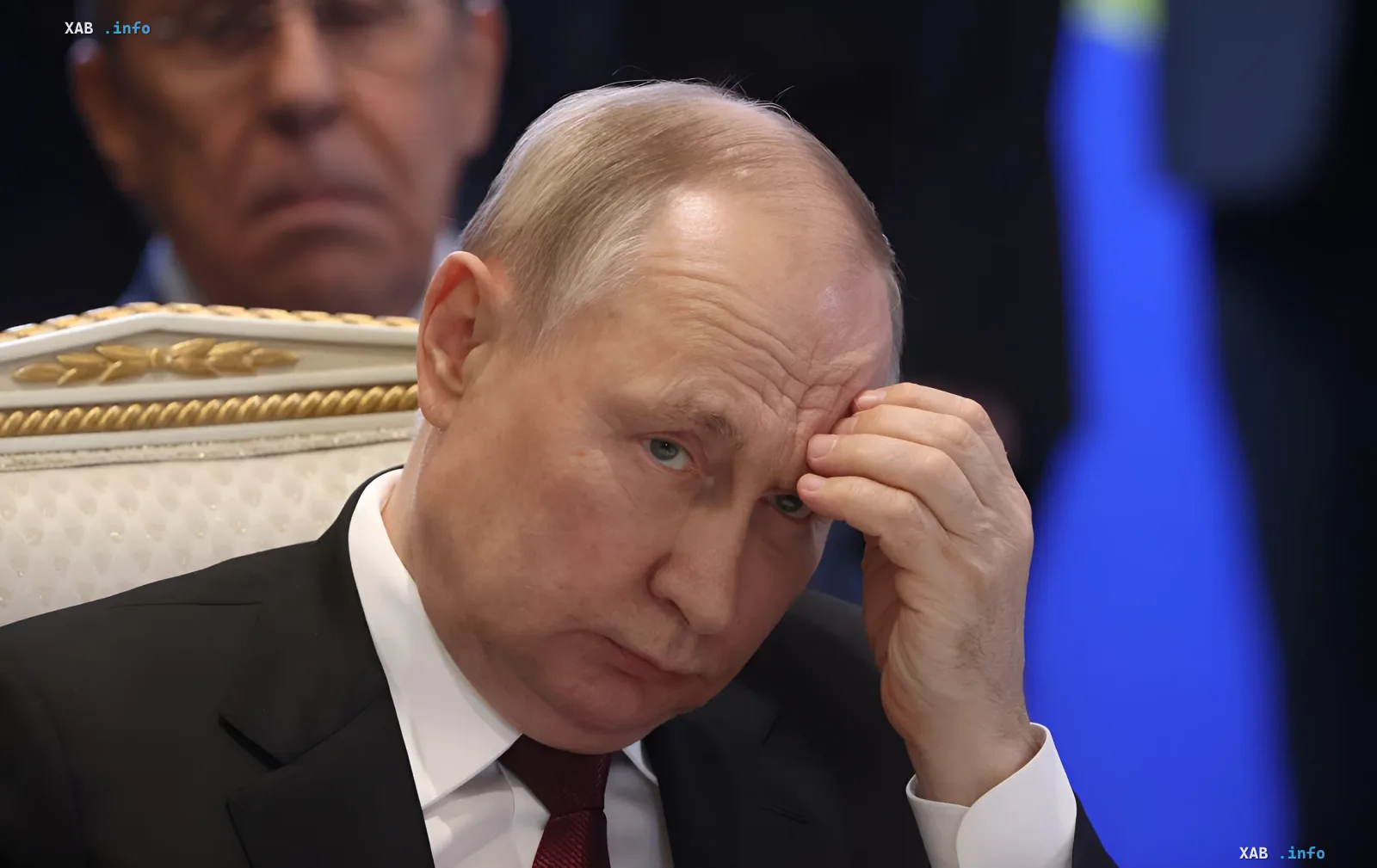
The fifth St. Petersburg International Economic Forum (SPIEF) has opened in St. Petersburg. Taking place against the backdrop of a protracted war and systematic attacks on Russian infrastructure, the event has become an arena for seeking answers to one of the Kremlin's main questions: how to return the economy to a growth phase?
Vladimir Putin, who opened the forum, urged officials and business leaders to find new points of support. However, the statistics paint a worrying picture: the Russian economy, valued at $3 trillion, is showing a sharp slowdown. If growth in 2024 was 4.9%, last year it fell to 1%. In the first quarter of 2026, a contraction of 0.2% has already been recorded, and the forecast for the current year barely reaches 0.4%.
Double Blow: Sanctions and Drone Attacks
Official representatives explain the decline by citing high interest rates, sanctions pressure, and the strengthening of the ruble. But the real reasons lie deeper. Attacks by Ukrainian drones have dealt a crushing blow to the manufacturing sector. Estimates suggest that a quarter of oil refinery capacity, as well as fertilizer production facilities and port infrastructure, have been hit.
The situation is exacerbated by strict measures taken by the government itself. In an attempt to stabilize the market, Russia banned gasoline exports from April 1, and jet fuel supplies are restricted until the end of 2026. These measures, intended to curb the internal crisis, only highlight the scale of problems in logistics and production.
The Paradox of Peace Talks
There is a growing understanding in business circles that economic growth is impossible without geopolitical de-escalation. As an anonymous top executive of a major corporation noted, the Russian stock market reacts with a surge of enthusiasm only to news of peace talks mediated by the US. This, according to experts, is the true vector for recovery.
However, the prospects for negotiations are hazy. The Kremlin states that the dialogue, which began in February last year, has been suspended due to the US focus on the conflict in the Middle East. Along with diplomacy, billions in investments and discussions on easing the sanctions regime have been "frozen." This breeds pessimism: many believe Putin missed the chance for a deal last year, and now the economy is showing signs of instability.
Lack of Growth Ideas
Experts and even government representatives admit the lack of tools for maneuvering. Former Central Bank of Russia Deputy Chairman Oleg Vyugin stated directly that with a double-digit key rate, tax hikes to finance the war, and falling investment, there are simply no ideas for growth. "The government can essentially offer nothing," he summarized.
Even the temporary rise in oil prices caused by tensions in the Middle East is considered by experts to be a short-term factor incapable of solving systemic problems.
Criticism is also coming from within the political system. State Duma deputy from the CPRF Renat Suleymanov, in a rare hard-hitting statement, pointed to the impossibility of development in wartime conditions. He emphasized that tanks and shells have no consumer value: the economy produces them, but the population cannot consume them, making talk of investment and capital expenditure meaningless.
Dependence on External Factors
Russia, with a population of 140 million, cannot rely on internal growth engines as India or China do. Stock and bond markets remain shallow, and the inflow of foreign investment has ceased. Mikhail Matovnikov, head of the financial analysis center at Oschadbank, summed up the situation concisely: "The economy needs an external push. It will not come from either the state budget or the banking system".


