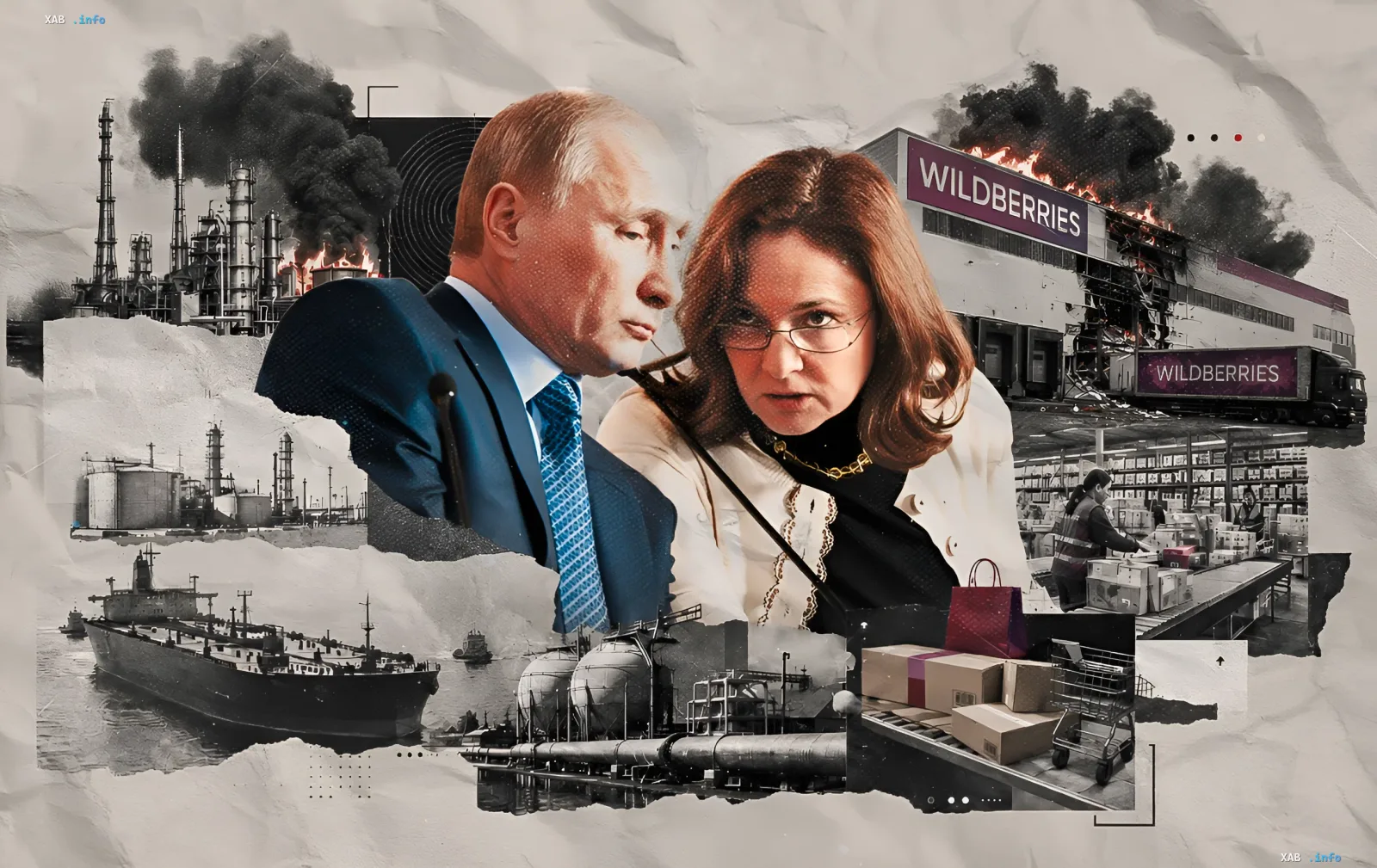
The Russian economy, which had shown growth for two years following the start of the full-scale war, has entered a phase of steady deceleration. While military spending and high energy prices previously served as drivers, these factors are now exhausting their potential. Amidst sanctions pressure and strikes on critical infrastructure, the resilience of the Russian economy is diminishing.
From a "Soft" to an "Emergency" Landing
In 2025, Russia's GDP growth rate slowed to 1%. Central Bank Governor Elvira Nabiullina previously characterized this result as a "soft landing." However, new macroeconomic forecasts point to a more dramatic scenario.
In July, the Bank of Russia was forced to significantly downgrade its forecast for the current year. The expected GDP growth was reduced from 0.5–1.5% to 0–1%. The forecast for 2026, which allows for zero economic growth, is already being described by experts as a rapid descent or even an emergency landing. To support the economy, the regulator had to lower the key rate from 14.25% to 14%, yet inflationary expectations remain high.
Energy Crisis and Strikes on Refineries
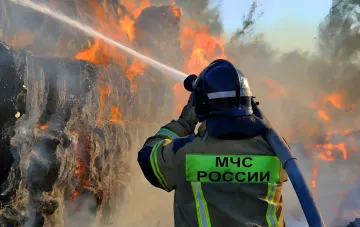
One of the key factors behind the slowdown has been the shelling of Russian oil refineries (ORs), which Ukraine intensified in the spring. This has led to a fuel shortage and rising prices.
Since the beginning of 2026, retail gasoline prices in Russia have risen by an average of 14%. Compared to last summer's figures, the increase stands at 20%. To keep the situation under control, the government banned fuel exports until the end of the year and relaxed quality requirements, allowing the sale of "Euro-3" standard fuel instead of the previously mandatory "Euro-5".
Russian authorities assess the fuel difficulties as temporary. The situation began to stabilize in late July – early August thanks to refineries coming out of emergency repairs. Diesel exports are planned to be permitted from September, although experts warn that "drone sanctions" may continue to reduce export volumes and budget revenues.
Social Consequences and Labor Shortage
Economic deceleration inevitably affects the social sphere. Leading economic geographer Natalia Zubarevich notes a reduction in healthcare spending and the "optimization" of social expenditures. Regional budget deficits are actively growing, linked to falling corporate tax revenues and reduced income from export-oriented industries.
A critical issue remains the labor shortage. Since 2022, it has tripled, reaching 1.5 million people. This deficit is being covered by labor migrants from Asian countries: only in the current year, 70,400 work permits were issued to Chinese citizens and 33,700 to Indians.
Contradictory Data
There are discrepancies between official data and the analysis of international institutions regarding the current state of the economy.
The Ministry of Economic Development of Russia lowered its economic growth forecast to 0.4%, which is a pessimistic scenario. However, the Kiel Institute for the World Economy (Germany) considers this forecast overly optimistic. The institute's report notes that it may be based on unreliable data.
"There are serious doubts about the accuracy of official growth figures, and if inflation is understated, as many suggest, this will lead to an even greater reduction in real growth figures," the report by German experts states. The IMF has not yet downgraded its figures but has also noted a strong slowdown in the Russian economy.