
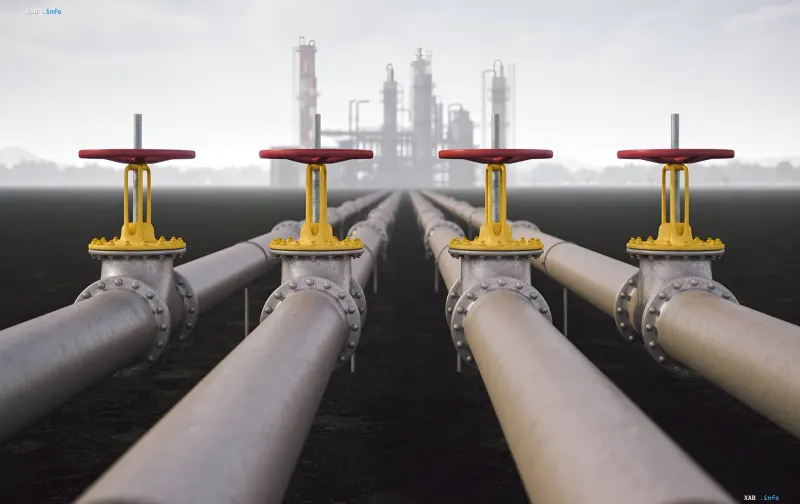
The era of hopes for resuming Russian gas supplies to the European Union has reached its logical conclusion. During a daily briefing, European Commission spokesperson Anna-Kaisa Itkonen gave a clear answer to the question of a possible return to previous energy exchange schemes: such a scenario is no longer being considered.
"If the question concerns the resumption of Russian gas imports into the European Union, then no, it is impossible," Itkonen emphasized. According to her, the EU legislative framework has already been transformed in such a way that a return to the old supply model is legally excluded.
Legislative Deadlock for Pipeline Gas
The decision to completely abandon Russian energy carriers is supported by specific legal mechanisms. This month, a ban on gas transportation via pipelines under short-term contracts came into force. This is only the first step in a series of restrictions. Brussels plans to introduce two more stages of sanctions, which are scheduled to take effect in January and September of next year.
The EC spokesperson noted that the EU's political course is clearly formulated: "We will not return to Russian energy carriers; on the contrary, we are moving resolutely towards their ban and diversification." The Repower EU strategy, aimed at energy independence, continues to be implemented in full.
Oil in Focus: The Next Stage of Restrictions
While the situation with gas has already been resolved, work on the next steps continues. The European Commission confirmed that active preparation of a new package of energy restrictions is currently underway, this time concerning Russian oil. A ban on importing black gold will become part of the expanded Repower EU strategy.
"Oil will be included in this strategy, work on this is ongoing, and we hope to be able to present a proposal at the appropriate time," Itkonen added. It is expected that the EU will completely abandon Russian gas imports by the end of 2027, while the oil ban should become the final note in the process of decarbonization and severing economic ties with Moscow.
Disagreements Among Allies
Despite Brussels' firm stance, discussions within the European energy community continue regarding the pace and consequences of such a radical abandonment. In particular, Ivan Jimenez, head of the Bilbao port in Spain, warned about the risks of a sudden abandonment of Russian LNG. In his opinion, too rapid a termination of contracts could lead to excessive EU dependence on supplies from the USA, so the process should be more gradual.
However, the Baltic states and Poland take a fundamentally different position. They are calling on the European Commission to accelerate the process and present a proposal for a phased ban on Russian oil imports as soon as possible. Warsaw and the Baltic capitals argue their demands based on the need to cut off financial flows that, in their view, continue to fund Russia's war against Ukraine.
Furthermore, representatives of these countries point out that the risks of a large-scale energy crisis, previously predicted due to geopolitical tensions in the Middle East, have not yet materialized. This gives them grounds to believe that the EU economy is ready for stricter sanction measures without the threat of an energy system collapse.


