
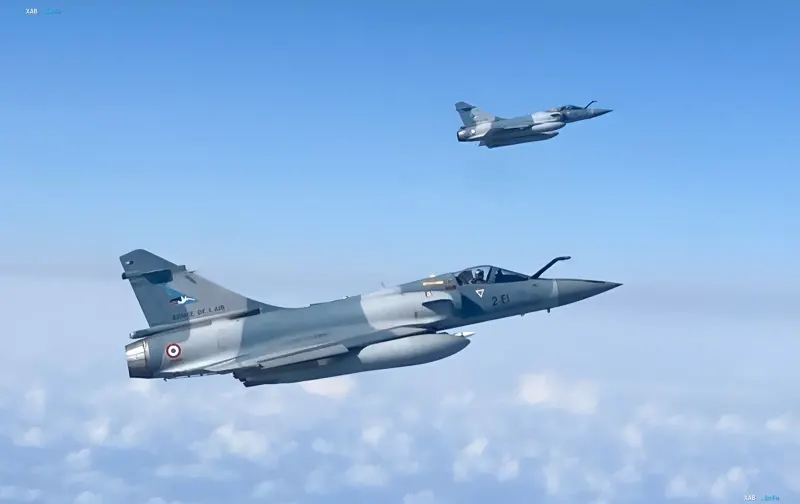
At the NATO summit in Ankara, a historic decision was made that changes the status quo on the Alliance's eastern flank. The Baltic Air Policing mission, which for over two decades has ensured the security of the airspace of the Baltic states, has officially been transformed. It now holds the status of full-scale air defense.
This was announced by the President of Lithuania, Gitanas Nausėda. According to him, the change in format is a response to a new reality where threats have ceased to be theoretical.
From Escort to Defense
The Baltic Air Policing mission was established in 2004, immediately after Lithuania, Latvia, and Estonia joined NATO. Since these states do not have their own fighter aviation, their allies took on the protection of their borders. Until recently, the main task of the pilots was to detect and escort Russian military aircraft flying near the borders of the Baltic states.
However, the situation has changed. This year, NATO aircraft used weapons for the first time within the framework of this mission. Drones, which preliminary assessments suggest were Ukrainian and accidentally crossed the border, were shot down over the territories of Estonia and Latvia.
The Alliance acknowledged that weapons were not used previously because the format was created exclusively for peacetime conditions. Gitanas Nausėda emphasized the importance of this step:
"Thus, we show that we are paying attention to incidents. This is a kind of deterrence. But what is happening today is no longer a completely peaceful situation".
New Response Speed
Estonian Foreign Minister Margus Tsahkna noted that the updated format will allow for a faster response to air threats. This will ensure greater flexibility in decision-making during critical moments.
Currently, Baltic Air Policing fighters take off every time Russian military aviation conducts flights over international waters from the Kaliningrad region to the Gulf of Finland and further along the borders of the main territory of Russia.
Scaling and Technology
The mission has changed several times in response to the geopolitical situation. After Russia's occupation of Crimea in 2014, it was significantly expanded. Currently, more than a dozen fighters participate in it, provided on a rotational basis by three NATO member countries. The aviation is stationed at two military airfields in the region.
Alongside the change in the mission's status, NATO is implementing new technologies to strengthen control. The Alliance is launching the Maven Smart System (MSS NATO), developed by Palantir Technologies. It is designed to analyze intelligence information and monitor the situation on the eastern flank, including tracking potential threats and troop movements.


